












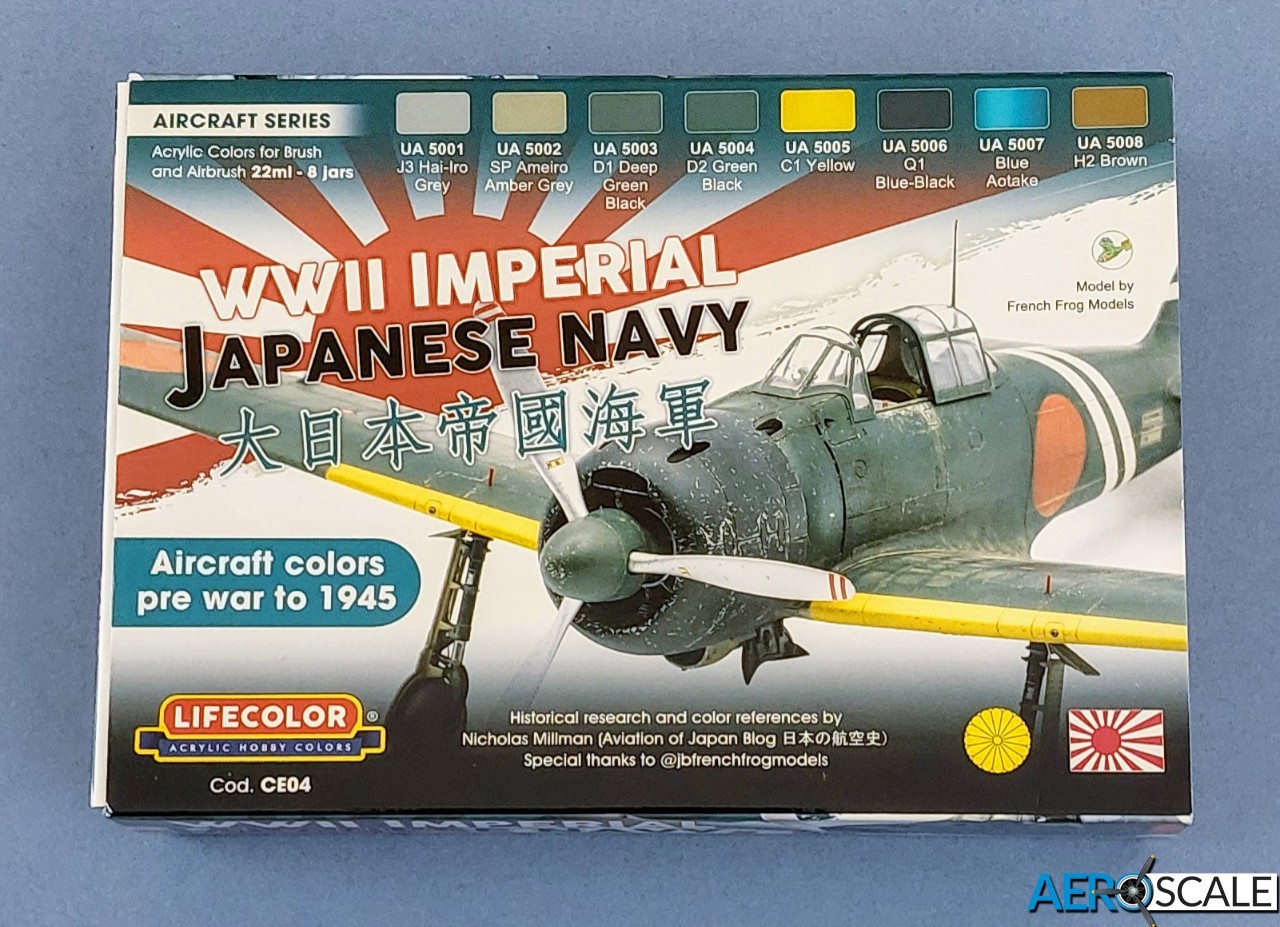
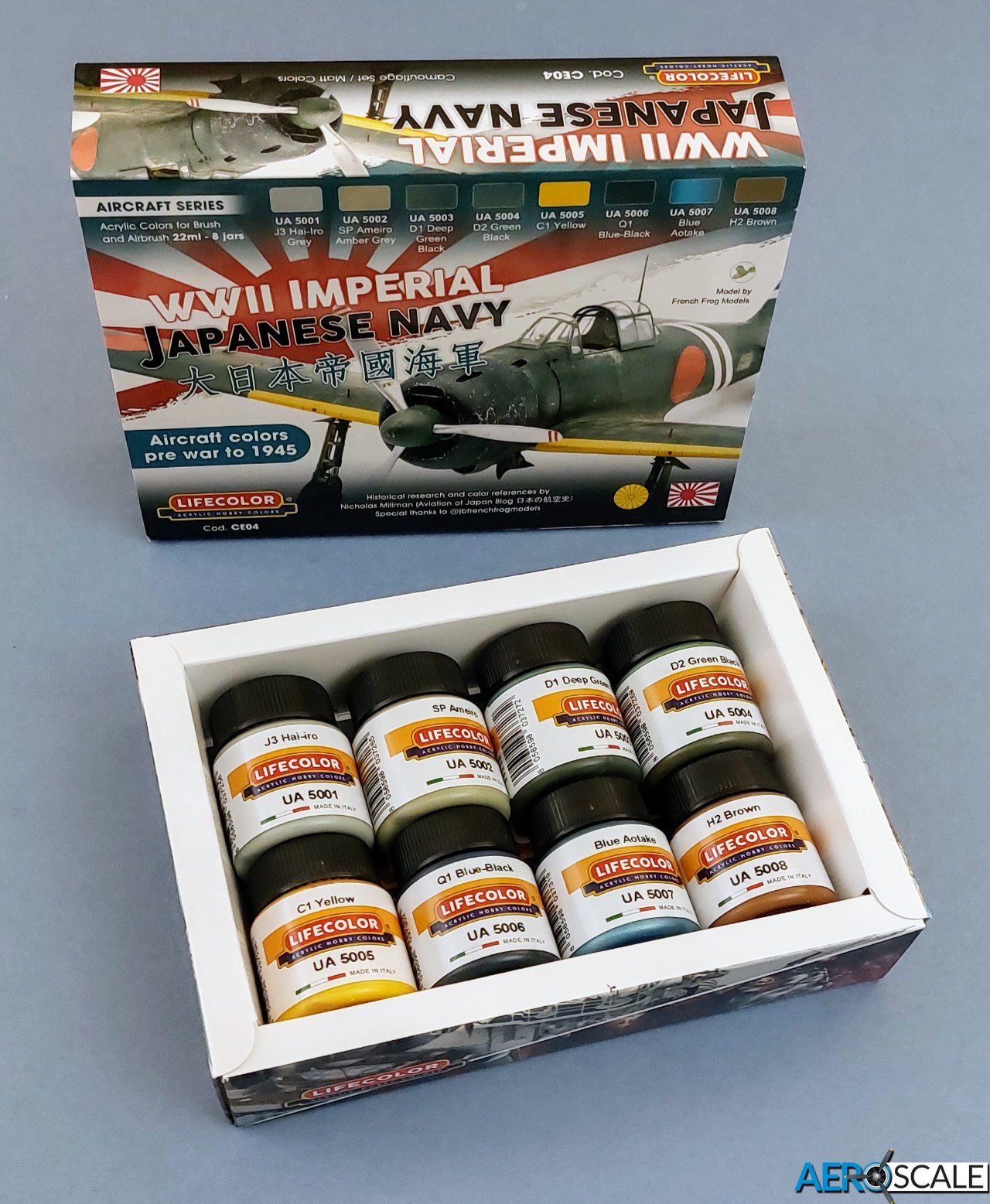
LifeColor's IJNAS set comprises eight colours neatly packed in a cardboard carton with an outer sleeve that will double as a convenient way to store the paints. The sleeve shows a very nicely finished Zero, and the rear has a colour chart with typical uses of the colours along with generic instructions for using LifeColor acrylics - i.e. thinning, recommended spraying pressures and clean-up.
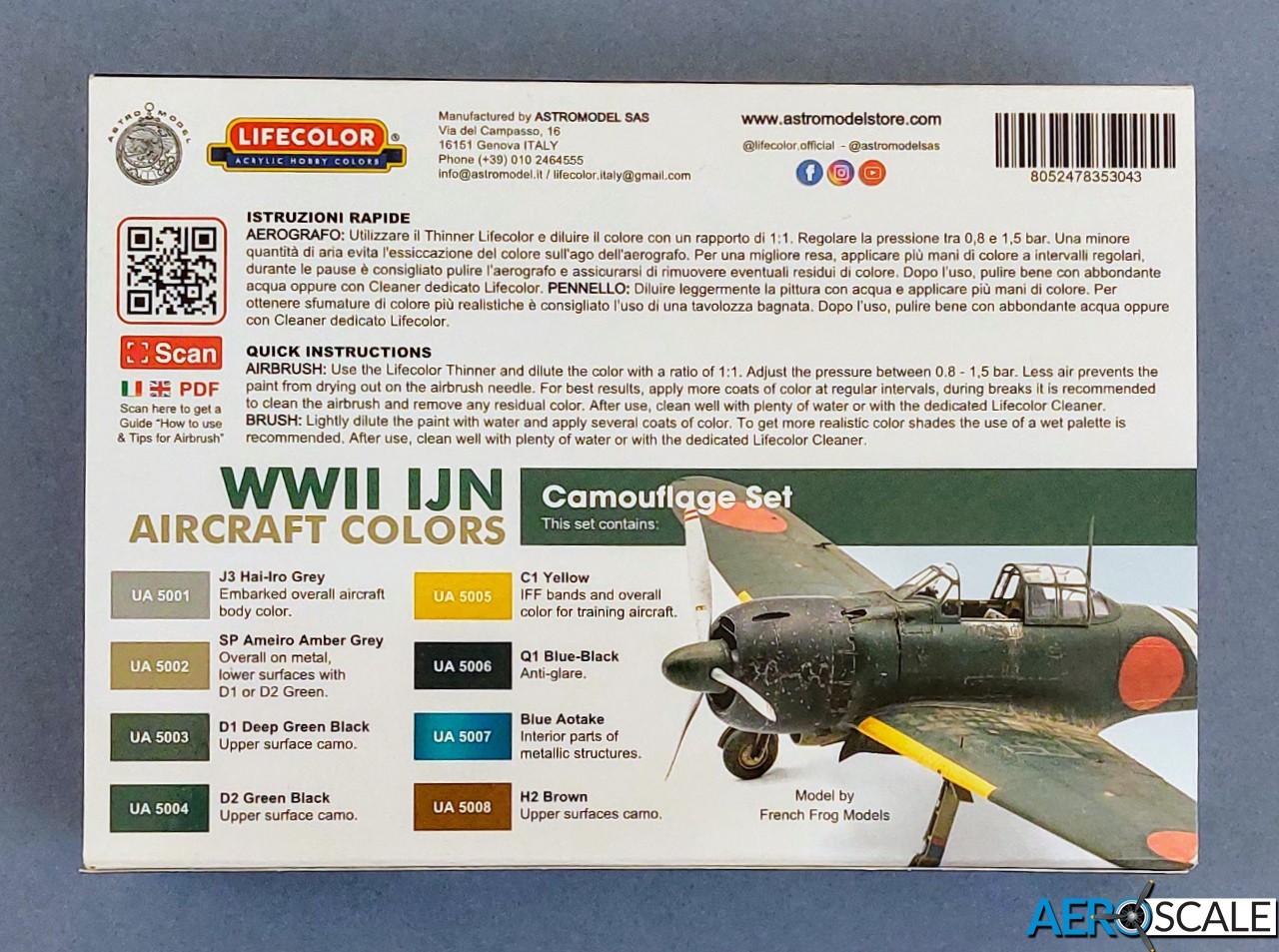
The paints were developed in consultation with Nicholas Milliman, whose Aviation Of Japan blog is an absolute treasure trove of information on all aspects of Japan's airforces during WWII. I highly recommend exploring his site for detailed information on Japanese wartime paint finishes.
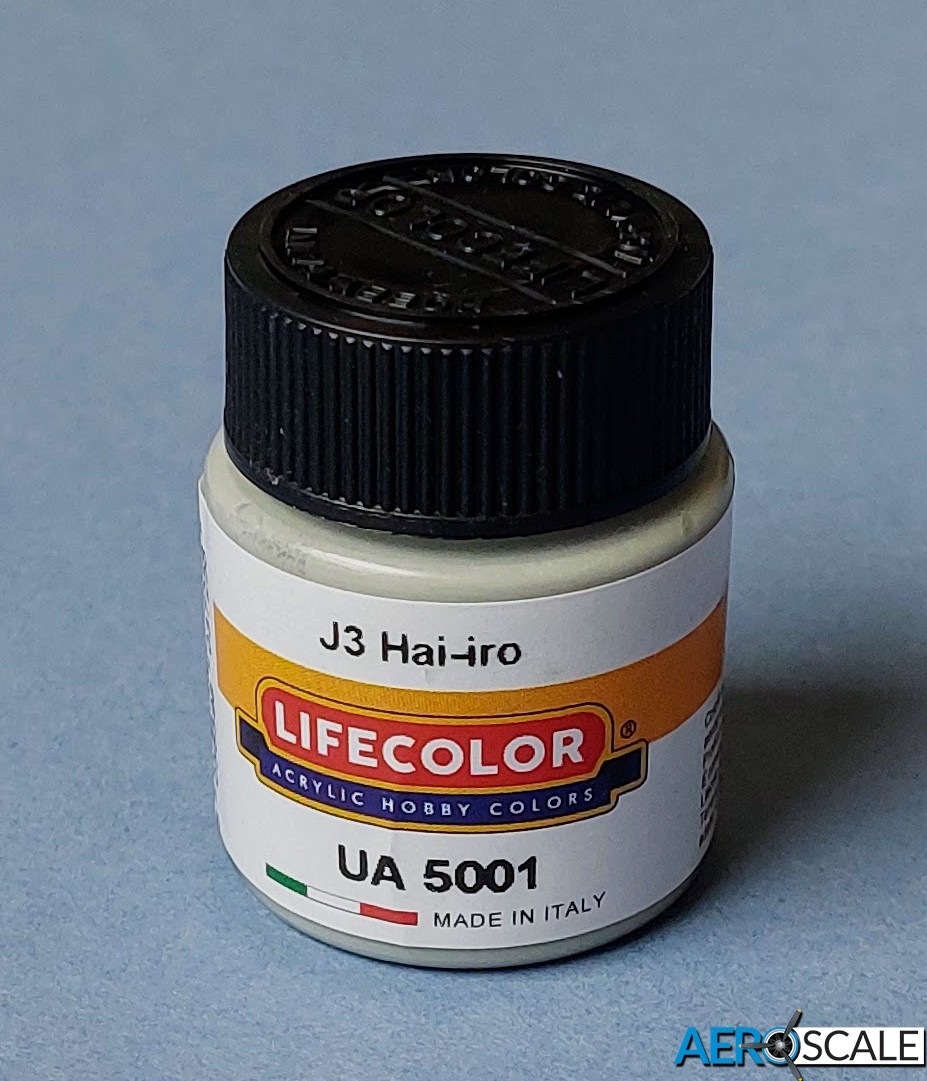
Each colour arrives in 22ml plastic bottles with a screw cap, and the paint has a creamy consistency straight from the pot. Some of the pigments tend to settle over time, so it's important to stir the paints thoroughly to ensure colour accuracy and consistency.
I tested the paints on glossy card using both a paint brush and an airbrush and got excellent results with both methods. Drying times were very short, allowing additional coats to be applied rapidly.
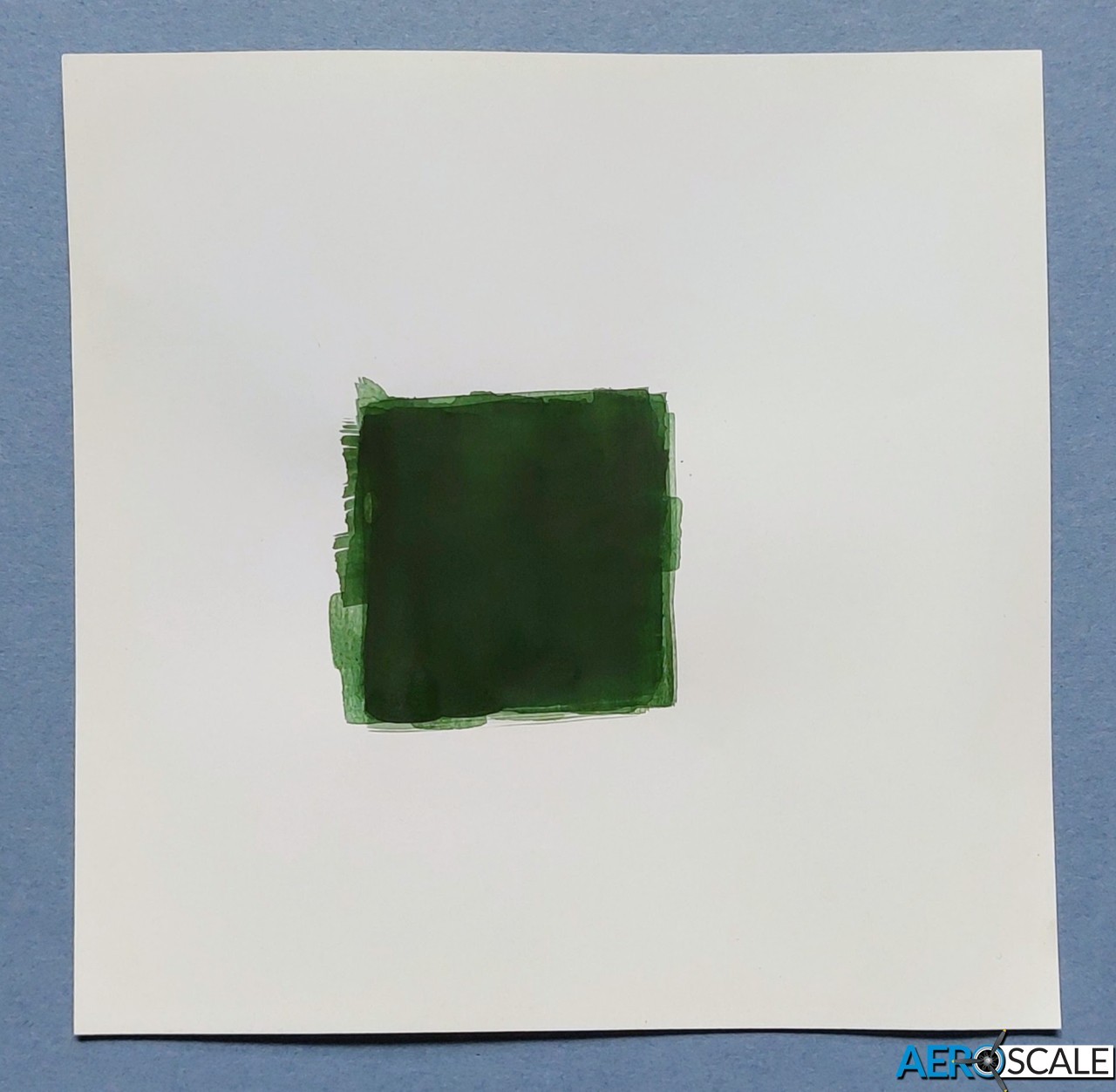
The instructions indicate to thin the paints with a little water for the best results when hand brushing, building up the colours with multiple coats. This certainly works well, as can be seen in this following photo of 4x thin coats.
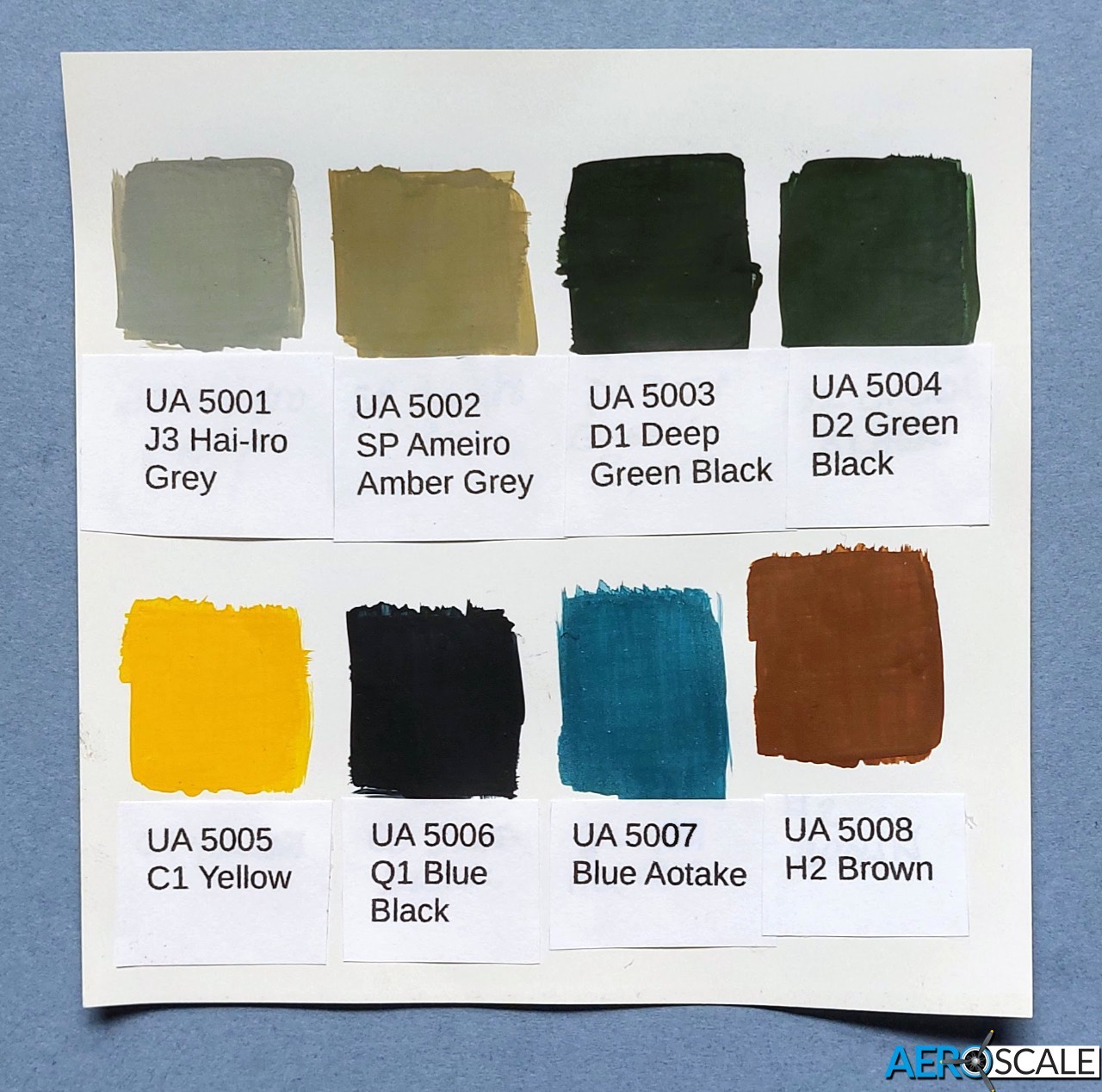
I used the paints neat and with fewer coats for the colour comparison swatches - and viewed up close the brush strokes were more evident.
For the airbrushing test I used LifeColor's own thinners with a ratio of around 50:50, and this gave excellent results at the recommended pressure, not drying within the airbrush and showing little tendency to "bleed". The coverage was very good and I quickly built up a solid patch of colour.
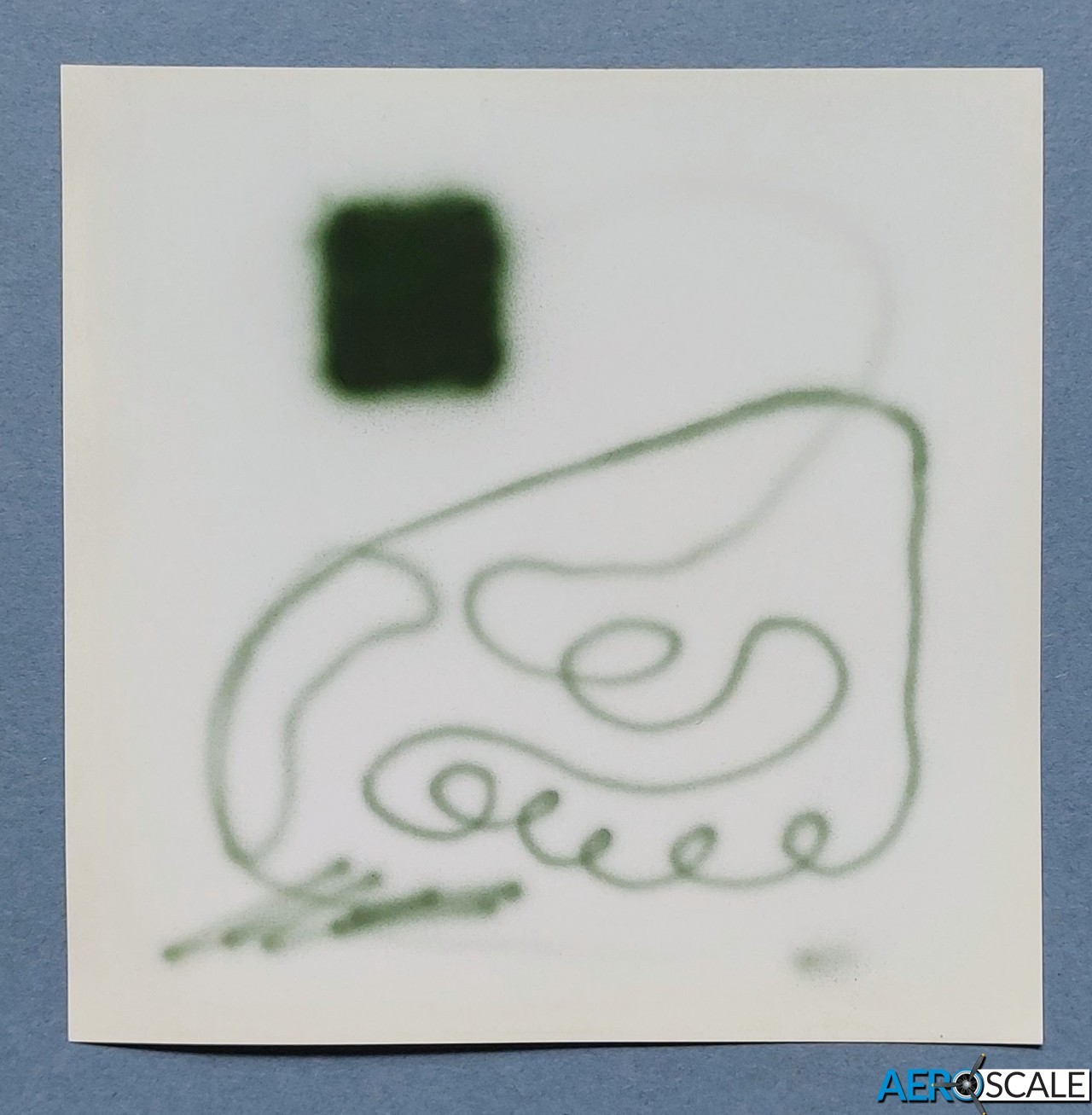
A huge plus point for anyone working in a domestic environment is that the paints are virtually odourless, even when sprayed - although I would still always recommend having plenty of ventilation and wearing a protective mask if you are using an airbrush, because paint particulates can be dangerous, whether you can smell them or not.
For all the colours except Aotake, when hand-brushed the paints dry essentially matte, with just the faintest sheen. Oddly, though, the airbrush test yielded a dead flat result. LifeColor's Aotake is a metallic paint and dries with a full gloss.
I've compared the paint swatches against my trusty set of FS 595 chips under bright overcast daylight conditions. My FS 595 fan doesn't have paint chips with a matte finish for all the hues, so I've used gloss or satin chips in some cases. For a matte match, substitute "3" for the "1" at the beginning of the FS number.
I must stress that these comparisons are only a rough guide, because the original Japanese colours were obviously never created to match US standards. I also noticed that some of the matches were closer with the naked eye than when I looked at the photos later, so there's obviously a small degree of colour shift taking place with the camera and/or my computer screen. This will also potentially be a factor for readers' own monitors. As a final caveat, my FS 595 colour fan is over 25 years old now, so there's always the chance that the samples may have changed slightly over time.
But, enough of that, here are the results.
UA 5001 J3 Hai-Iro Grey
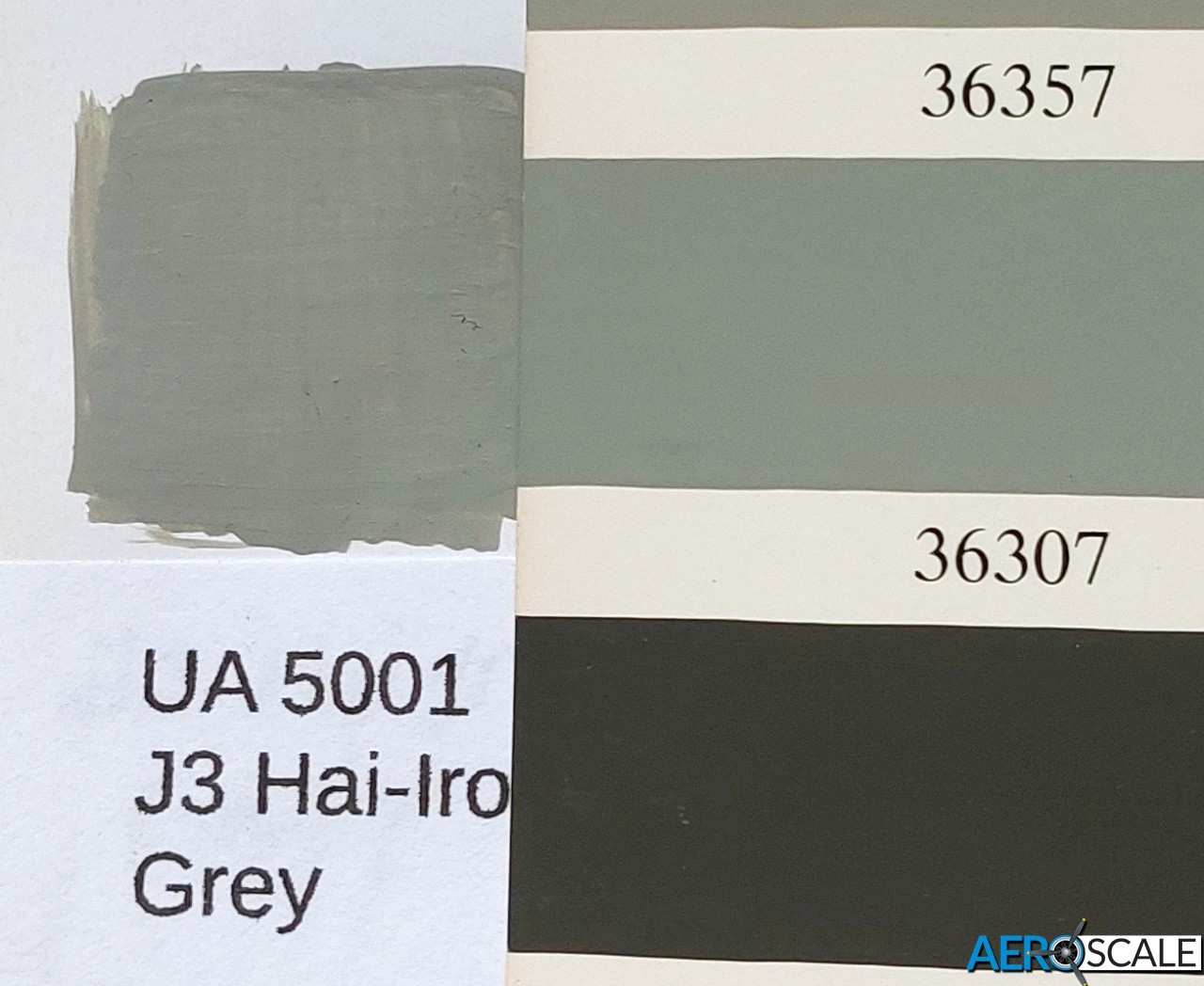
Searching online shows quite a range of tones for Hai-Iro amongst model pant ranges, ranging from neutral grey through to warm or greenish light greys. LifeColor's version is just on the warm side of neutral, and an almost exact match for FS 36307.
UA 5002 SP Ameiro Amber Grey
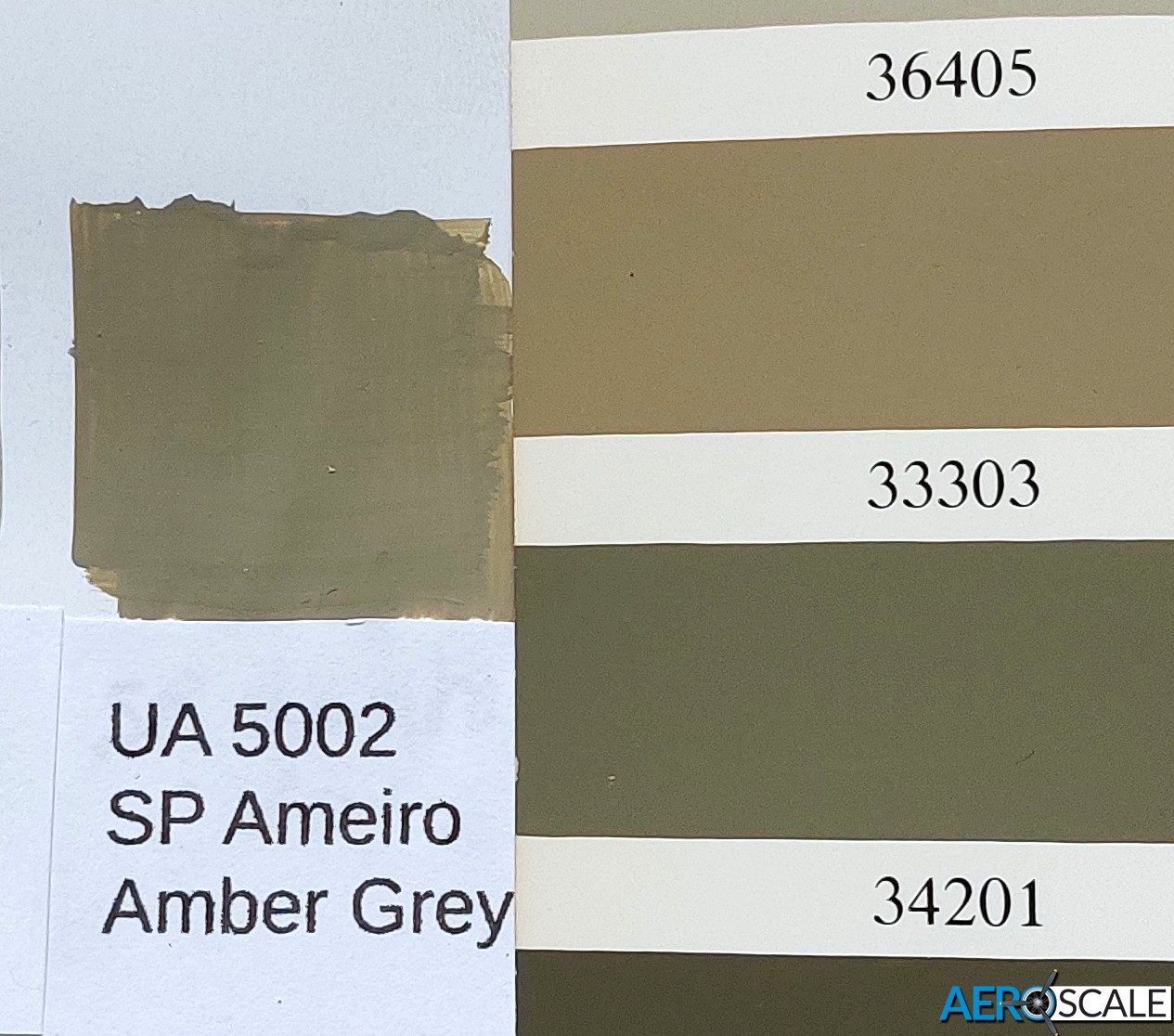
SP Ameiro Amber Grey is, as the name suggests, a much warmer tone - somewhat similar to RLM 02. LifeColor's version falls somewhere between FS 33303 and FS 34201
UA 5003 D1 Deep Black Green
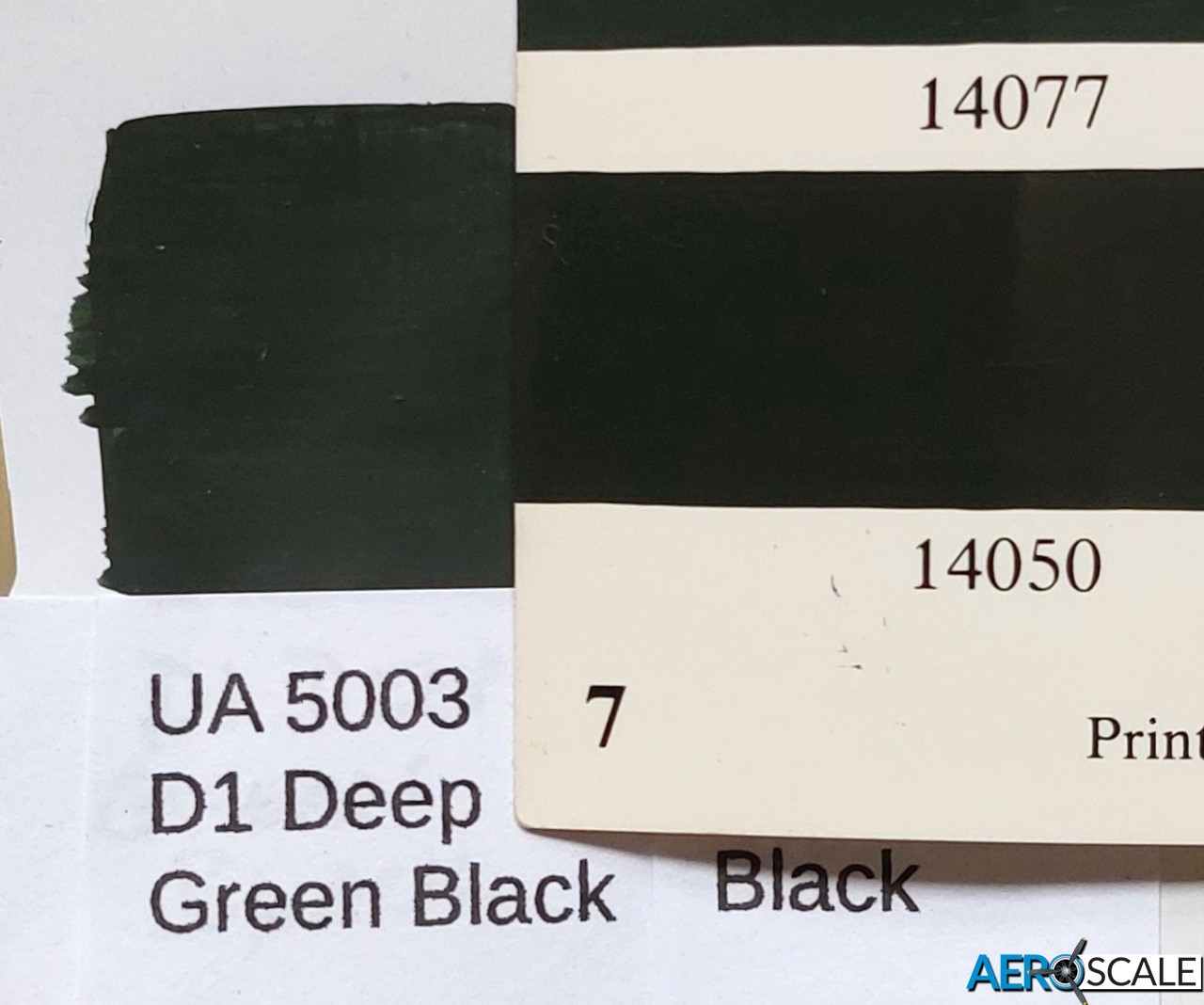
My first comparison the LifeColor's was a very close match to FS 14050, but when viewed a few days later in slightly different lighting conditions, FS 14077 seems a better match.
UA 5004 D2 Green Black
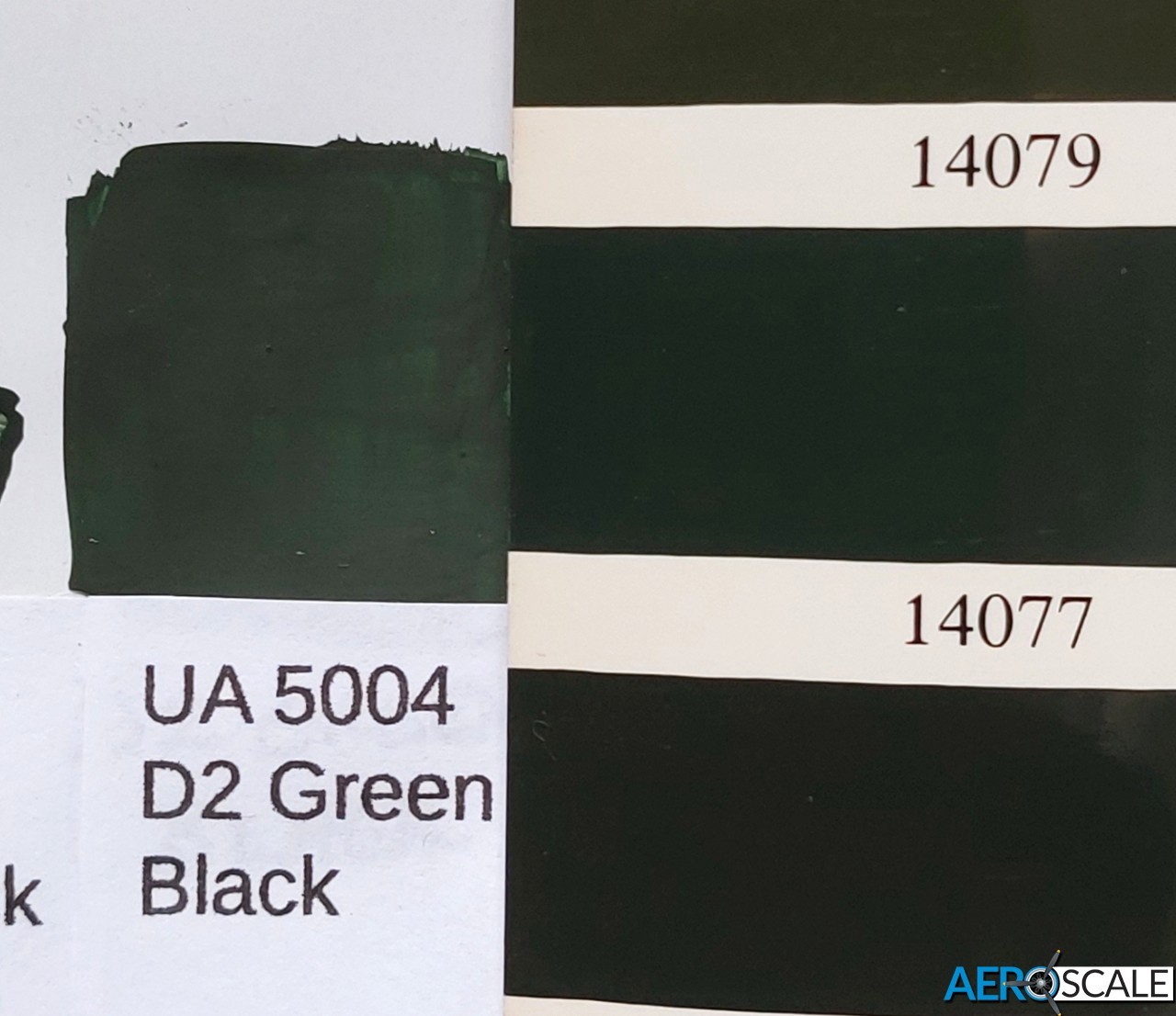
LifeColor's paint is again close to 14077, but somewhat lighter.
UA 5005 C1 Yellow
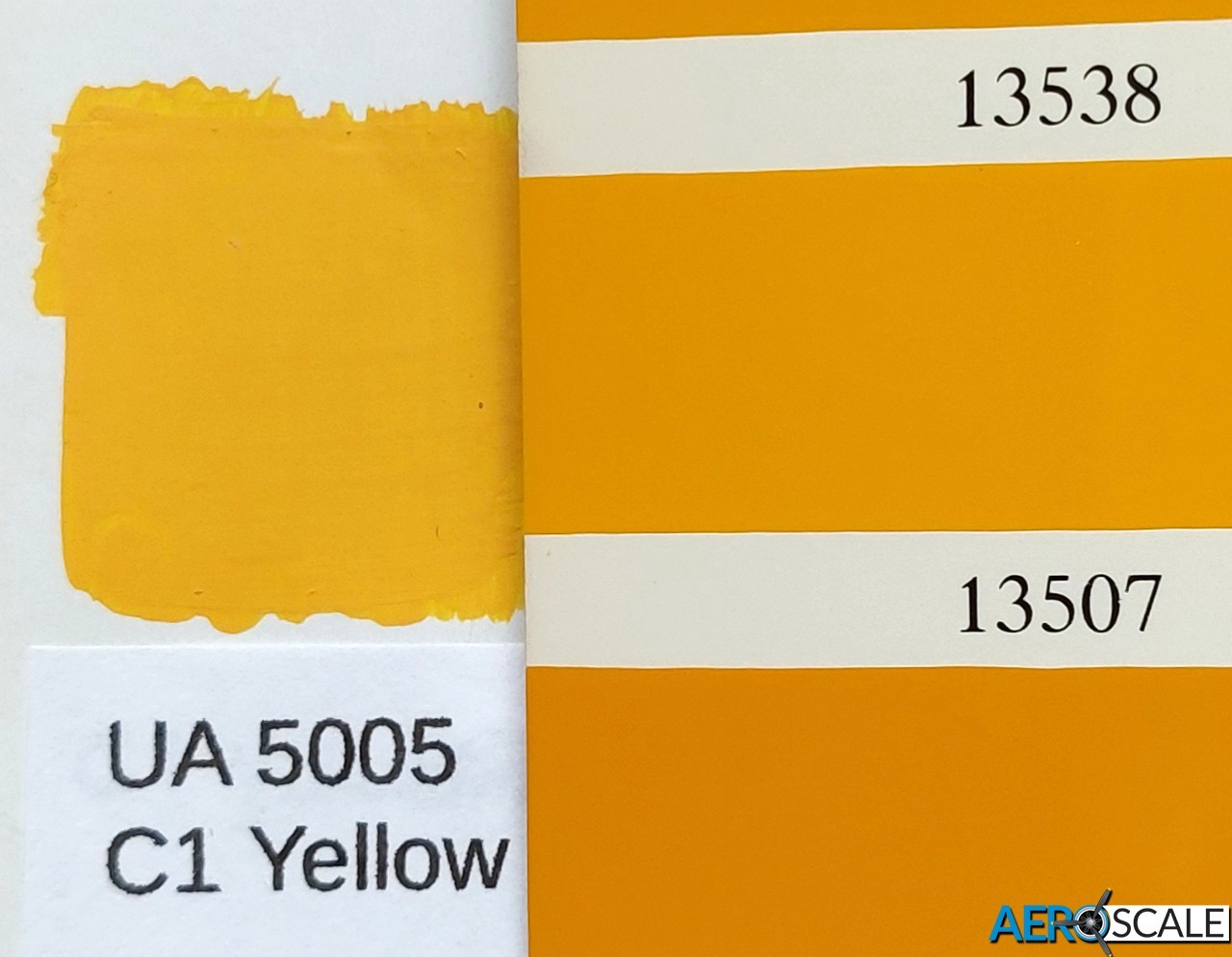
The LifeColor hue is closest to FS 13507, but somewhat paler, closer to the luminance (not hue) of FS 13655.
UA 5006 Q1 Blue Black
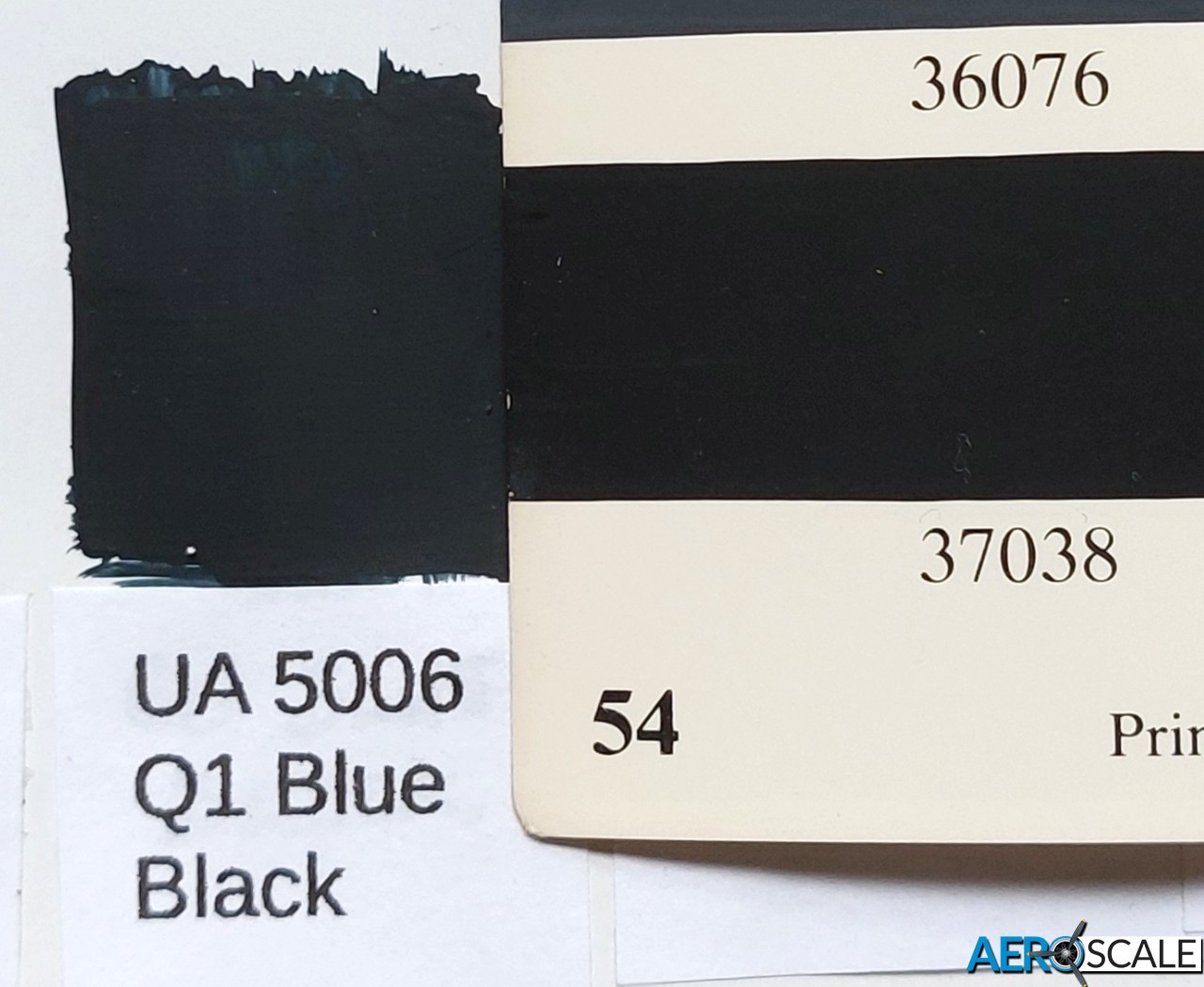
LifeColor's colour is close to FS 37038, but a little paler.
UA 5007 Blue Aotake
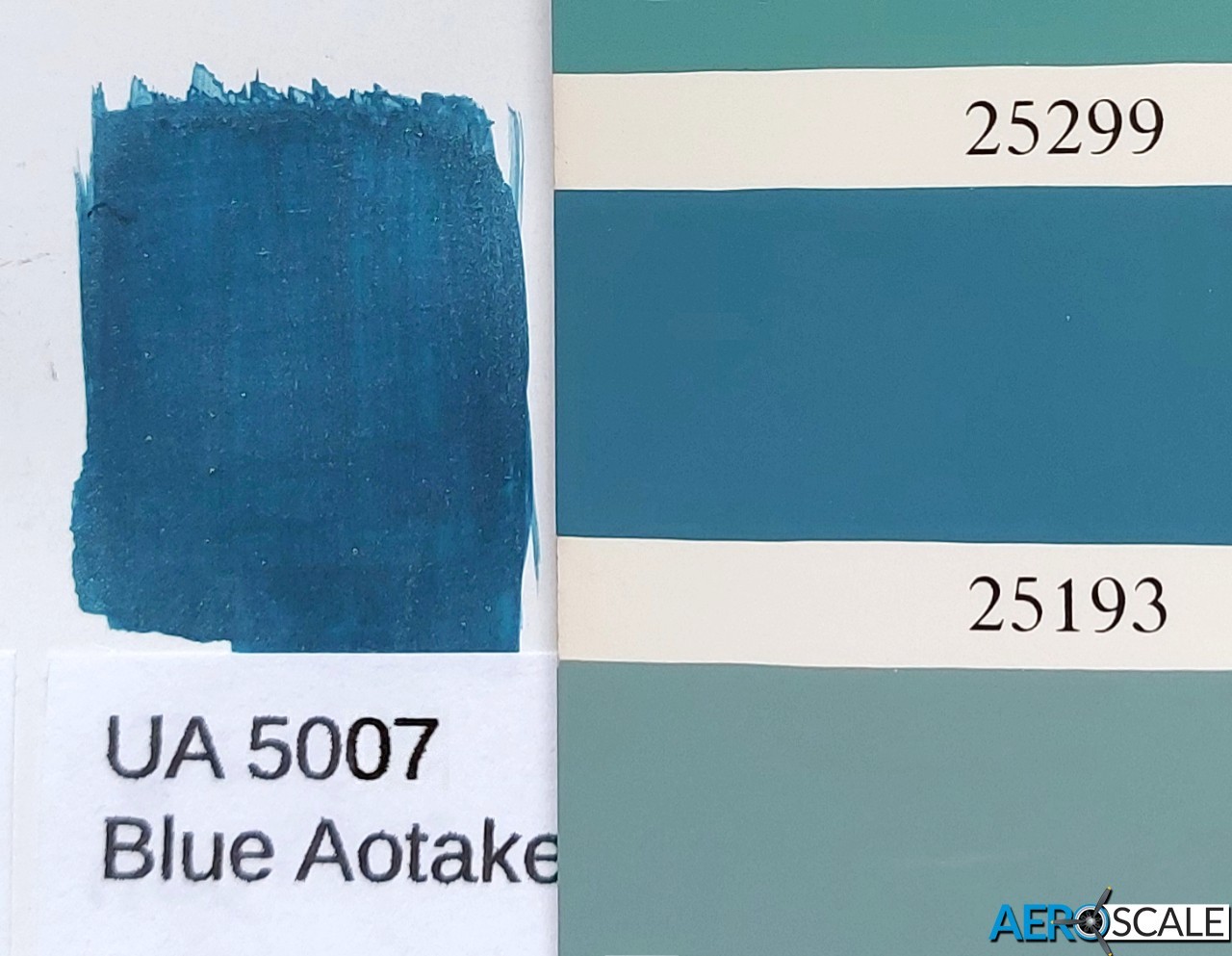
The oddball in the pack, so to speak, is Aotake - in reality a translucent coat applied over bare metal, but represented here by a metallic paint. In terms of hue, the LifeColor sample was close to FS 25193 but a little darker.
UA 5008 H2 Brown
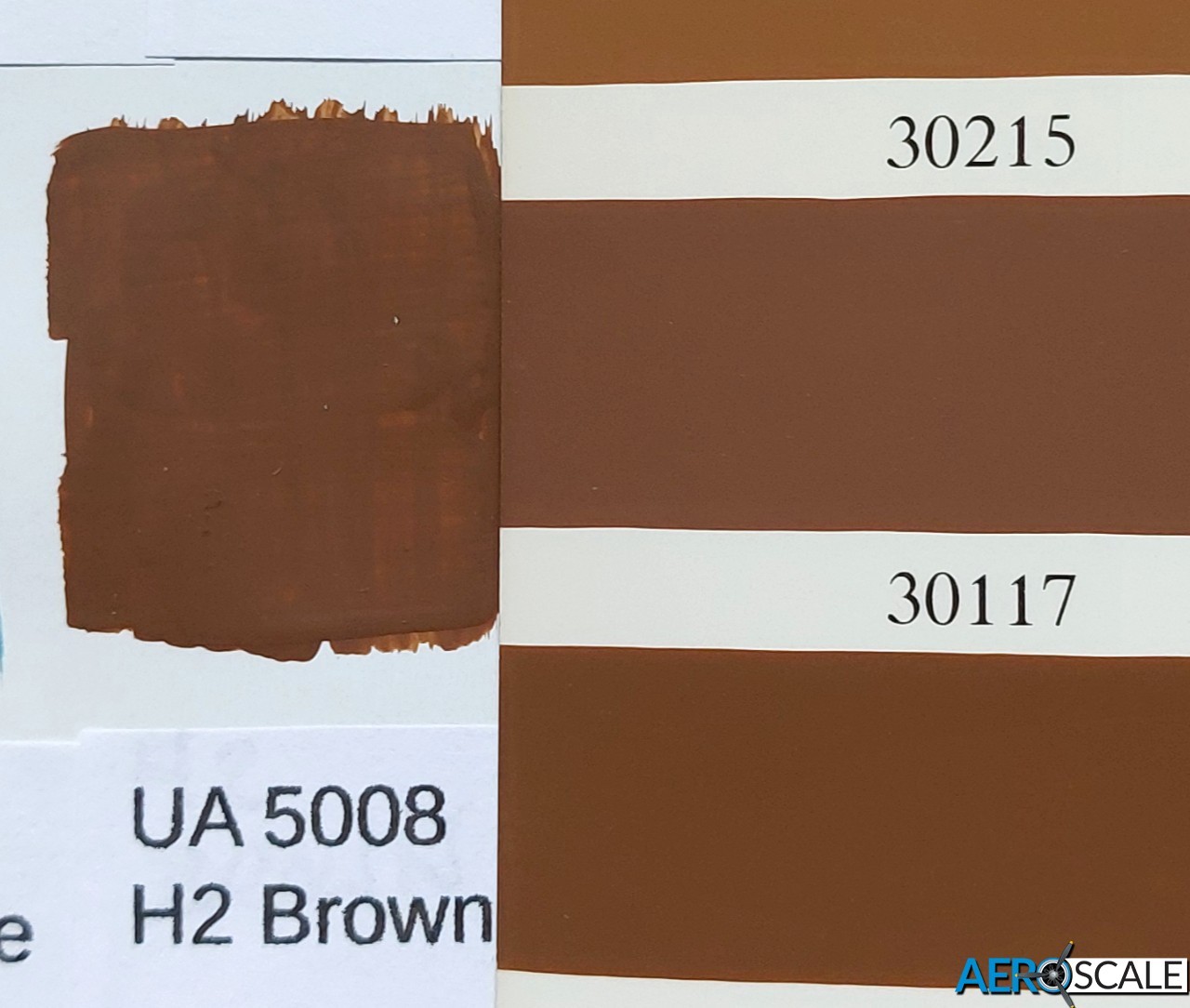
The LifeColor colour is very close to FS 30117.
Conclusion
The quality of these LifeColor IJN colours is excellent and they deserve to be very popular.
I'll confess that I'm a dyed in the wool solvent-based paint user, and I've had mixed success with water-based acrylics over the years, but the one brand that's consistently shone out for me is LifeColor. I don't know what they do differently to other brands, but I just get on with their paints where I struggle with many others.
So, testing these LifeColor IJN colours put me straight into my "comfort zone" and I'm looking forward to getting back to my workbench after too long a lay-off, and using them for real in the next few weeks on Fine Molds' 1:48 Zero. Watch out for updates in the Forum and a Finished Build article.
Many thanks to The Airbrush Company for kindly providing the sample set for review.
Set #LC-C04 - LifeColor WWII Japanese Navy Aircraft - is available now from The Airbrush Company - Price: £26.50 inc. VAT
Please remember, when contacting retailers or manufacturers, to mention that you saw their products highlighted here - on AEROSCALE