












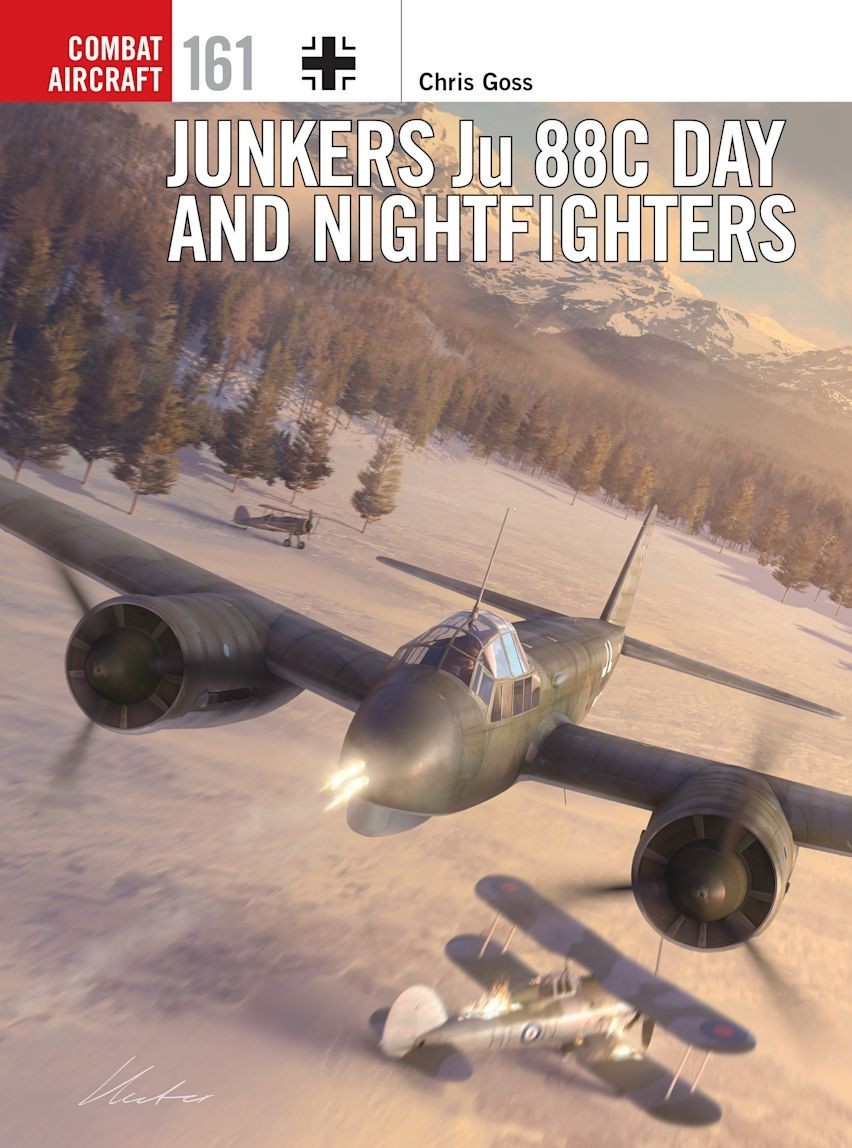
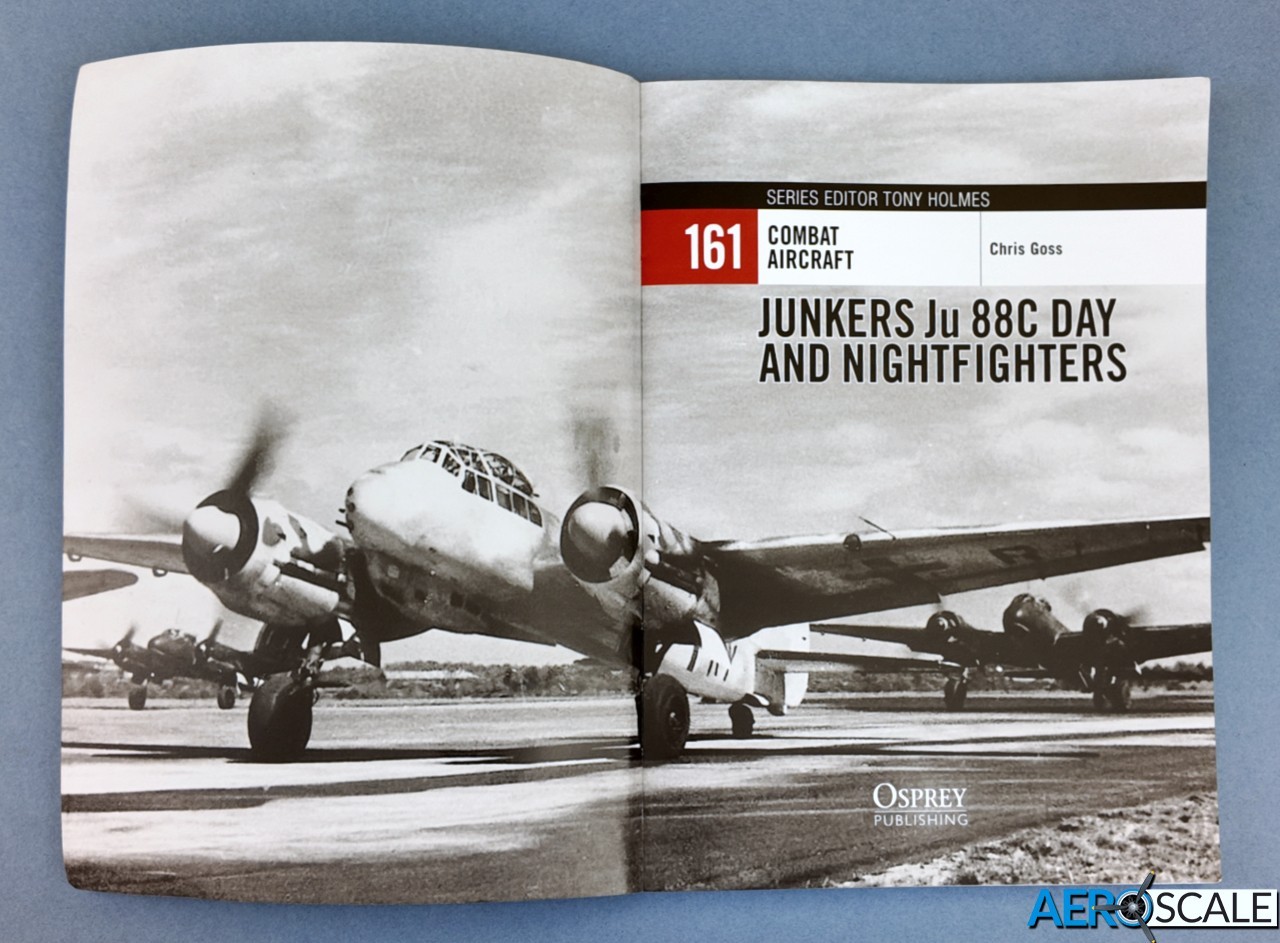
One of the latest titles in Osprey's Combat Aircraft series is devoted to the Junkers Ju 88C - the first heavy-fighter development from the existing bomber variants. The 96-page book is softbound and printed on high quality glossy stock, and is liberally illustrated with well-chosen and reproduced period photos, plus a spread of specially produced colour profiles.
The author, Chris Goss, is a retired RAF officer, and it shows in his knowledgeable outlook and appreciation of the difficulties and perils faced by the aircrew of both sides. His writing style is fluid and easy to read, always even-handed and making clear the personal impact of war on all those involved, whilst never falling into the trap of exaggeration or overdramatising events.
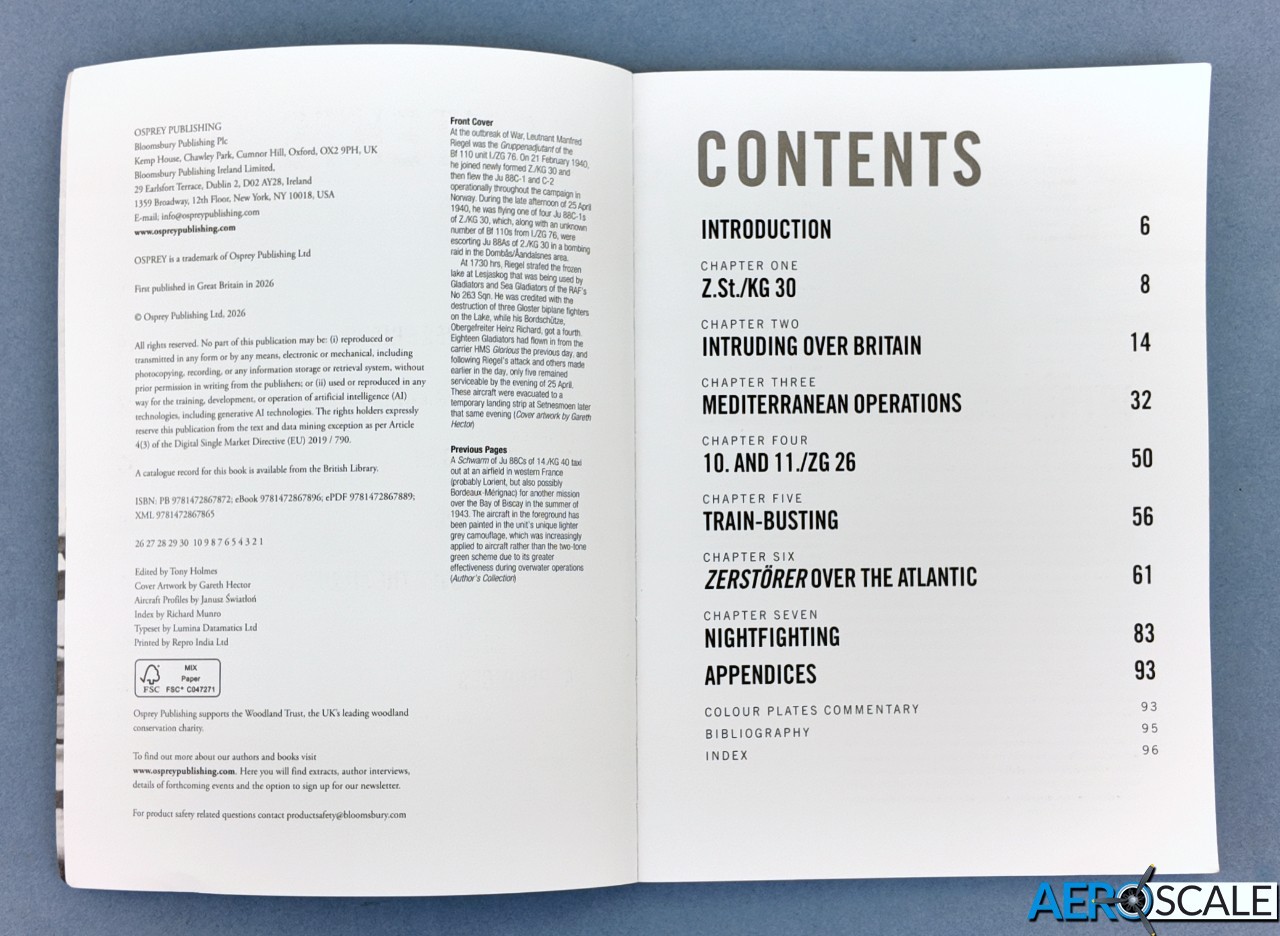
The book begins with a short overview of the development of the Ju 88C and a description of its key aspects, along with a list of the variants and the number bult, both conversions and main-production.
After that, the book is broken down into seven chapters, covering the use of the Ju 88C from the far north to the Western Desert, and from the Atlantic to the Eastern Front. The aircraft was pressed into service in a wide range of roles, from day and night fighter, through to intruder and ground-attack fighter, and the book provides an excellent reference in a convenient format.
Each chapter deals with an individual area of operations and covers it in quite some depth, considering the space allowed. The story follows the formation of units and their subsequent history. The text is meticulously researched, cross-referencing RAF and Luftwaffe records and making extensive use of personal diaries that bring events to life vividly, and what could otherwise have been a dry list of dates becomes a flowing saga that draws you in as you follow the lives, and fates, of the participants. What becomes all too clear is relatively small number of Luftwaffe personnel flying operations with the Ju 88C units at any given point, meaning every loss had a major impact on their colleagues.
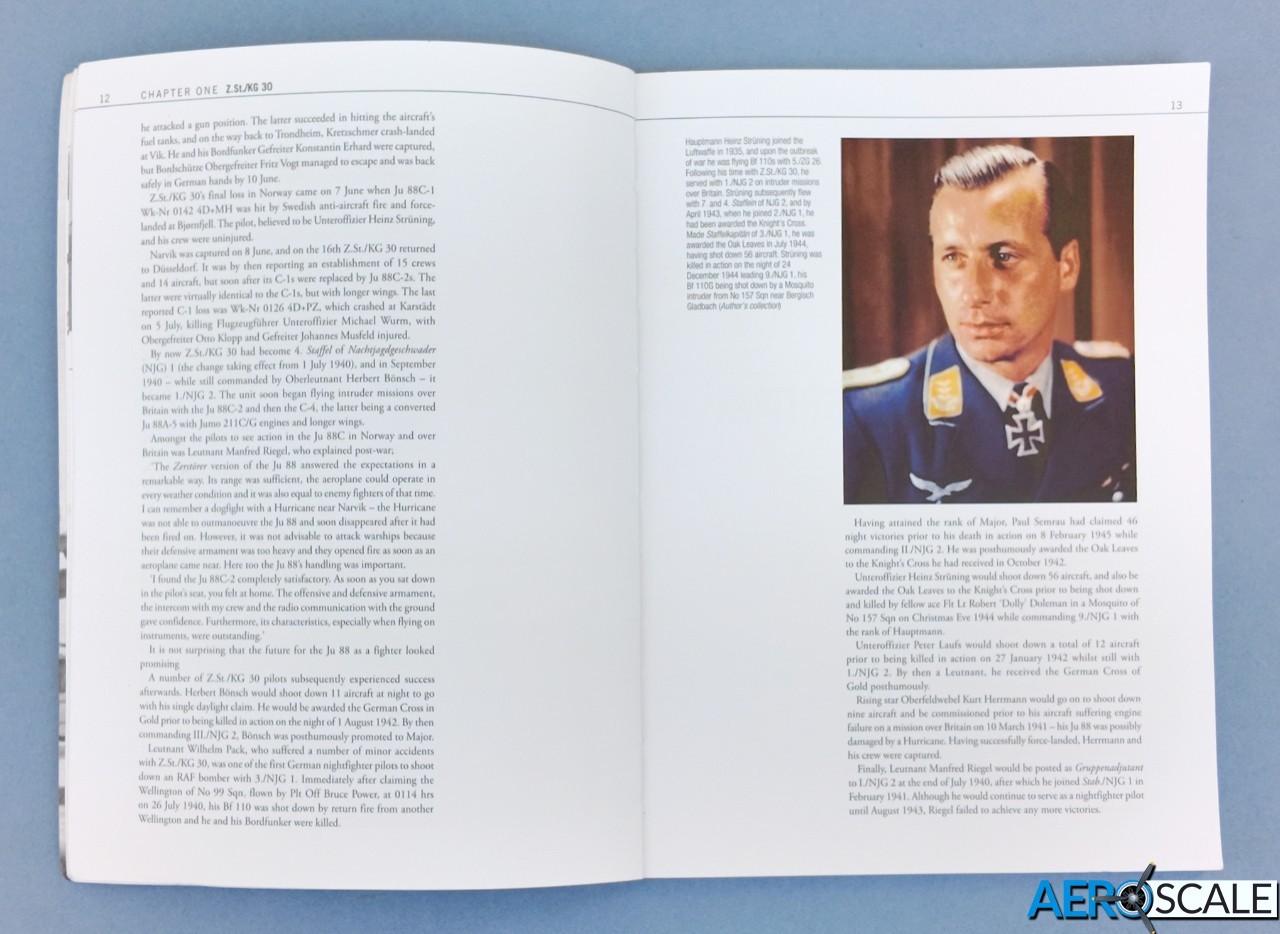
Two chapters really stood out for me. Firstly, the description of the intruder operations over Britain that had an effect far greater than the limited number of aircraft involved would suggest. As the commander of the new 1. Nachtjagddivision stated, "When I want to kill wasps, I smoke out their nest. I don't swat insects in the air one at a time, I go to the nest when they are in!". It's always been a mystery to me why the Luftwaffe ceased these attacks, and the author gives the answer. I won't reveal it - if you want to know, buy the book - but it is astonishing and, perhaps, typical of German wartime intelligence in failing to appreciate the genuine impact that intruder missions were having on Bomber Command, as crews faced the prospect of attacks after they'd returned to notional safety at the end of the raid. If only they'd maintained the intruder force along with building up their domestic night fighter defences, the Luftwaffe would have been in the enviable position of "having their cake and eating it".
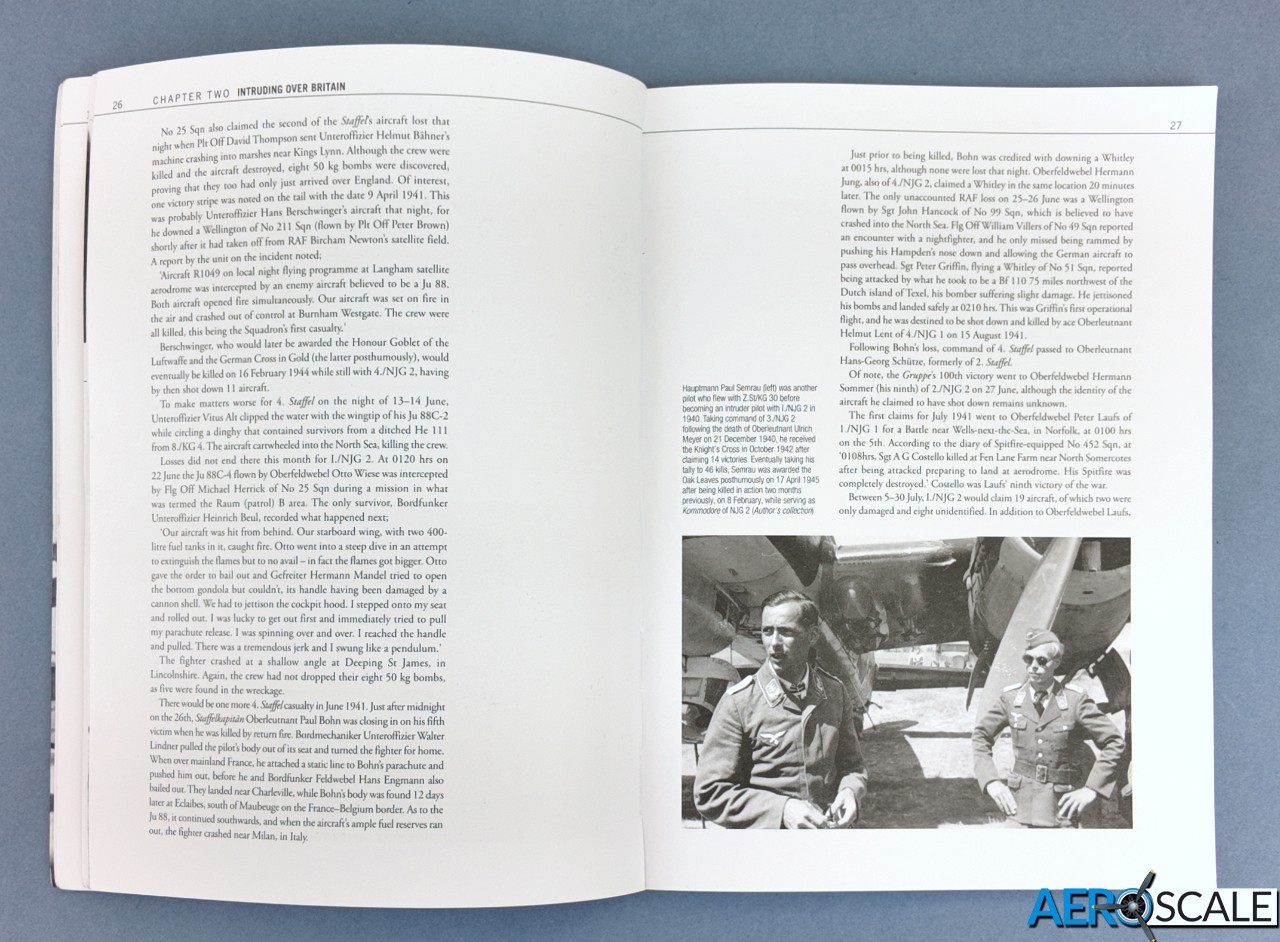
The other chapter that I also found particularly interesting is the account of maritime long-range fighter operations over the Atlantic. I was largely unaware of the importance and scale of these flights as the Ju 88s clashed with Beaufighters and, later, Mosquitos in one of the most hostile environments of the war. The chapter really underlines the danger faced by the crews on both sides in the fighting over the Bay of Biscay where, in almost every case, to have to bail out or ditch was basically a death sentence because the chances of rescue were so low. This is illustrated by the case of the first Luftwaffe crew to be picked up and returned to base, where they were treated as returning heroes despite being shot down. Interestingly, it was also through the rare rescue of a ditched Luftwaffe crew that the RAF was finally able to piece together the composition and location of the Ju 88 units that they faced over the Atlantic - something that had hitherto been a mystery to them.
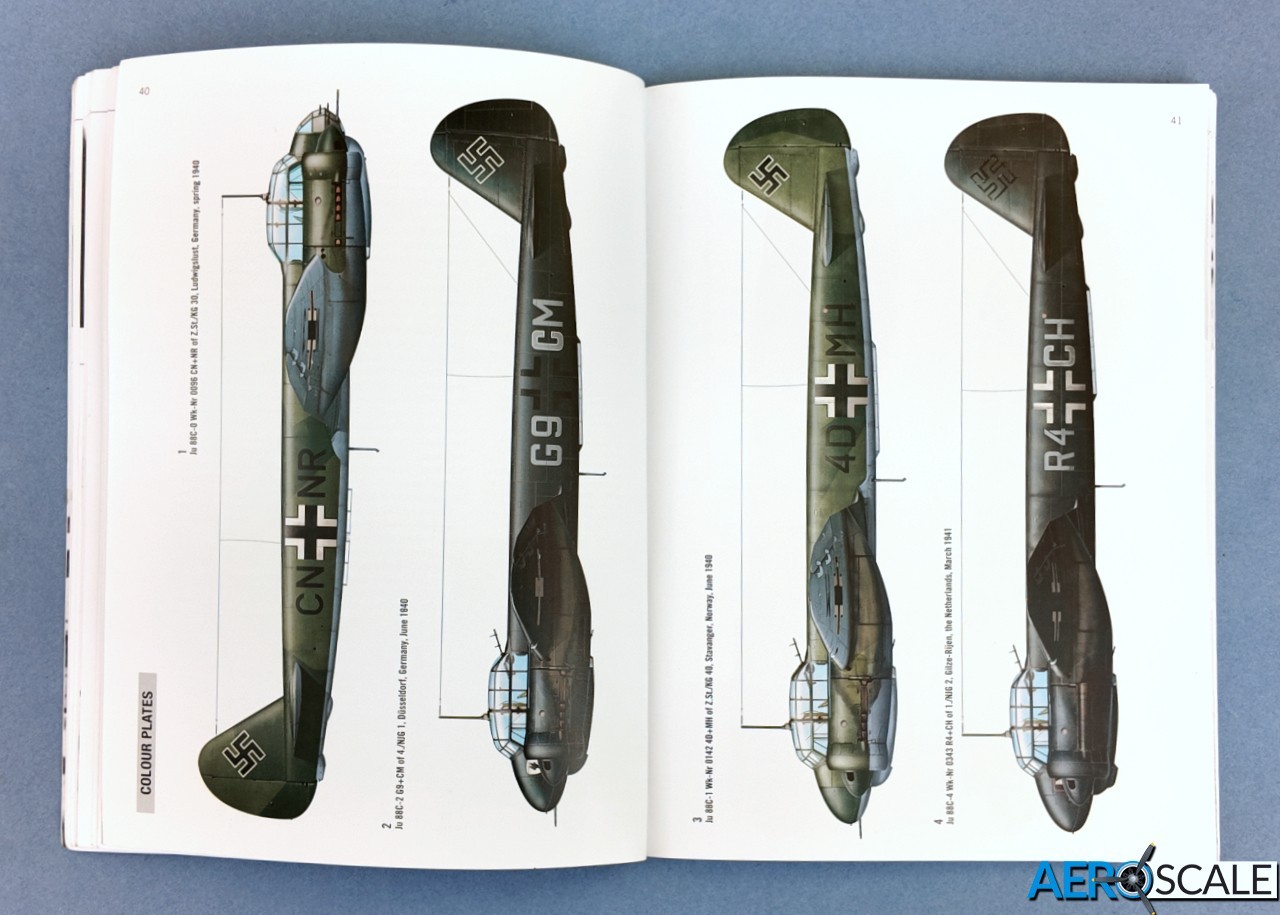
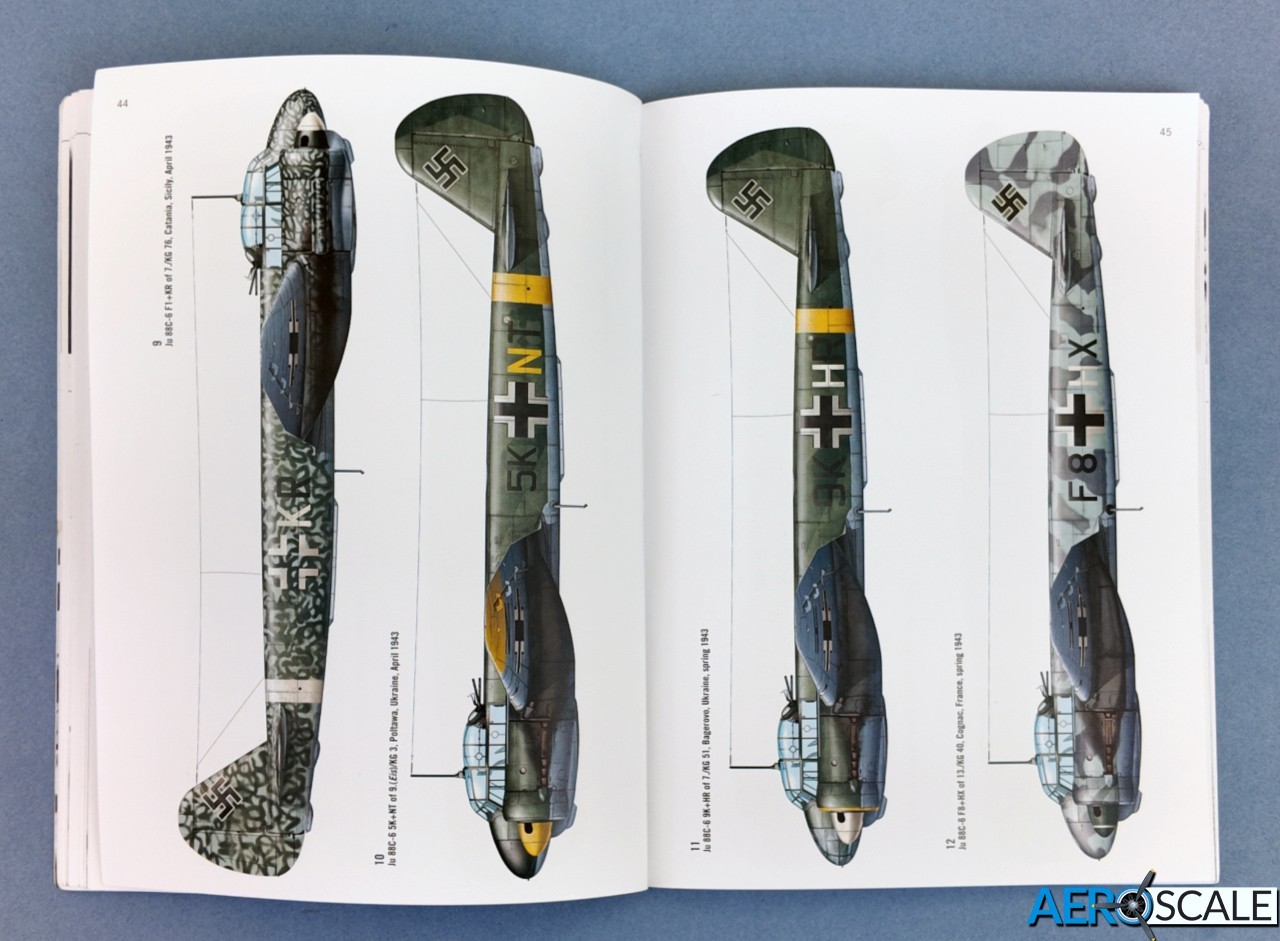
The centre ten pages are devoted to some excellent colour profiles by Janusz Światłoń. The twenty subjects chosen offer a nice variety of colour schemes, from standard Luftwaffe camouflage through to unit-applied "mirror wave" disruptive patterns. I found the schemes adopted for operations over the Bay of Biscay particularly eye-catching as they were new to me but, whatever your particular area of interest, there's plenty here to inspire some modelling projects.
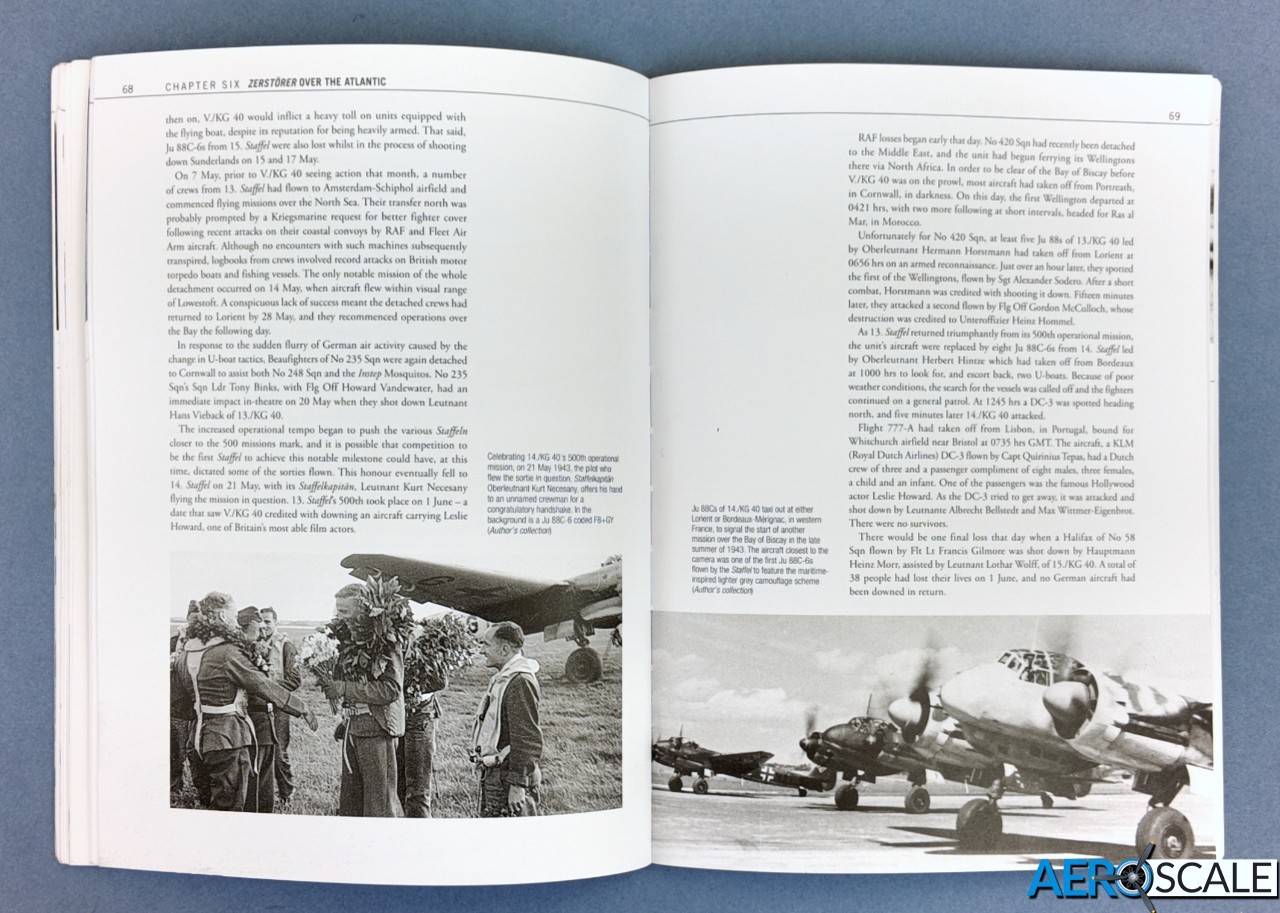
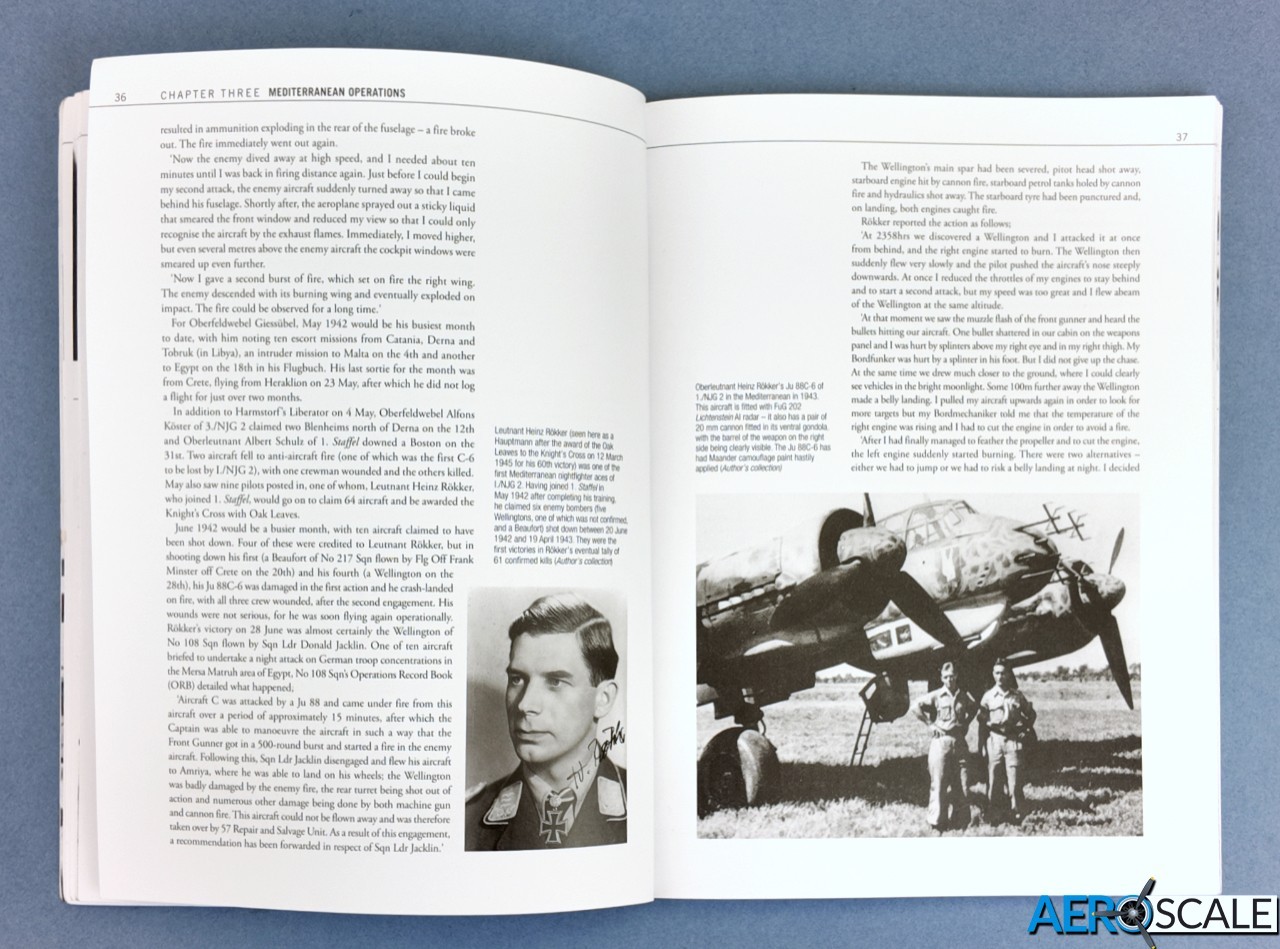
The photo coverage is excellent, with each chapter illustrated with numerous shots - most of which I've never seen before. The original quality varies as many are unofficial snap-shots, but they have been carefully reproduced to bring out the maximum clarity and, along with painting a vivid picture of day to day unit life - including air to air formation and combat photos, there's plenty of detail to be picked out for modelling projects.
Conclusion
I've thoroughly enjoyed reading Chris Goss's account of Ju 88C operations. It's packed with information in a very accessible style and never loses sight of the tragic human cost to both sides in clashes that tend to be somewhat overlooked in many accounts of the war.
Junkers Ju 88C Day And Nightfighters (ISBN: 978-1-4728-6787-2) is available now from Osprey Publishing - Price: £16.99
Please remember, when contacting retailers or manufacturers, to mention that you saw their products highlighted here - on AEROSCALE