












Background
The extraordinary pace of aircraft development following WWII is evidenced by a snapshot of the rapid rise in the world air speed record. In 1948, the F-86 Sabre held the title at 670 mph, while the F-100 Super Sabre took it first up to 755 mph in 1953, and then to 822 mph just two years later. But this record was shattered in March 1956 when Peter Twiss flew the Fairey Delta 2 at the then incredible speed of 1,132 mph - a leap of over 300 mph at a stroke.
Although it looked like a futuristic fighter when it first flew in 1954, the Delta 2 was designed purely as a research aircraft. Two examples were built to explore the supersonic behaviour of a delta wing, and the aircraft introduced a novel drooping nose and cockpit to improve view during take-off and landing. A drooping nose was also famously fitted to Corcorde, and the first of the Delta 2's did contribute to the development of the airliner when it was later modified extensively to test Concorde's planned wing design.
The Delta 2 showed obvious potential as a fighter and Fairey submitted proposals for a family of military developments. By early 1957, Fairey seemed well placed to receive an order for a prototype programme, but this all came to nothing with the publication that year of the infamous Sandys Report that effectively terminated all British fighter aircraft development in favour of missiles.
Fairey made a last attempt to produce a fighter based on the Delta 2 when they joined forces with Dassault and competed unsuccessfully against the Lockheed F-104 in the programme to rearm the Luftwaffe. Much of the Delta 2's testing was carried out in France, closely monitored by Dassault's design team, and it's no surprise that there is much speculation over the extent to which Fairey's Delta 2 influenced the hugely successful Mirage III.
Both Delta 2s survive and are on display, s/n WG774 at the FAA Museum at Yeovilton and s/n WG777 at the RAF Museum at Cosford.
The Kit
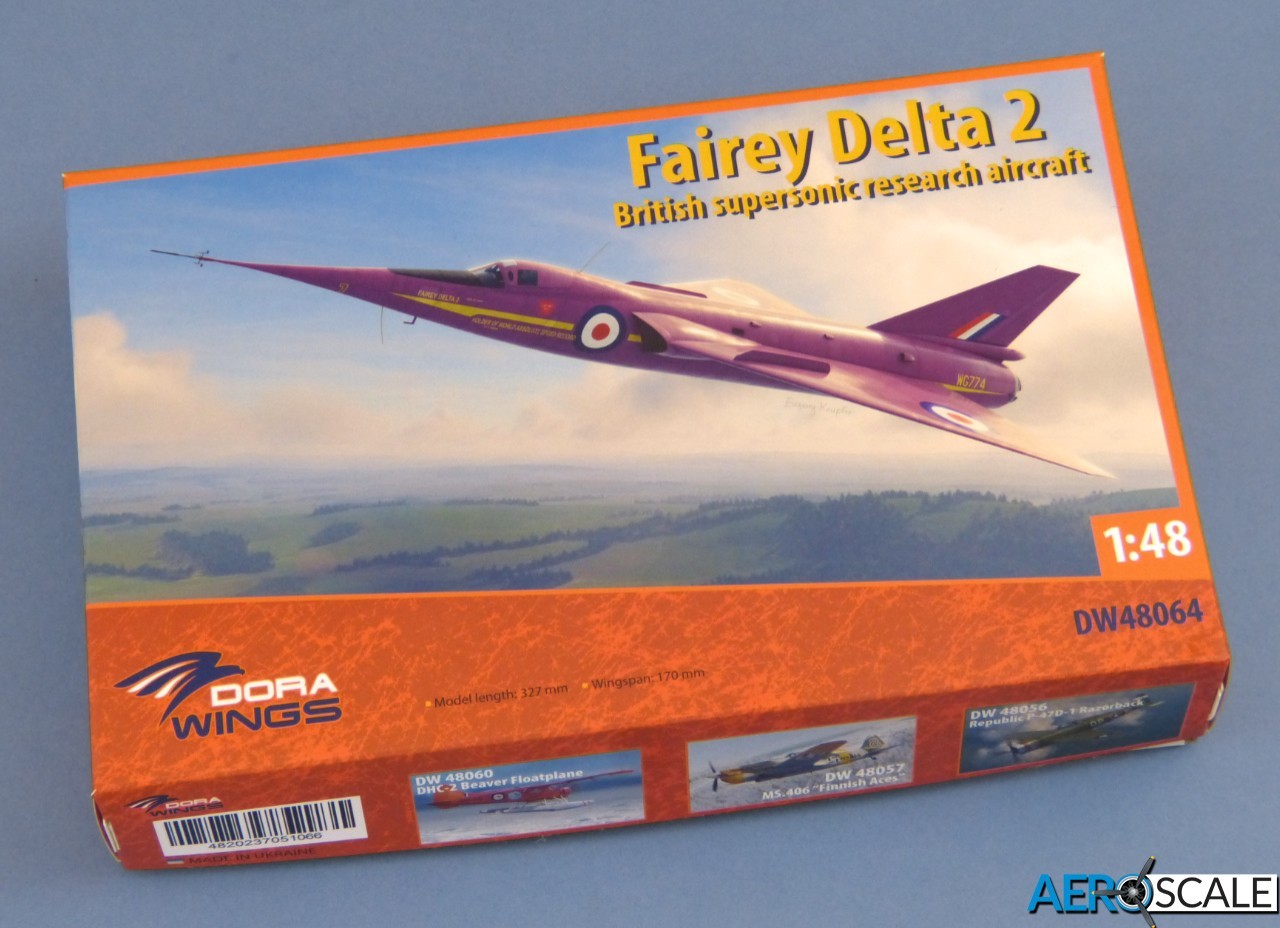
Dora Wings' Fairey Delta 2 arrives in a compact and sturdy conventional box, with everything packed into a single bag, with the clear parts, decals and other accessories in their own re-sealable bags within it for protection.
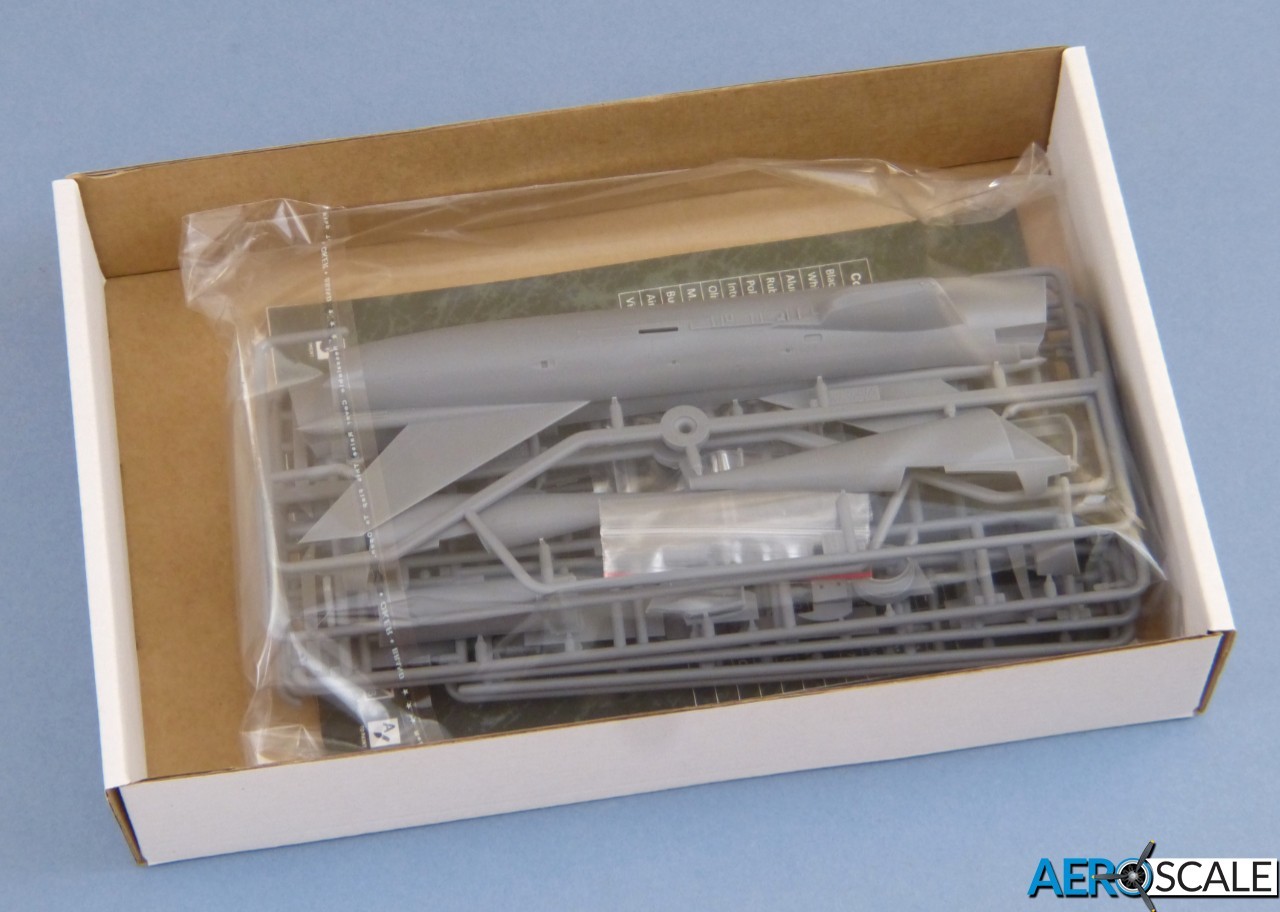
The kit comprises:
86 x grey styrene parts
2 x clear styrene parts
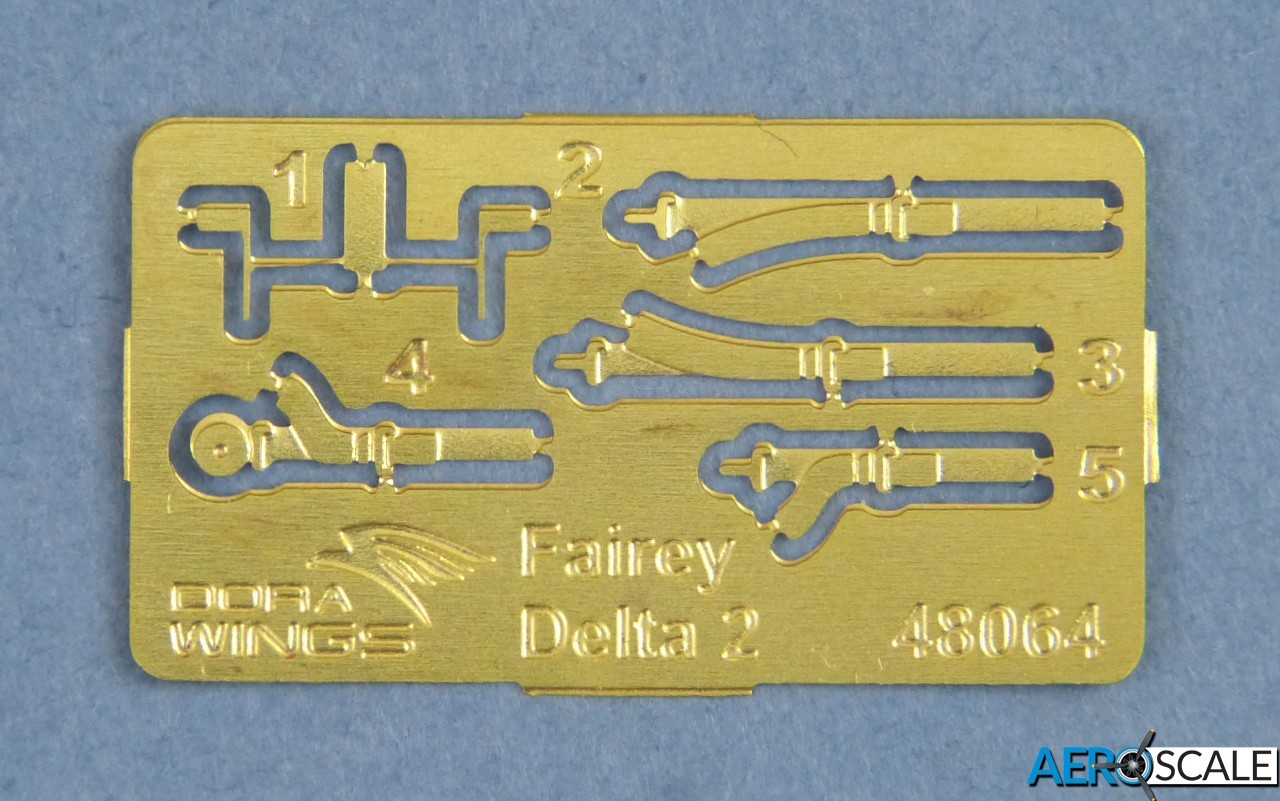
5 x etched brass parts
A sheet of die-cut vinyl painting masks
Decals for 4 x colour schemes
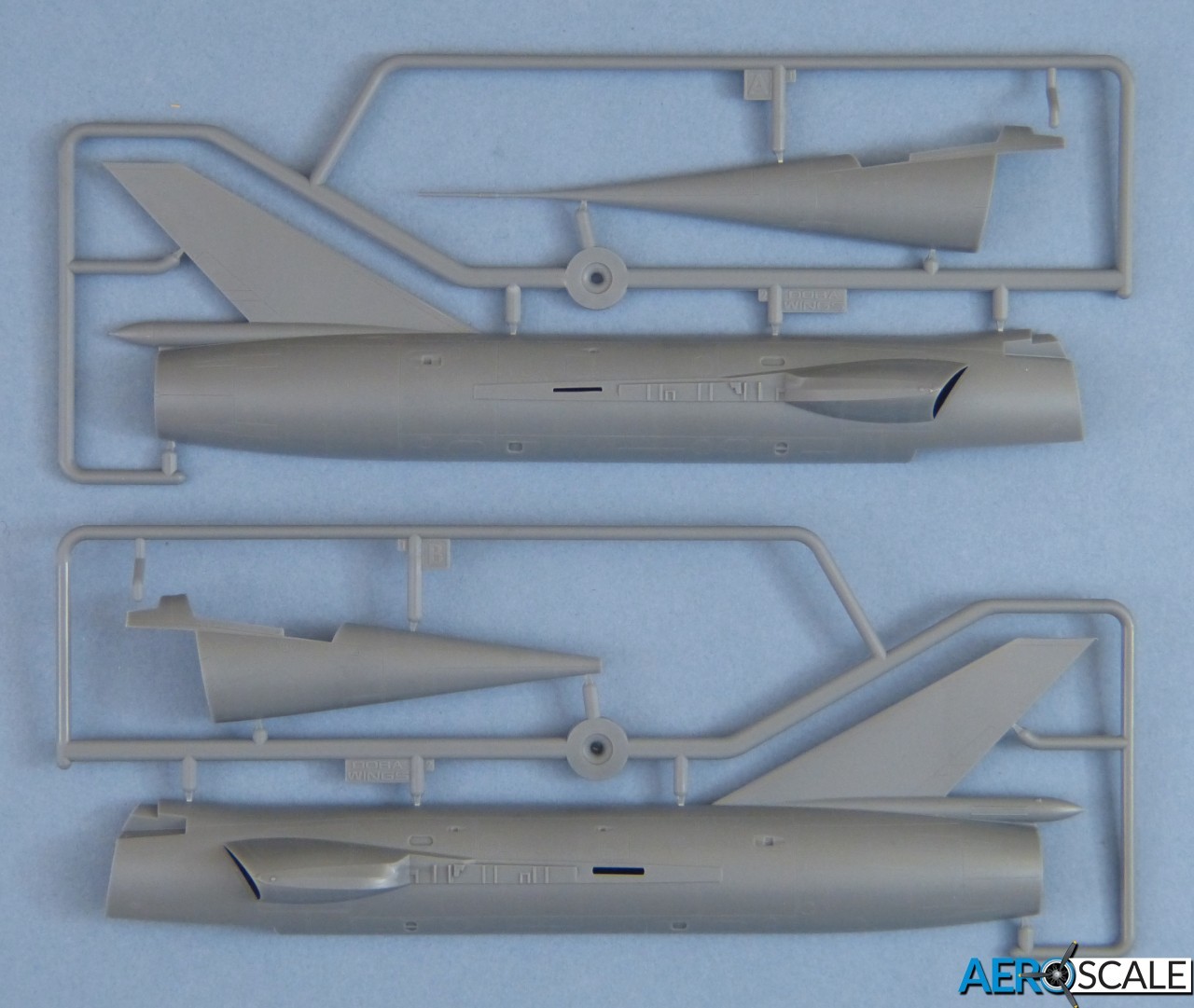
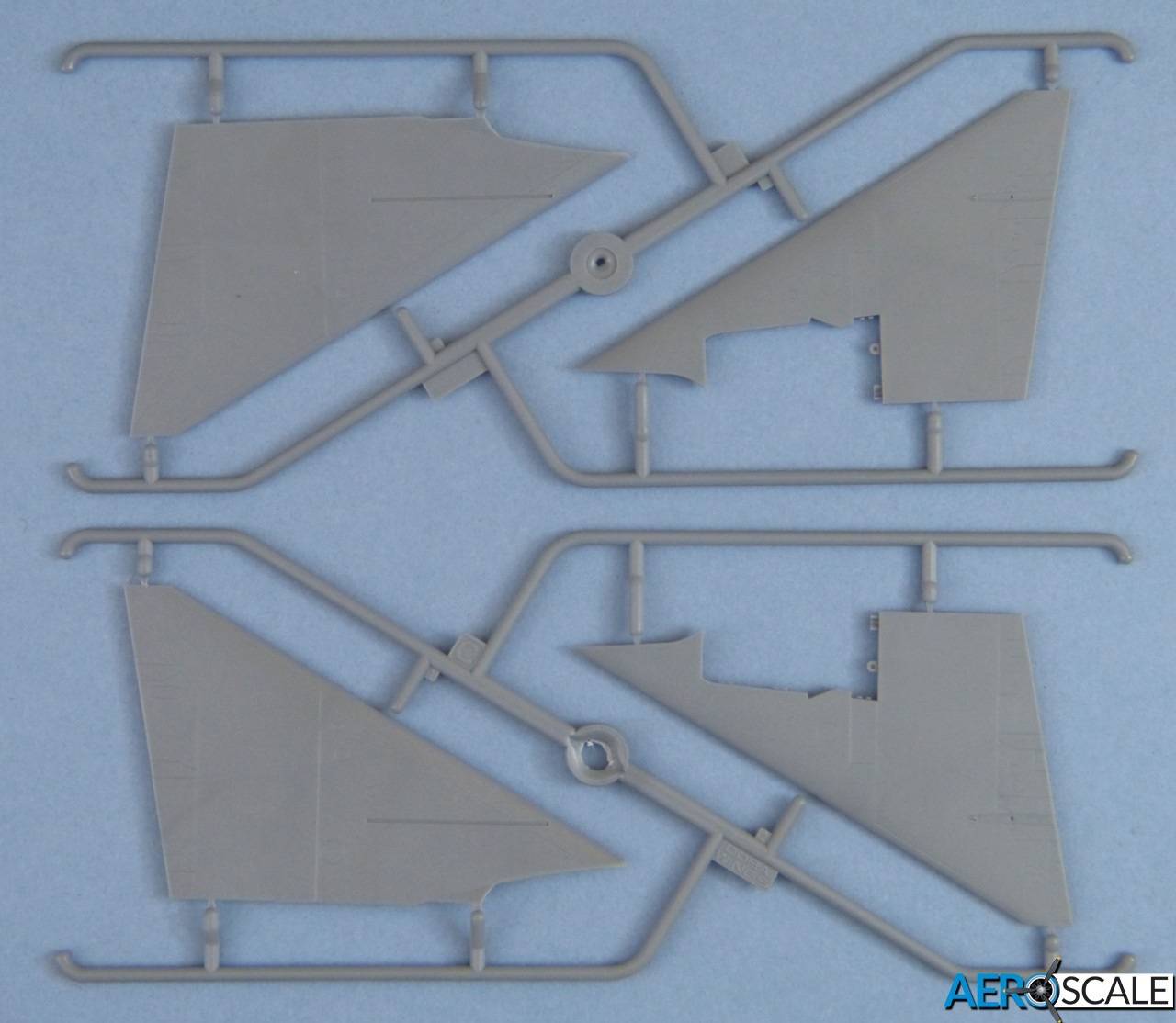
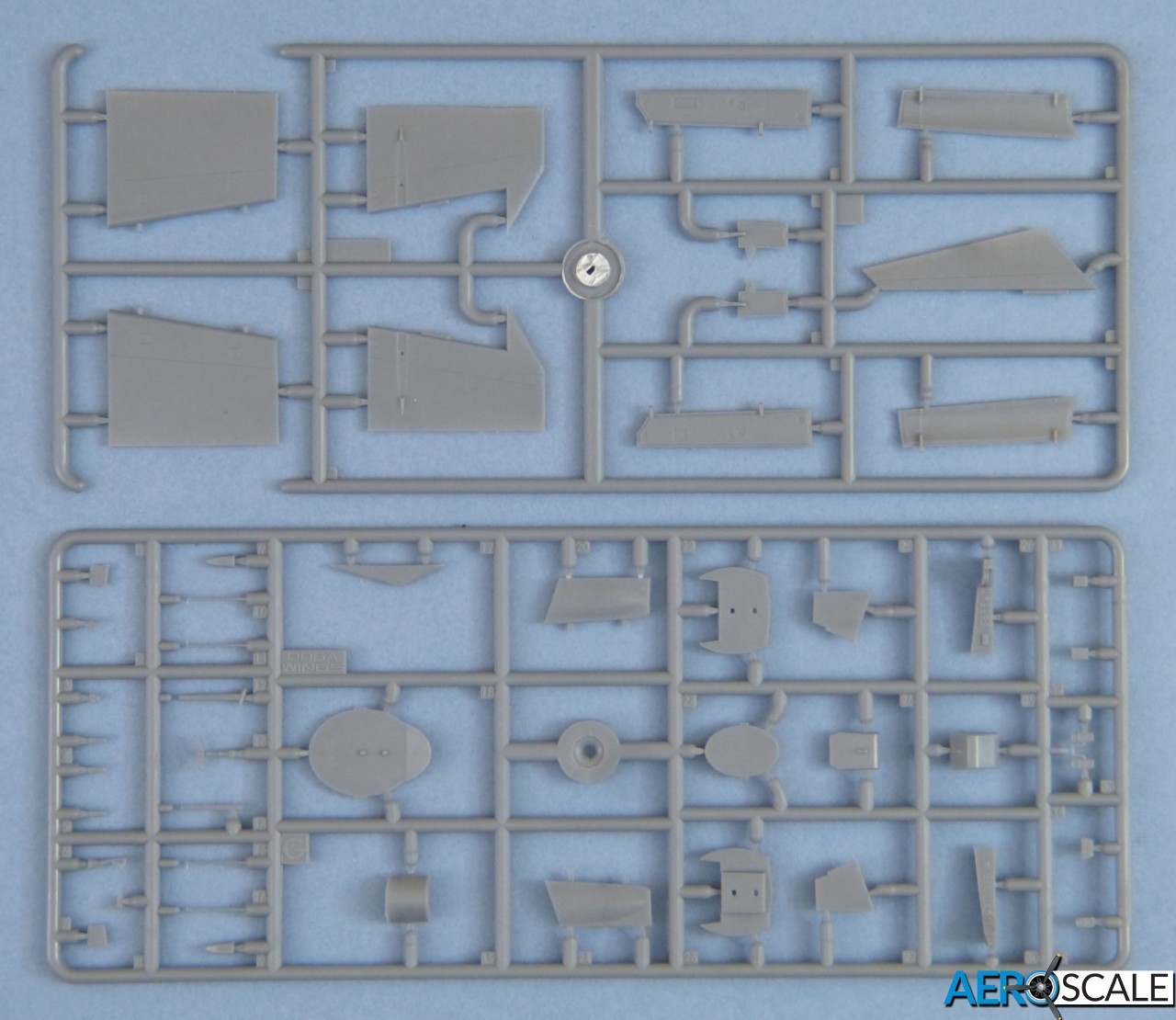
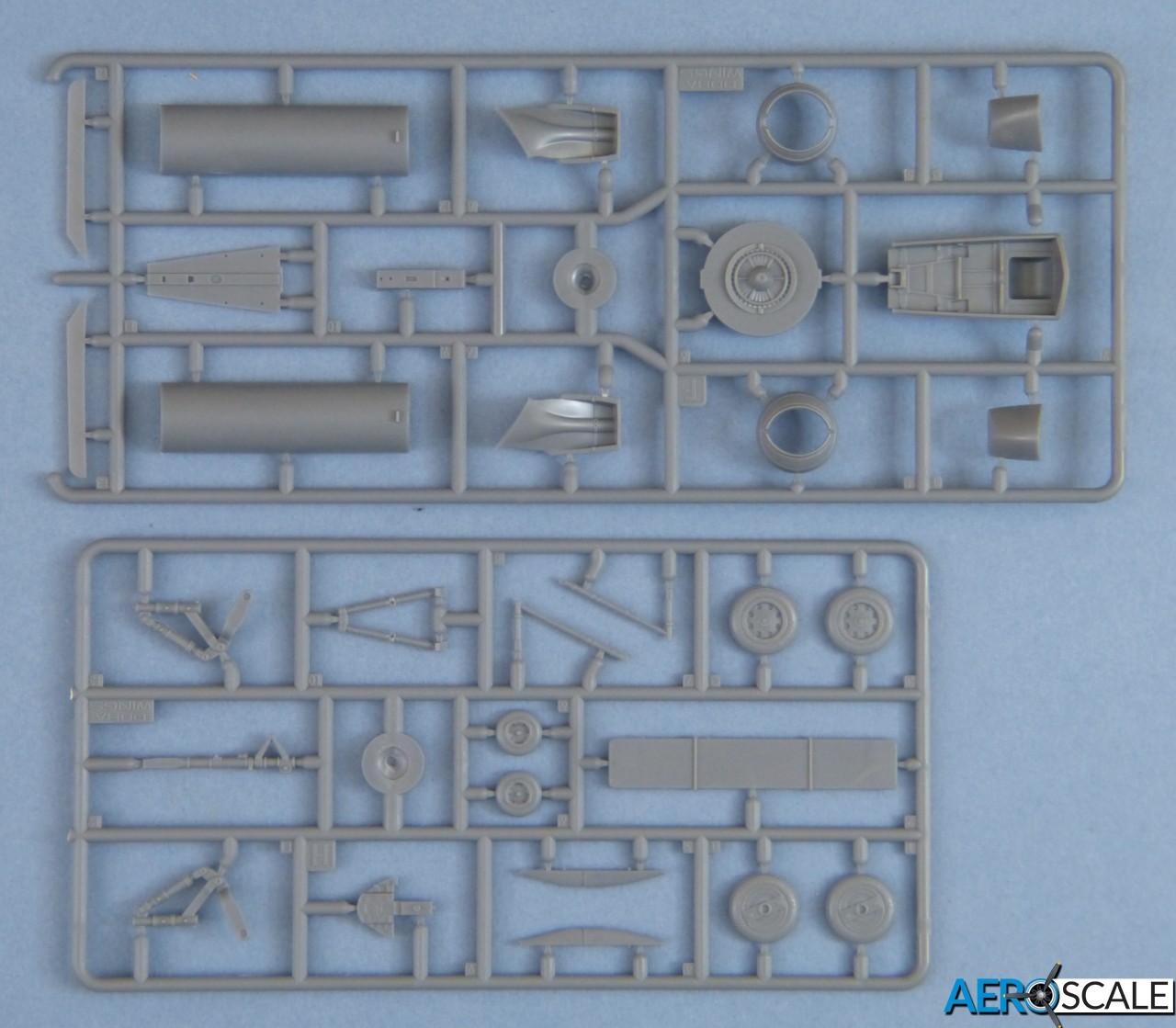
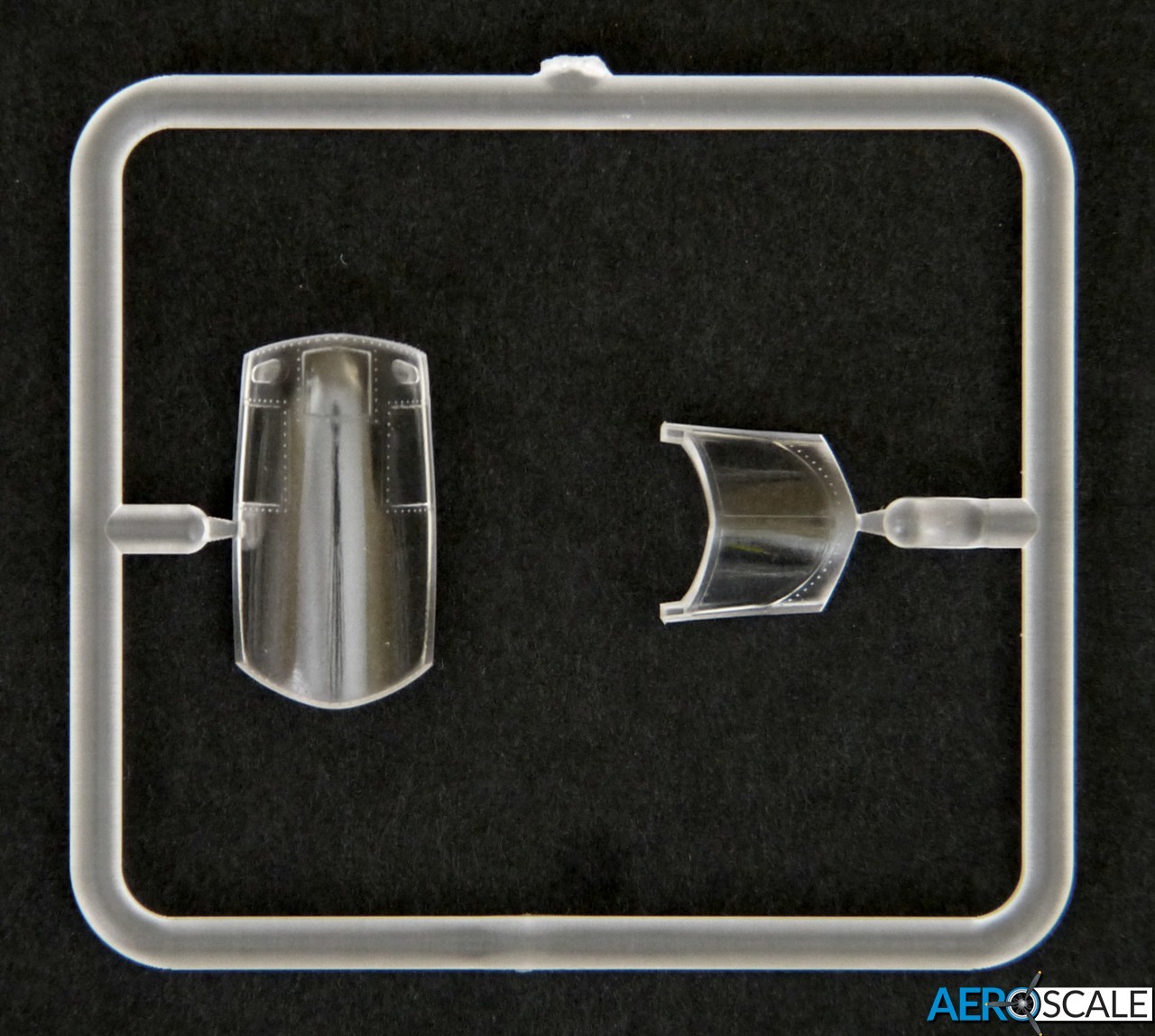
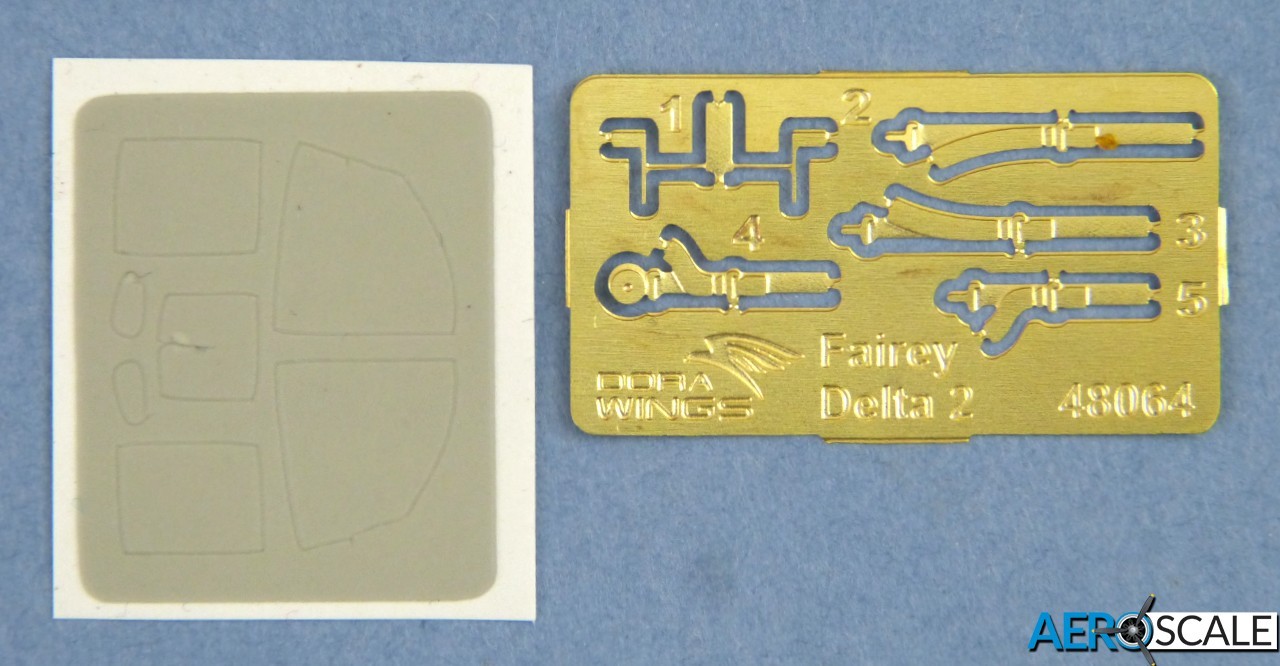
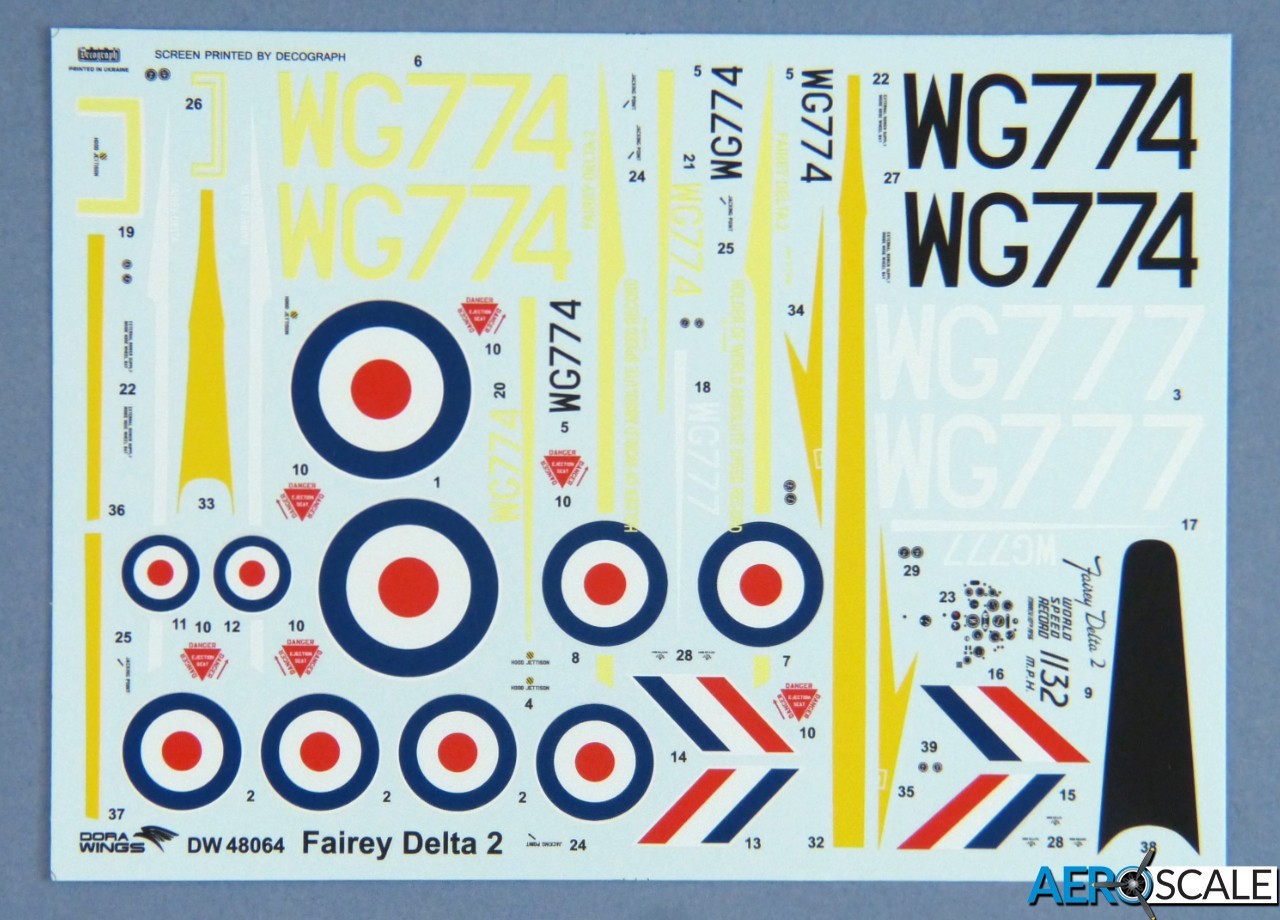
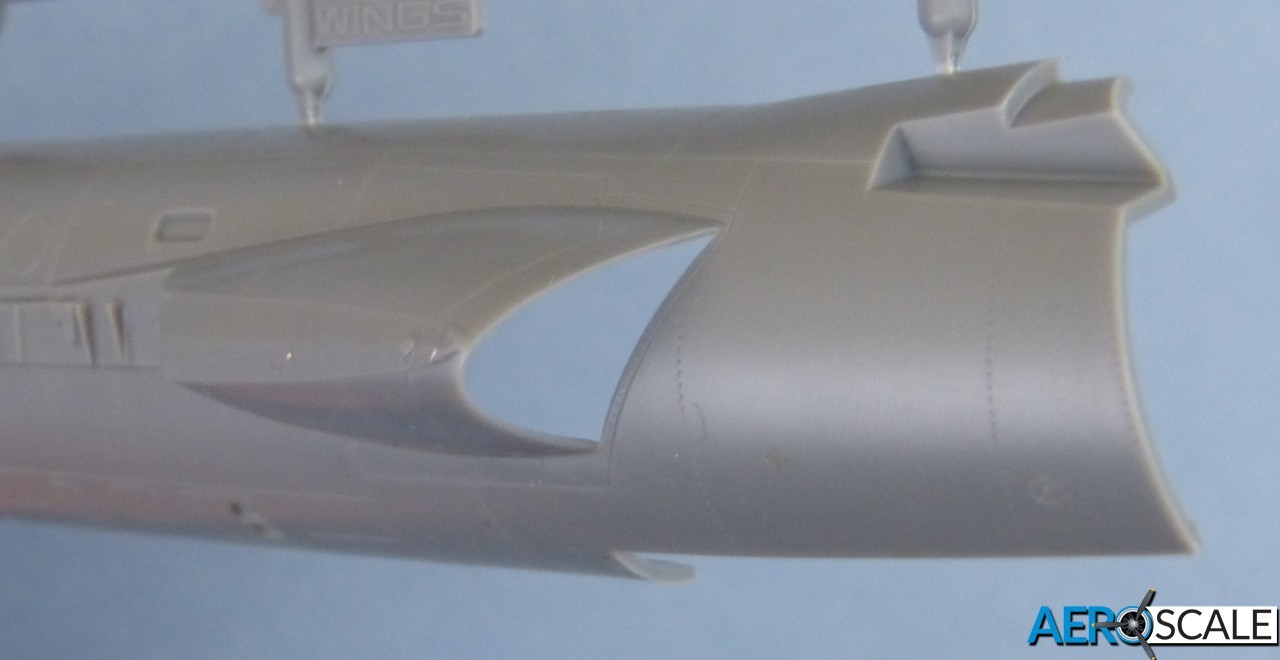
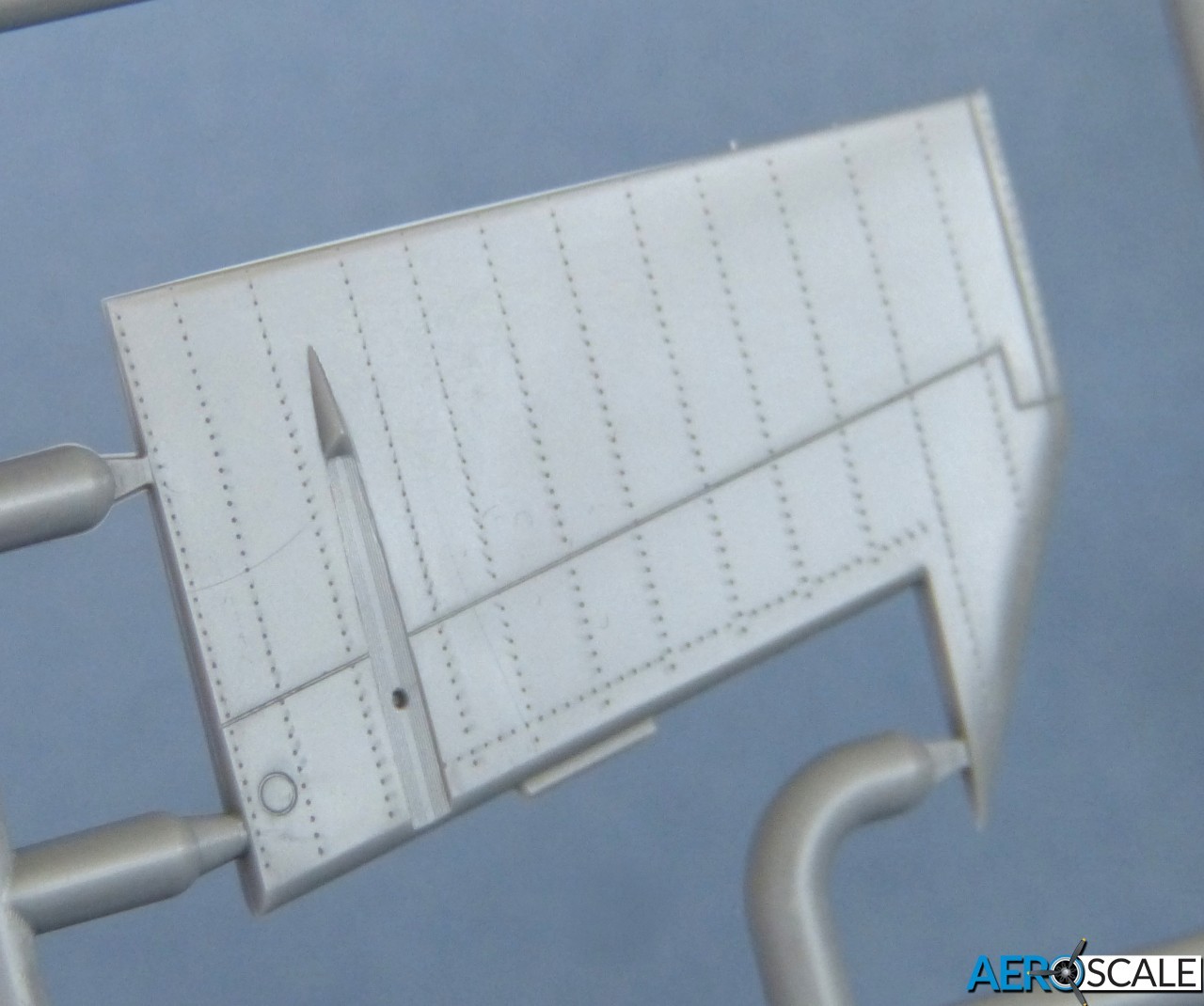
The moulding is very clean, with no signs of flash or sink marks in the review sample. As usual with Dora Wings kits, you don't have to worry about ejector pin marks, because there aren't any - I wish every manufacturer could manage this. Details are nice and crisp, and the exterior surfaces show a mix of delicate engraved panel lines and subtle embossed rivets and fasteners.
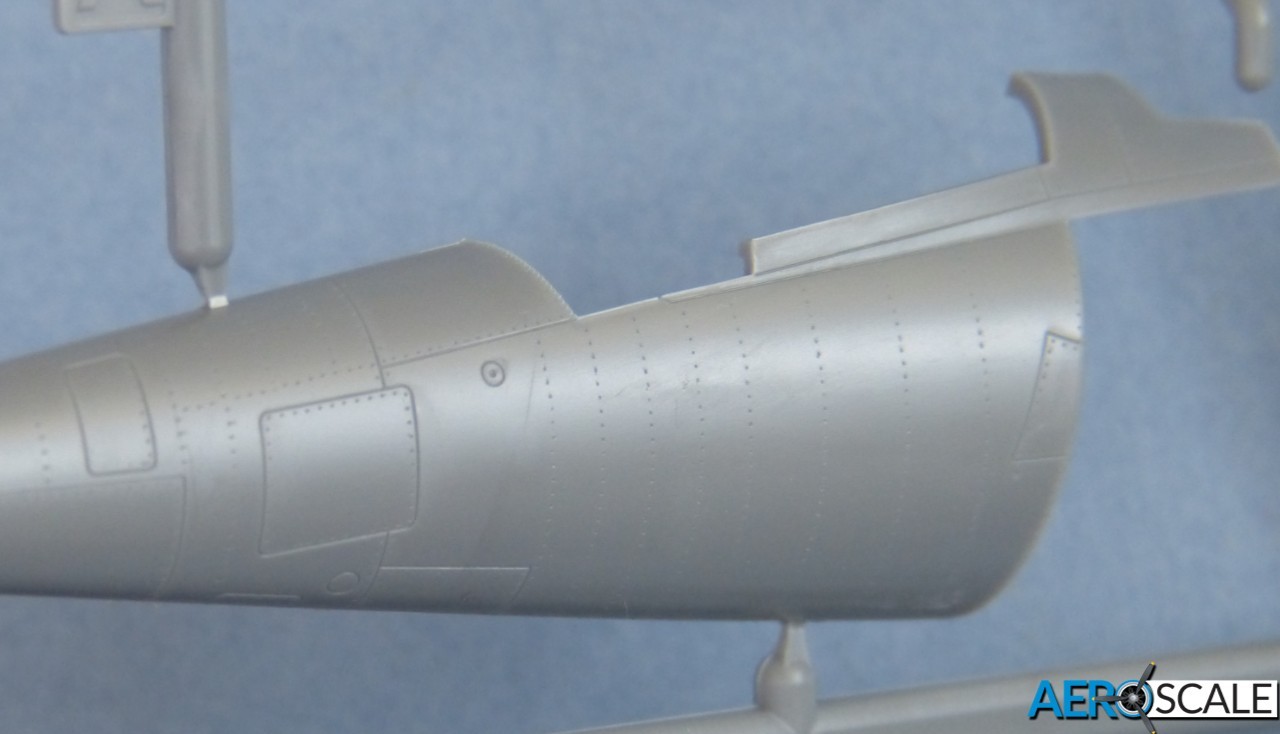
Test Fit
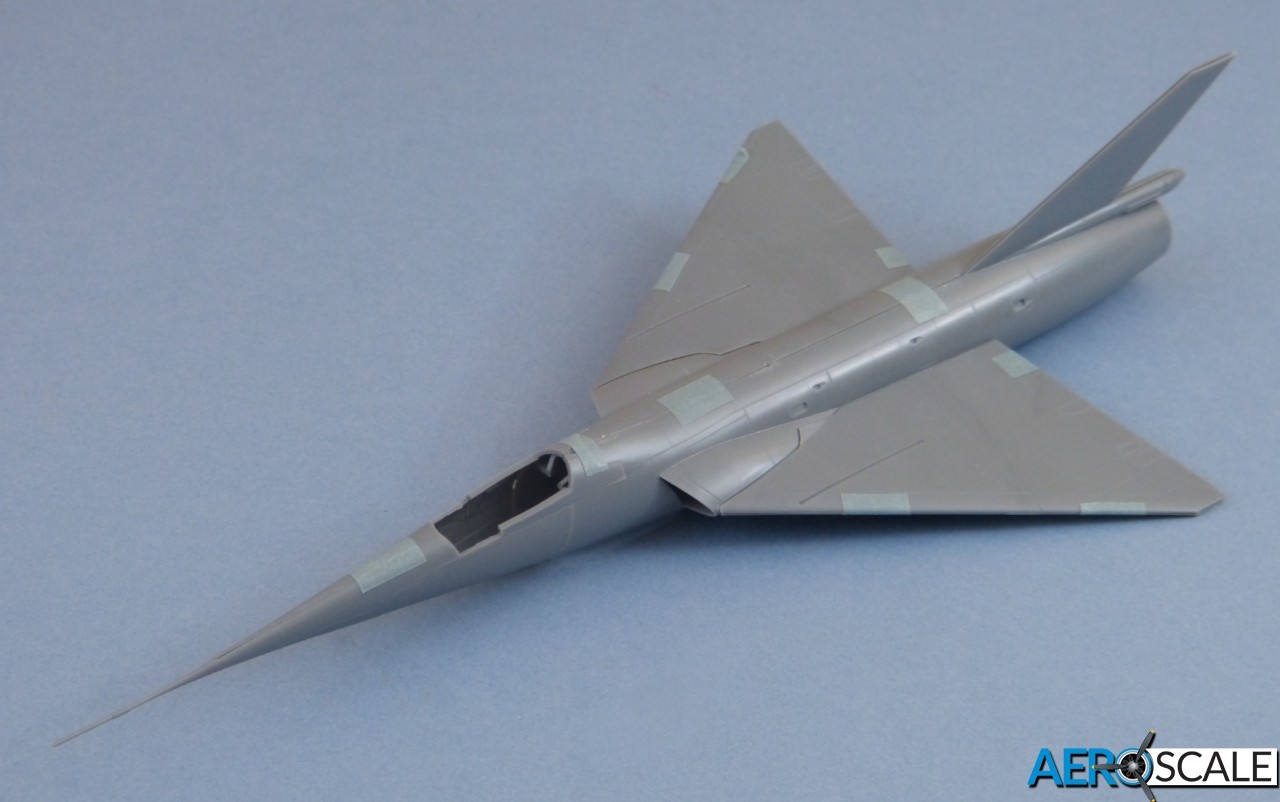
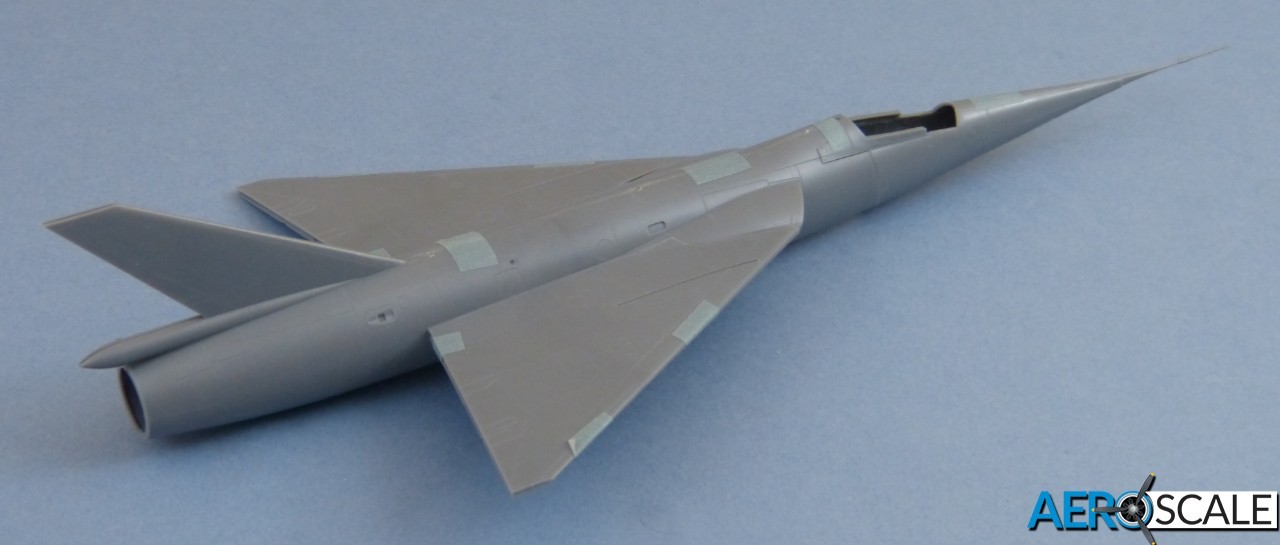
I did a dry assembly of the main airframe parts and it's very encouraging. Although there are only a few tiny locating pins, everything lines up precisely - although I'll probably add a few plastic card tabs along the inside of the fuselage seam to avoid it flexing.
The entire nose section is separate and can be built either raised for normal flight or drooped for take-off and landing. The fit is excellent and it's tempting to see if it's possible to leave it loose so the model can be displayed in both modes.
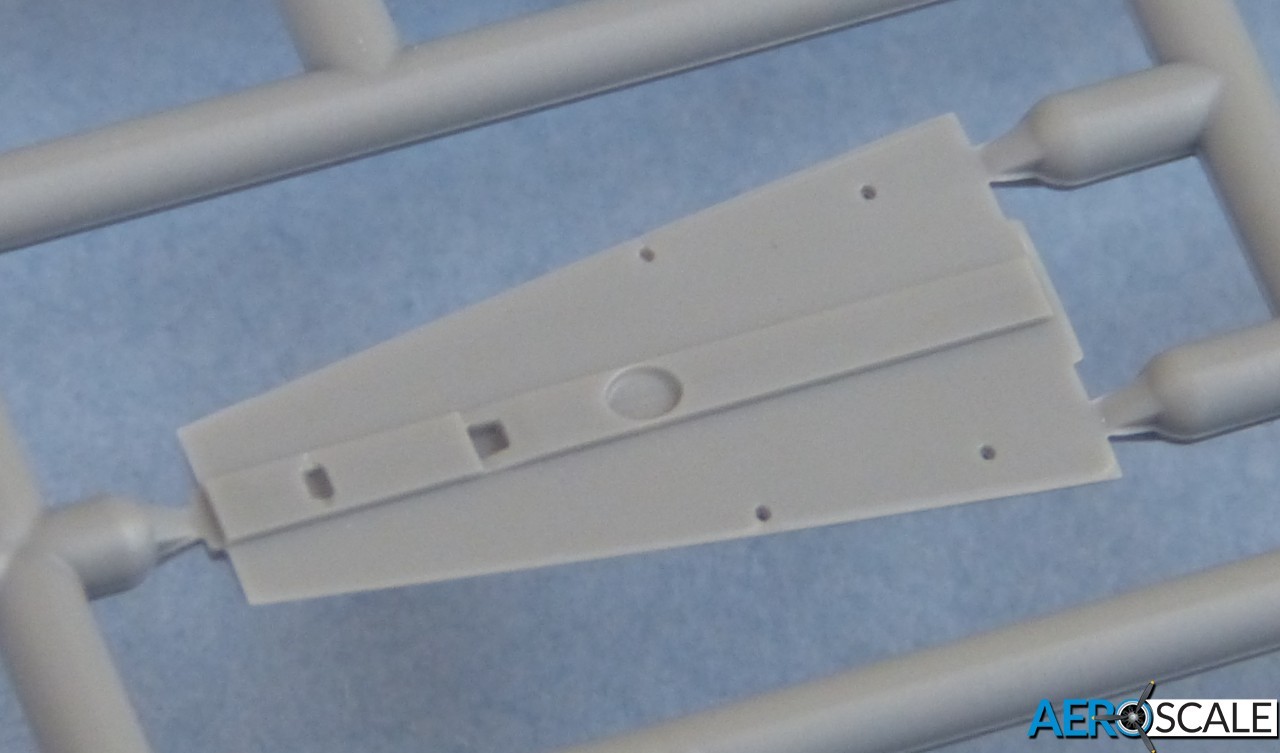
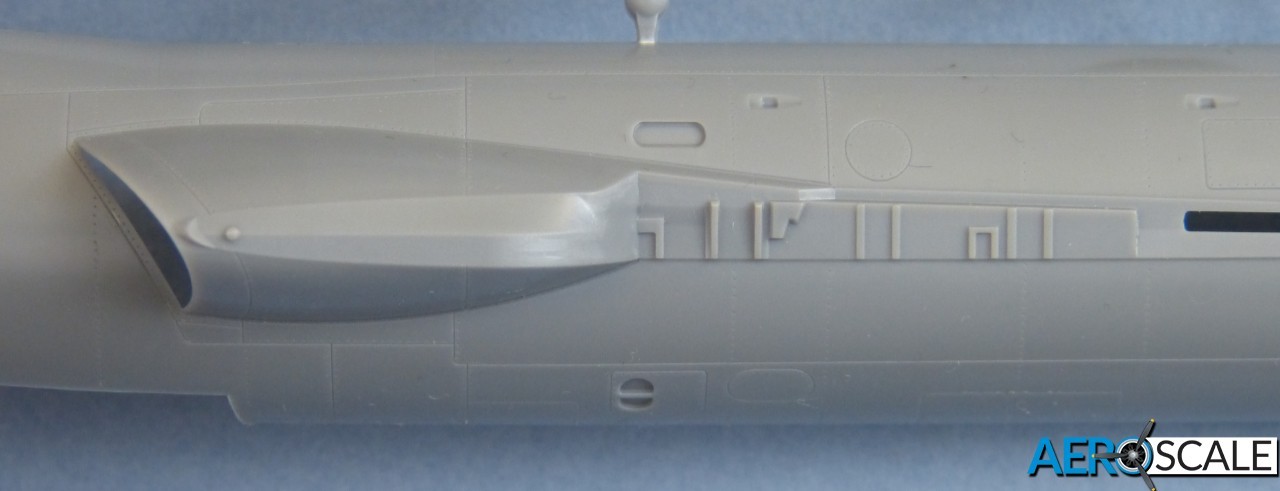
The wings are thin and butt-join to the fuselage, which could have been a problem without the nifty spar that supports them. The contours around the jet intakes at the wing roots are complex, but the fit is basically perfect and you should have no need of filler if you're careful.
Based on this test fit, Dora Wings' Delta 2 promises to be an enjoyable and straightforward build.
A Few Details
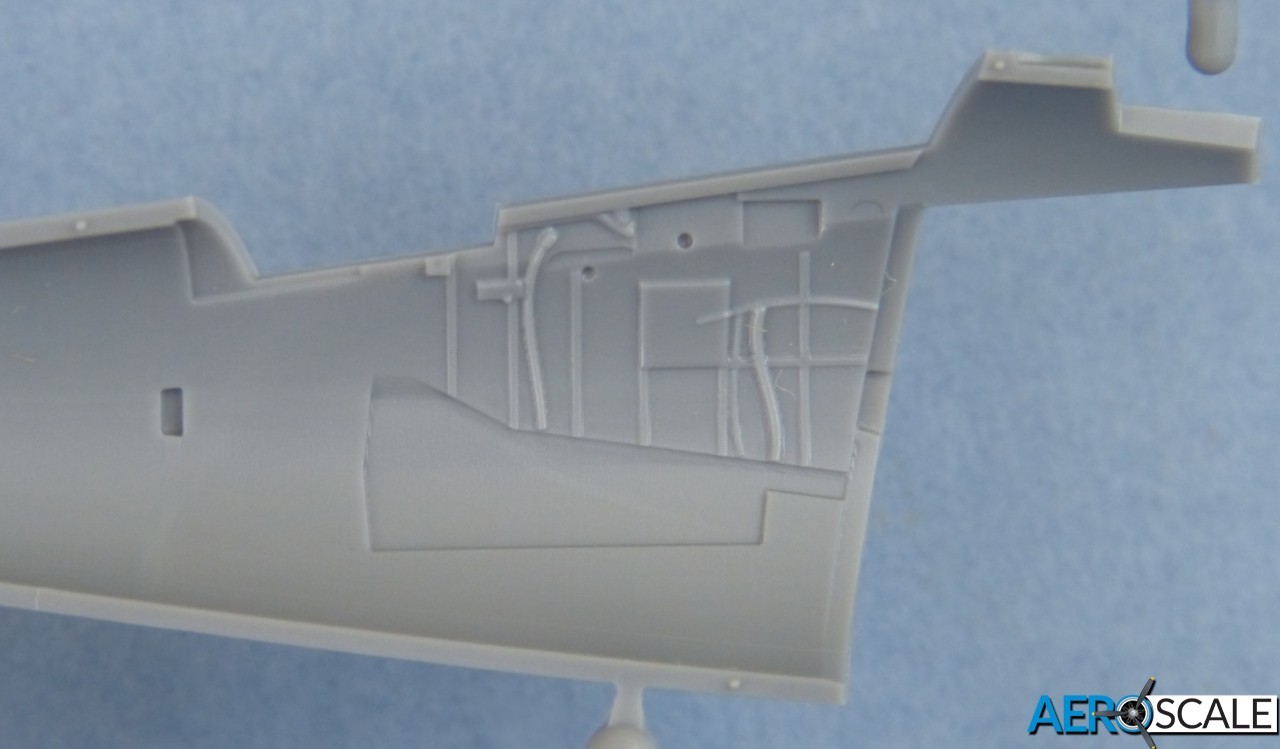
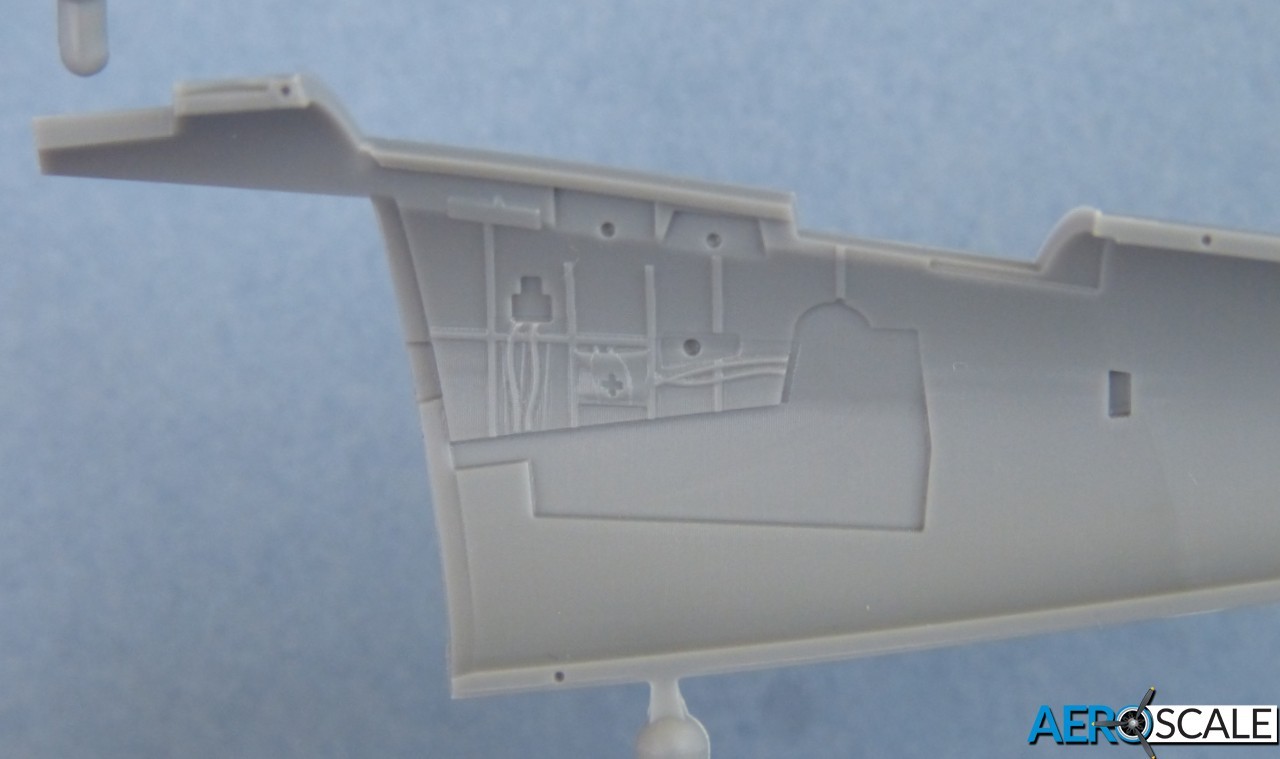
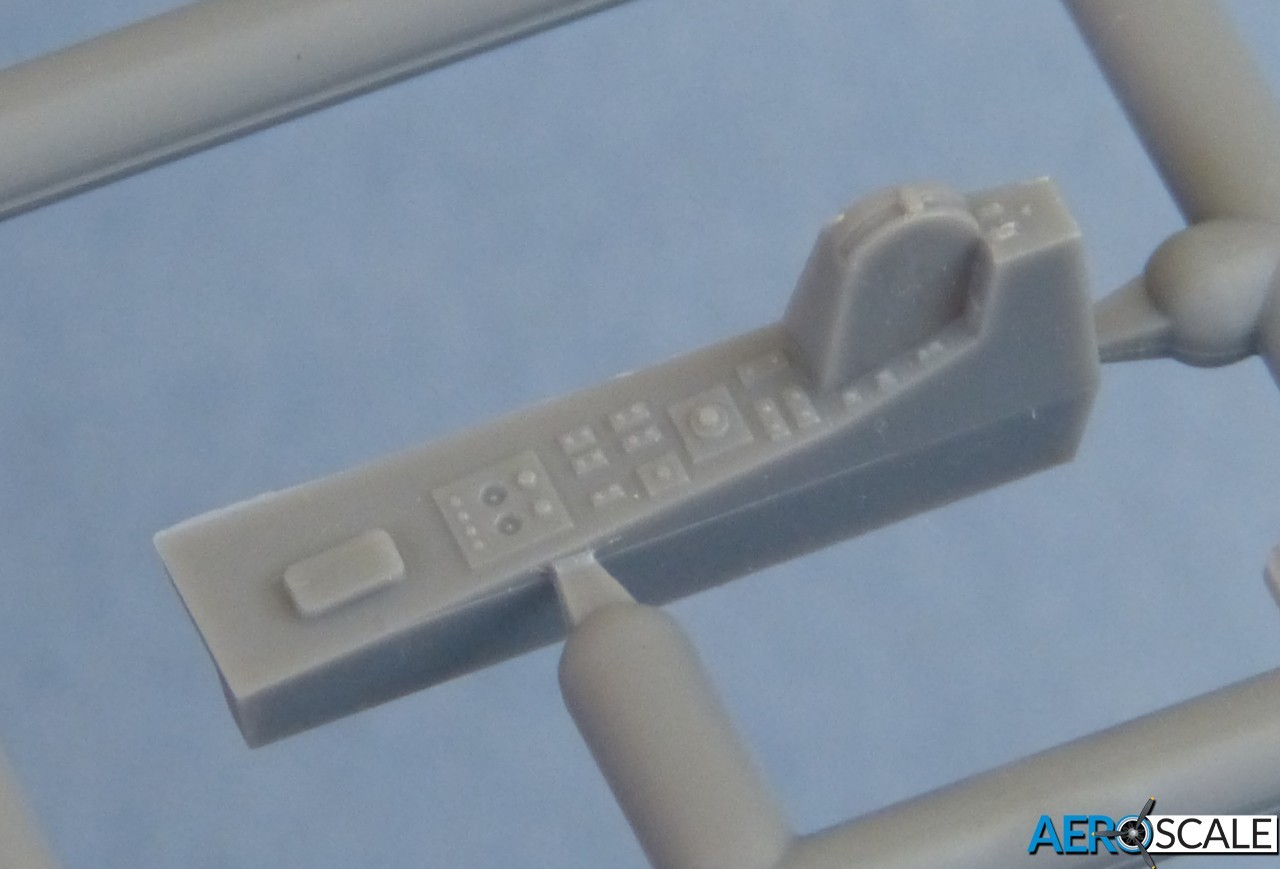
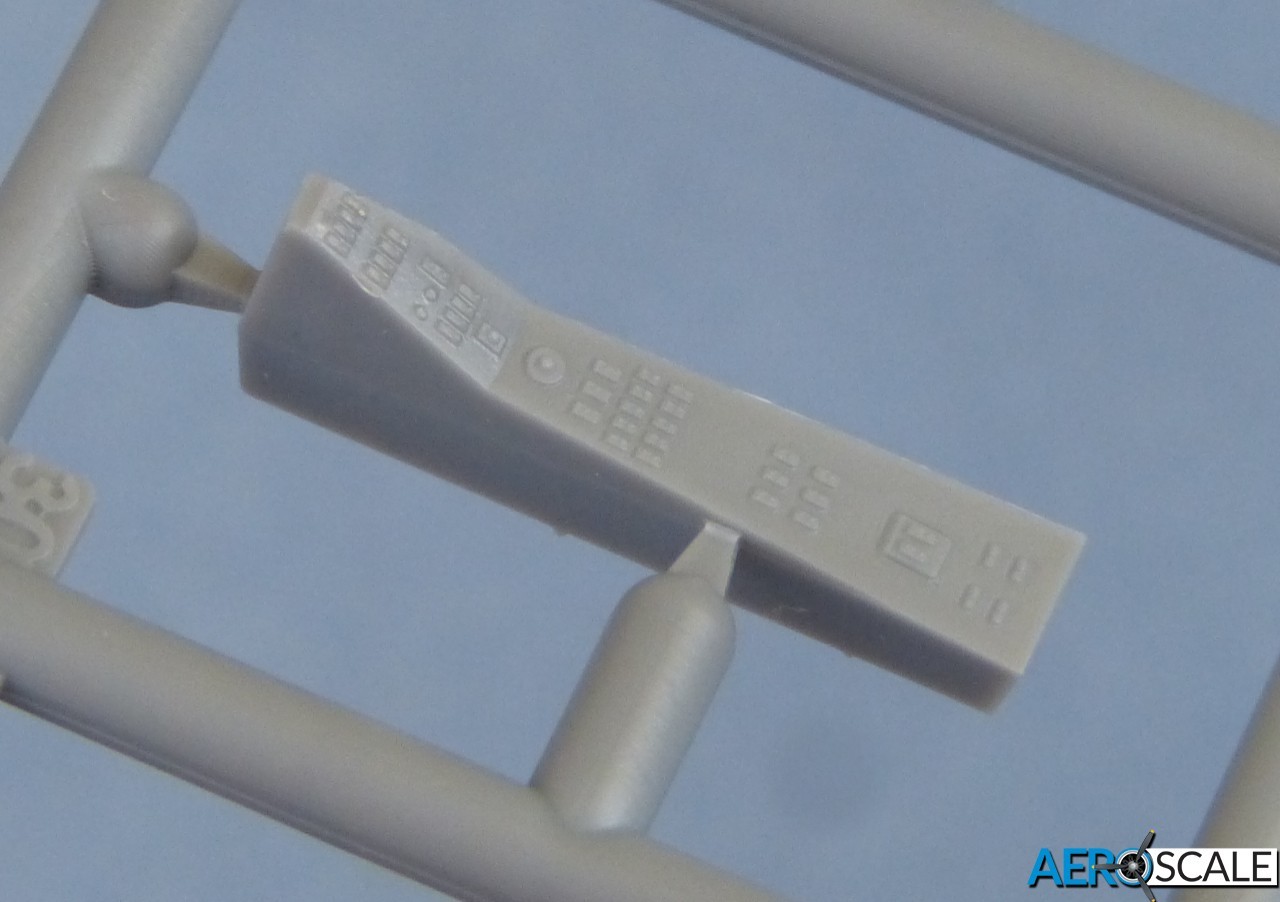
Construction begins with a neat 20-part cockpit. The side consoles are nicely detailed and the insides of the fuselage halves have some instruments and other equipment to add, so the resulting "office" should look suitably busy for a 1950s aircraft. The instructions call for an all-black finish, but the few photos I've found show a dark grey with black instruments and fascias, so a bit of extra hunting online won't go amiss before committing one way or the other.
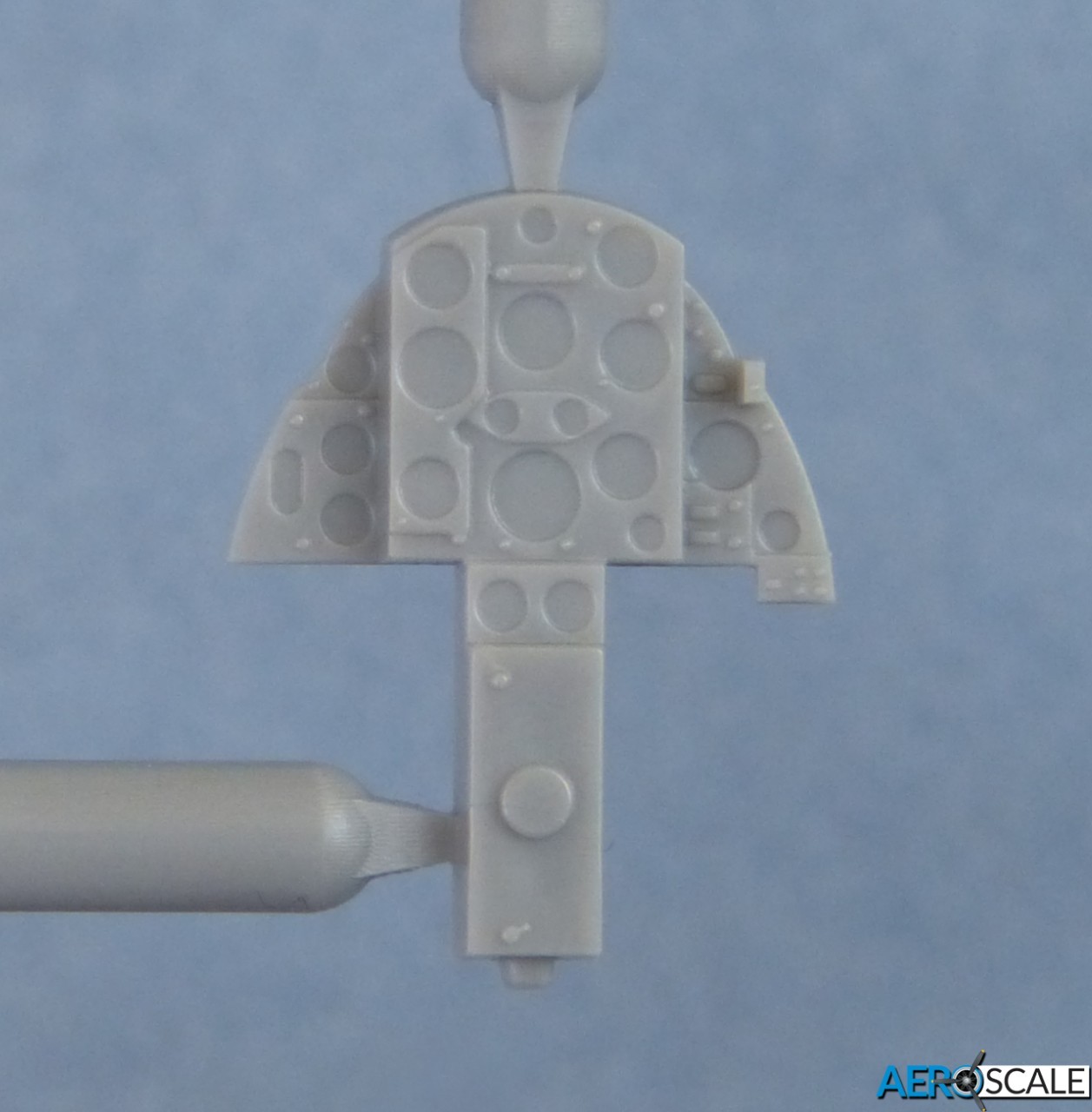
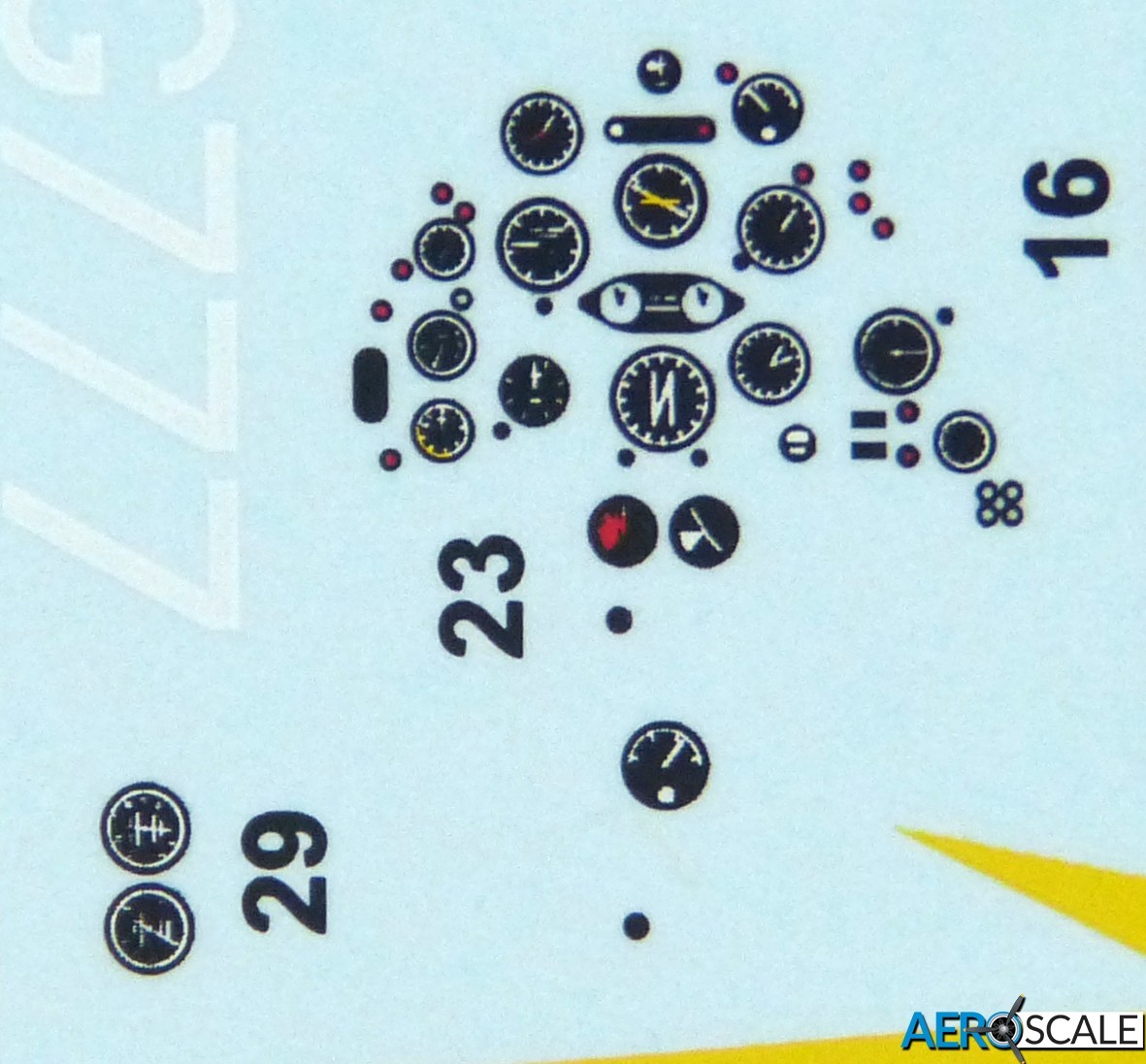
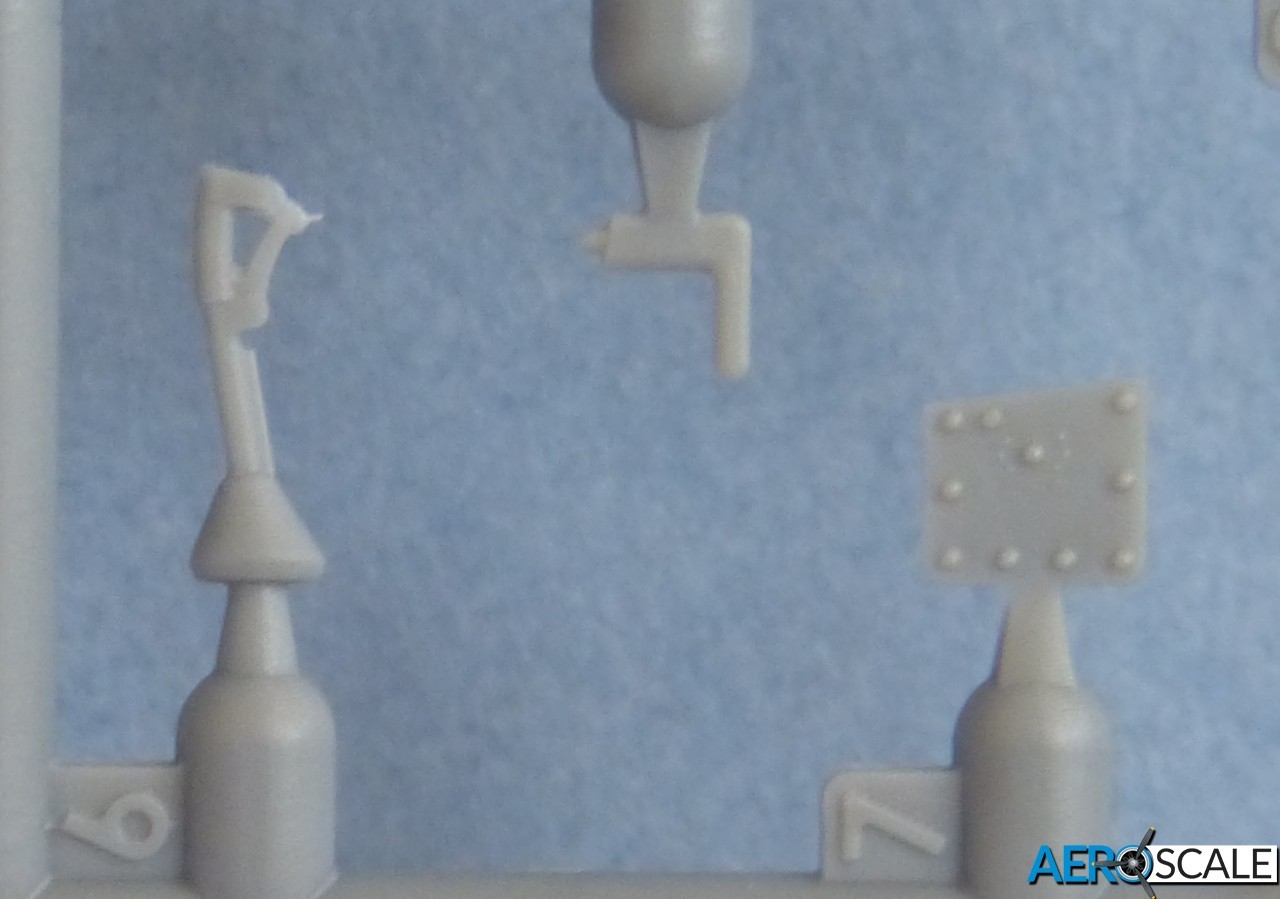
The crisply moulded instrument panel is supplied with a decal for the instrument faces, while the Martin-Baker Mk.3 ejection seat is constructed from 4 parts and fitted with photoetched belts. Looking at photos of the full-sized seat, there's certainly more detail that you could add, but the basics are all there - and not a lot will be visible anyway if you build the kit with the canopy closed. The way the shoulder harness attaches looks unusual in the instructions, but it matches a reference photo on the Martin-Baker website.
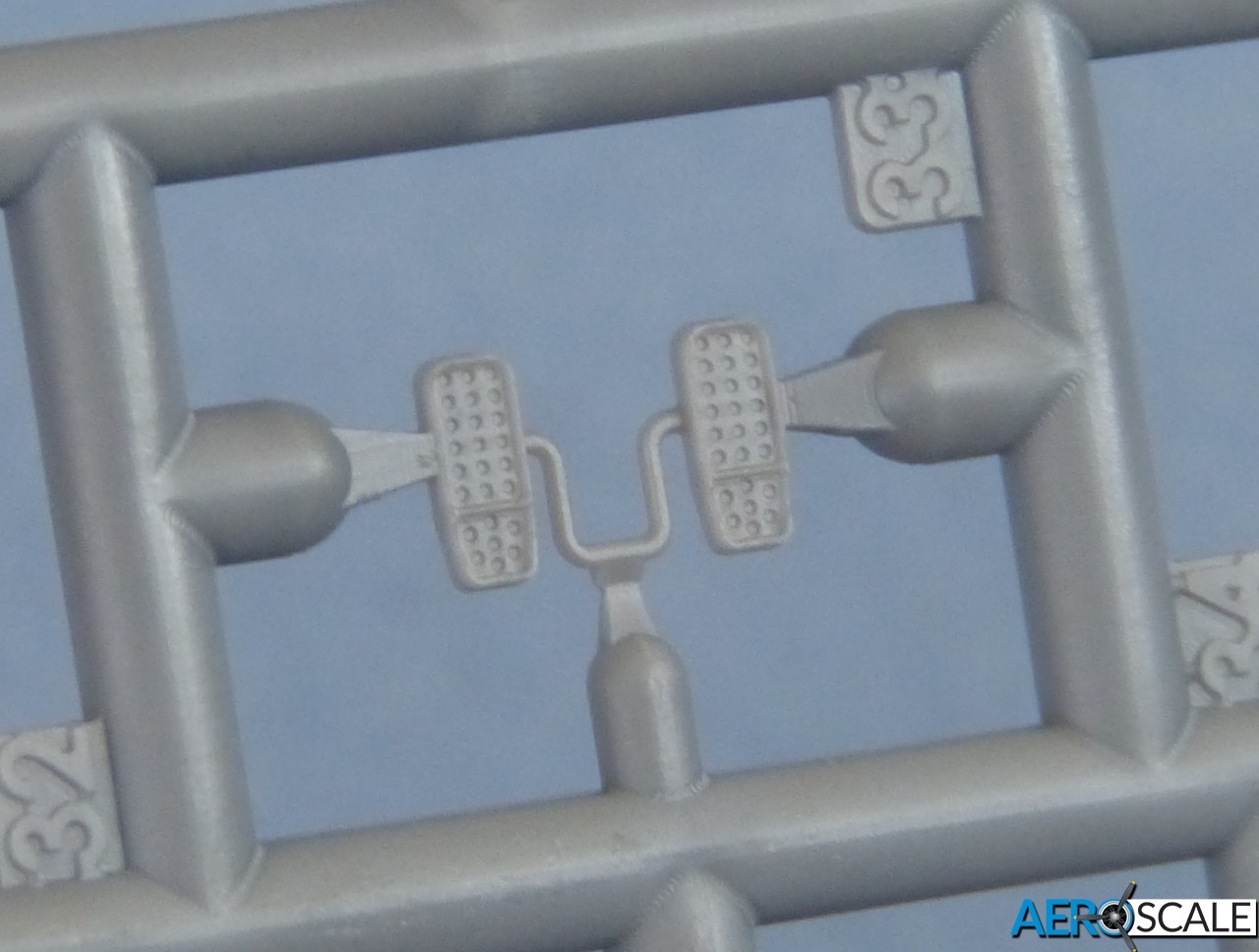
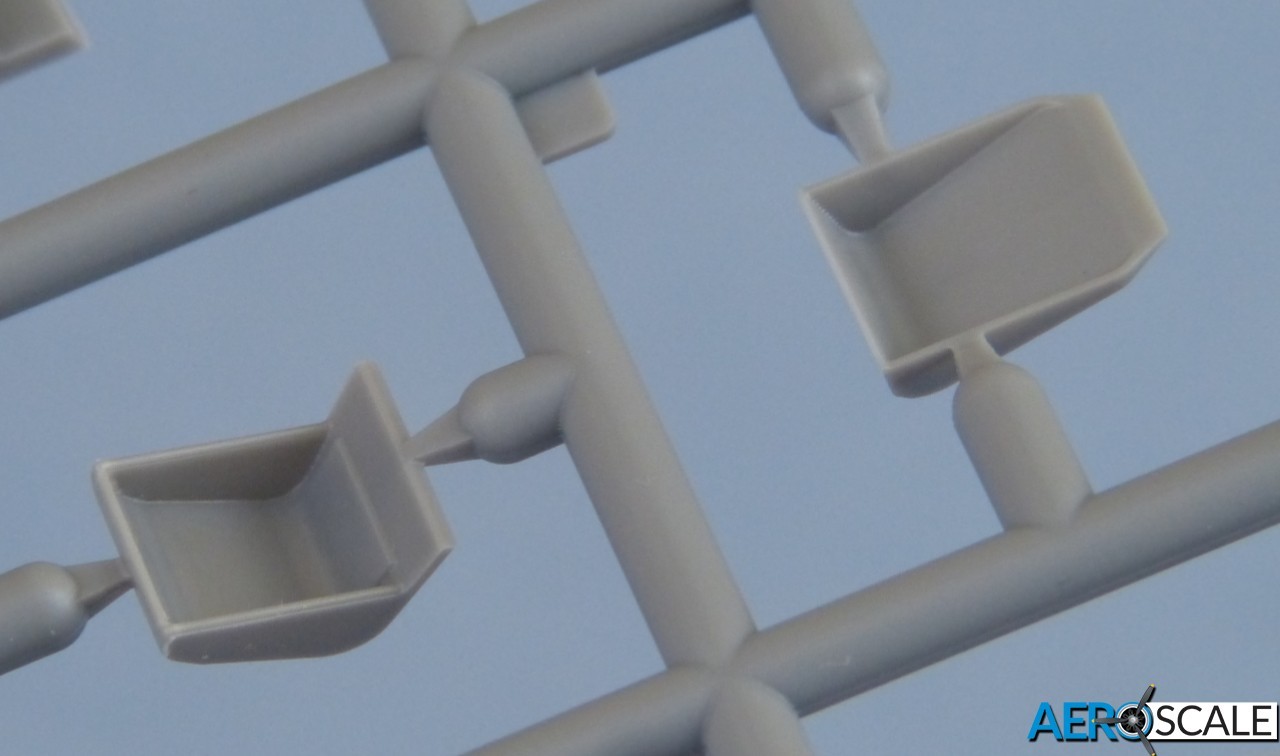
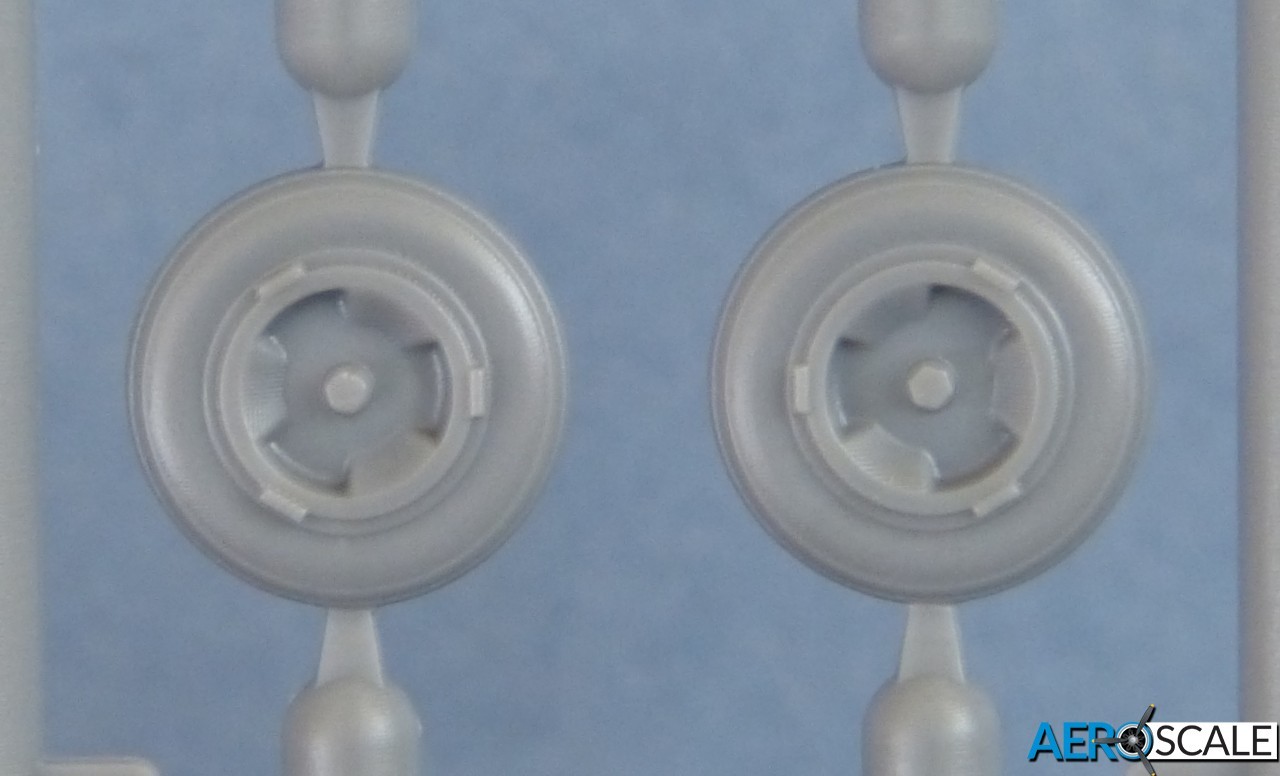
The undercarriage is nicely handled, with sturdy detailed gear legs and wheels. The mainwheel tyres feature Dunlop logos and are moulded "unweighted", so I'll file small flats to give the finished model a realistic sit. Talking of which, the instructions don't indicate whether you'll need to add nose-weight to avoid the model being a tail-sitter. If you do, the area in front of the cockpit looks big enough to hold a useful amount of weight - something like Deluxe Materials' Liquid Gravity will be ideal.
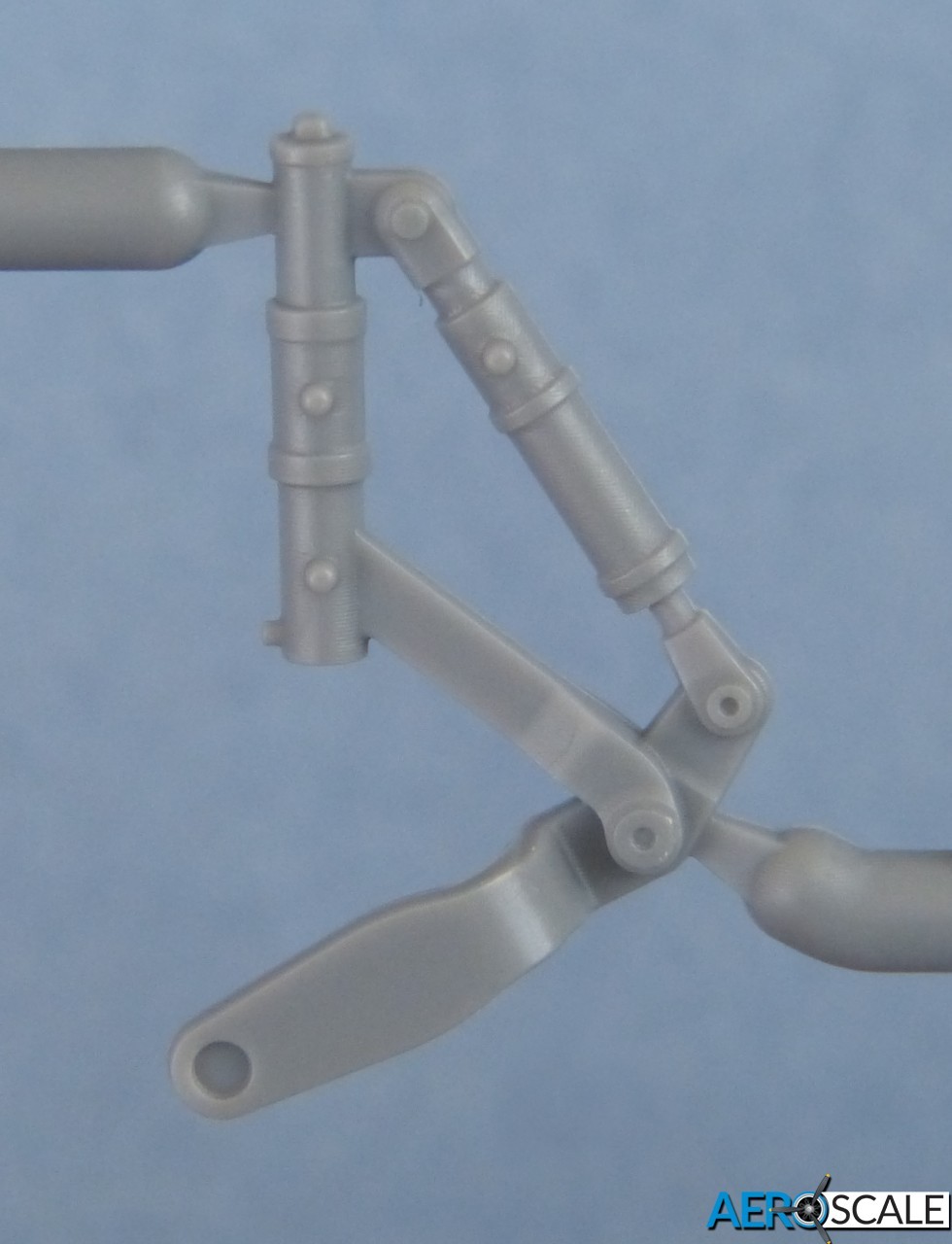
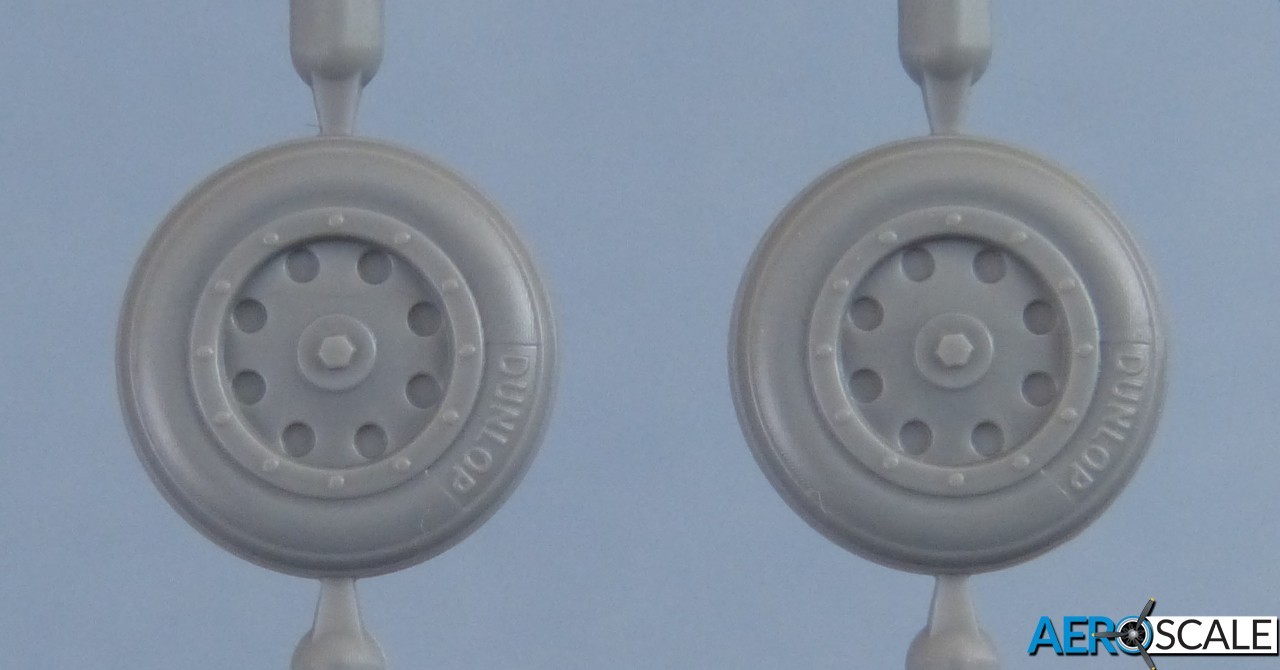
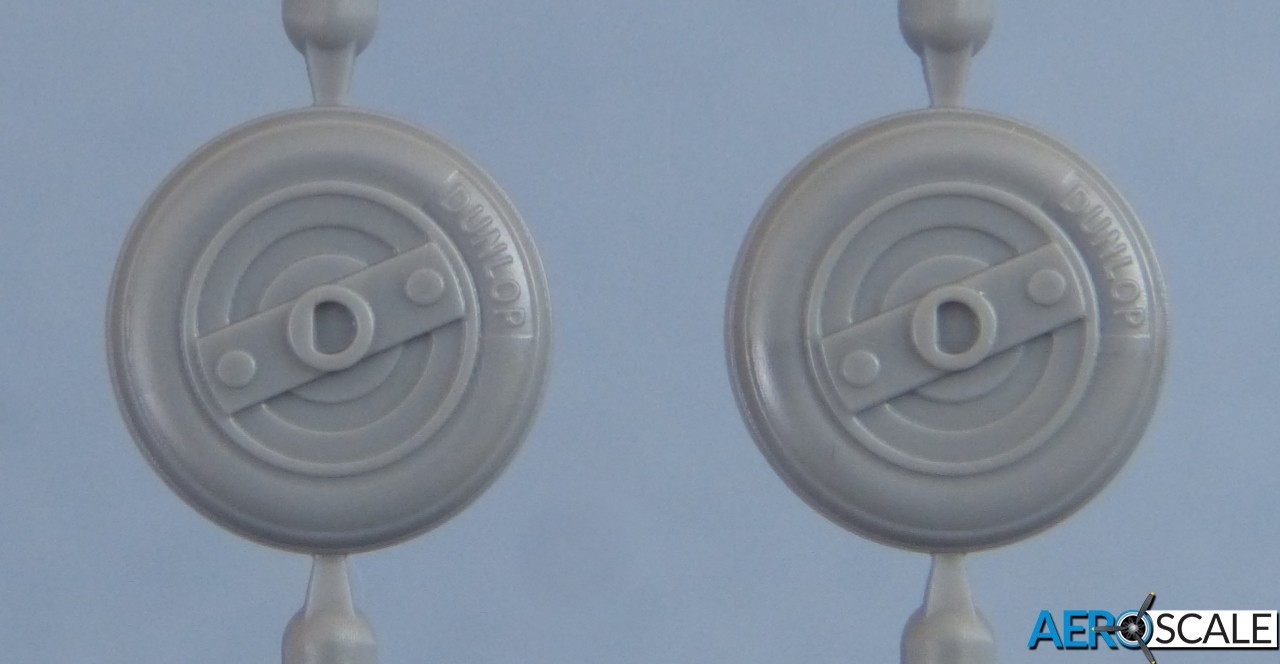
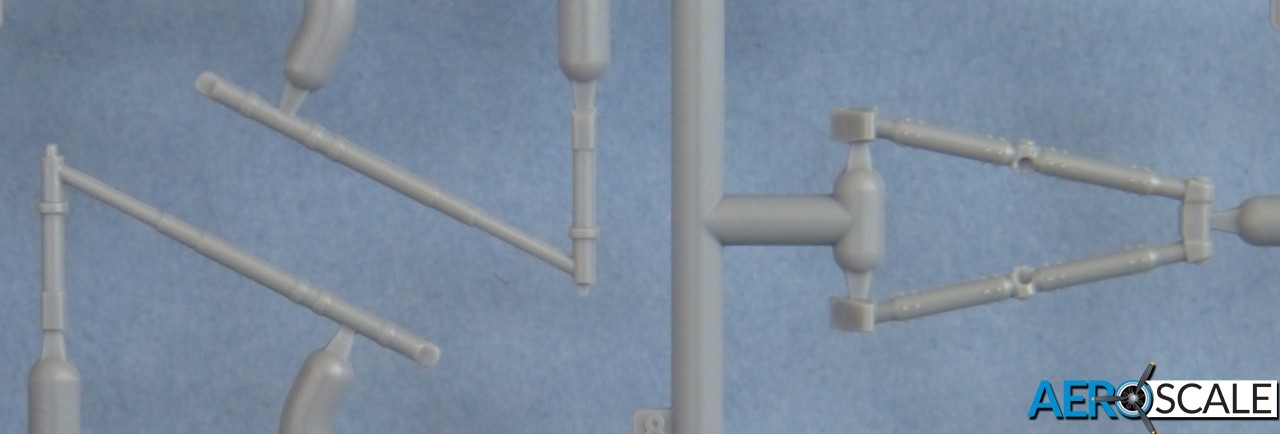
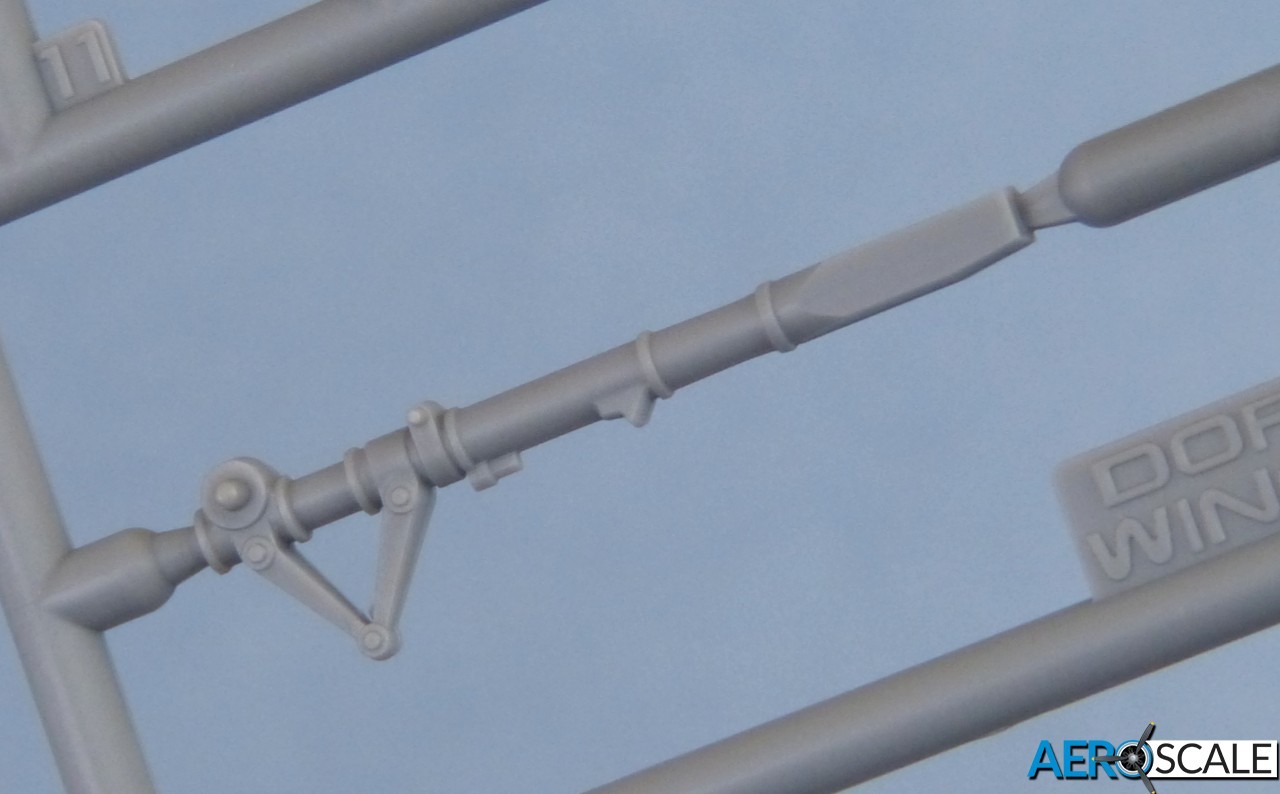
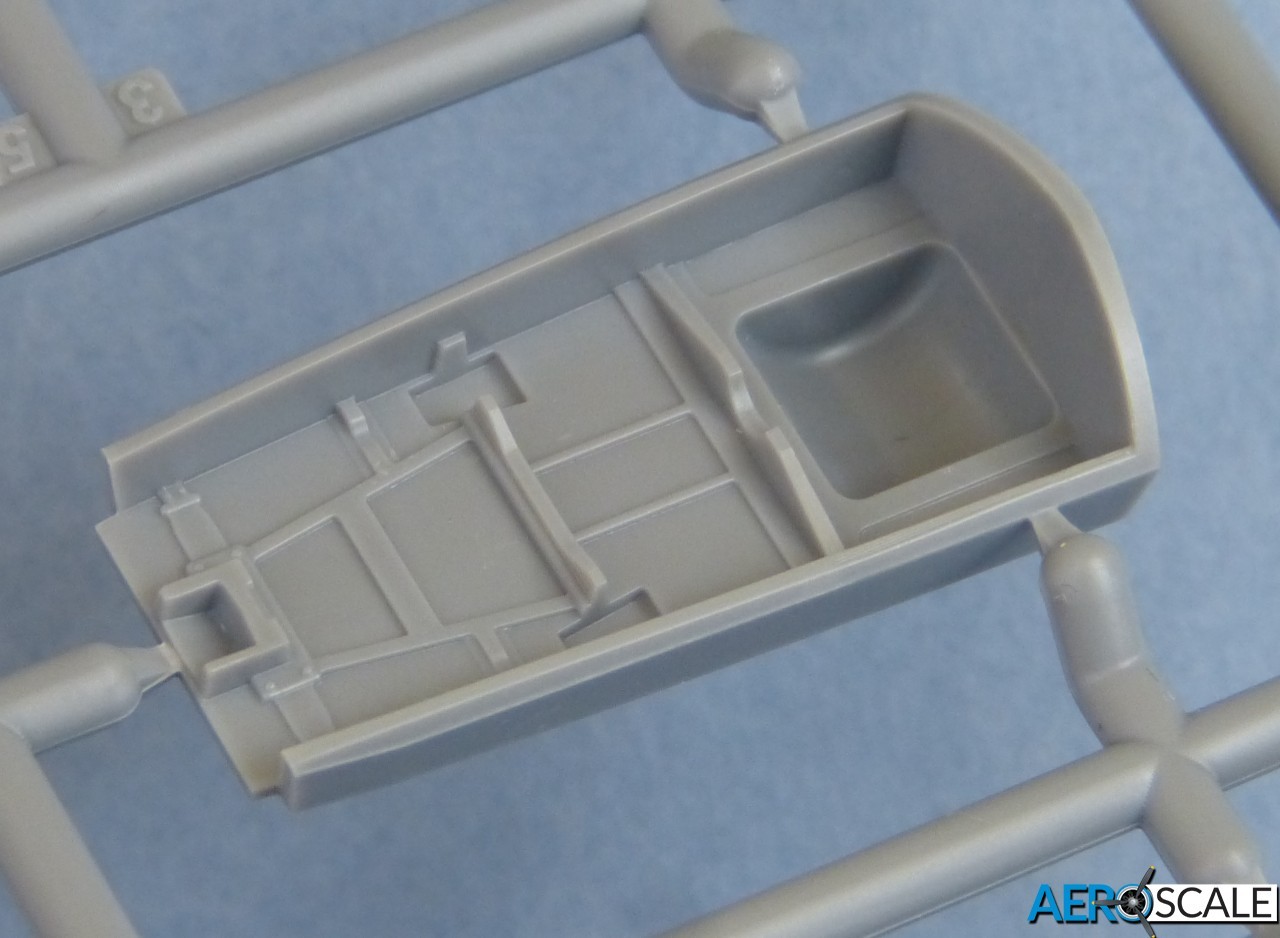
The wheel wells show a fair amount of internal detail. The mainwheel wells are necessarily shadow due to the thin wings, but the moulded detail should "pop" nicely with a light wash, and a neat touch is the way the fuselage side at the wing root forms the inside wall of each bay.
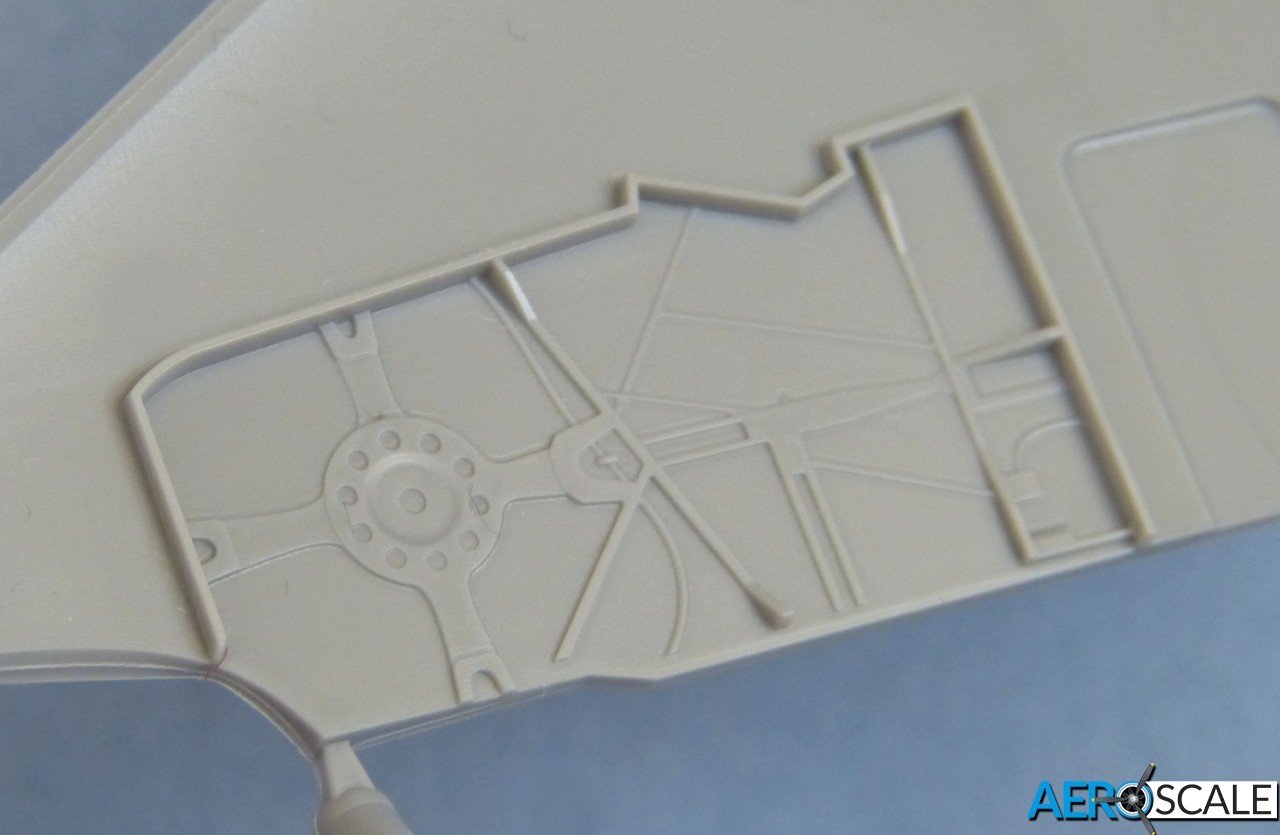
The gear doors have some delicate detail that, again, will respond nicely to a light wash to highlight it.
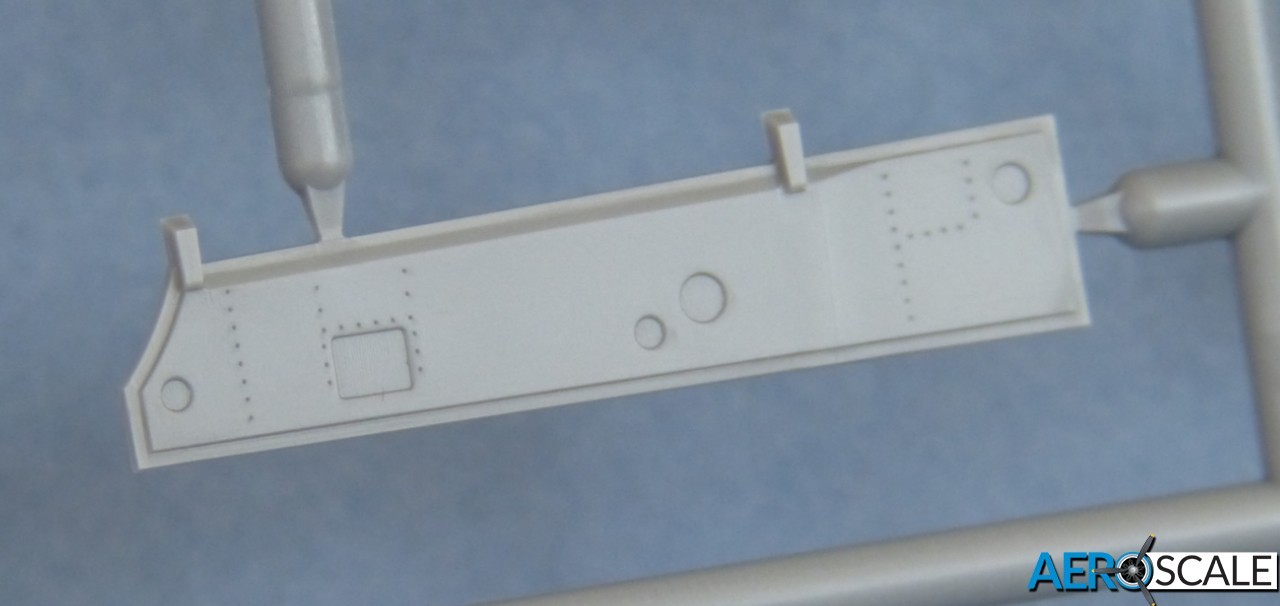
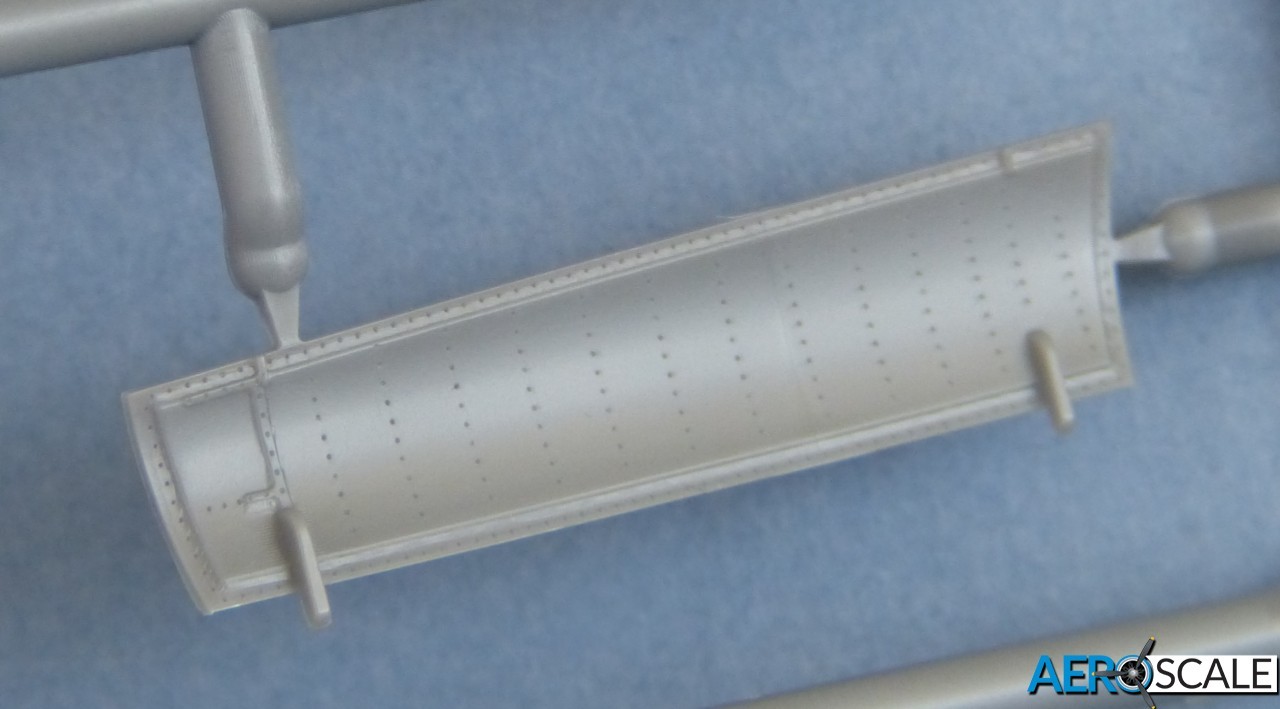
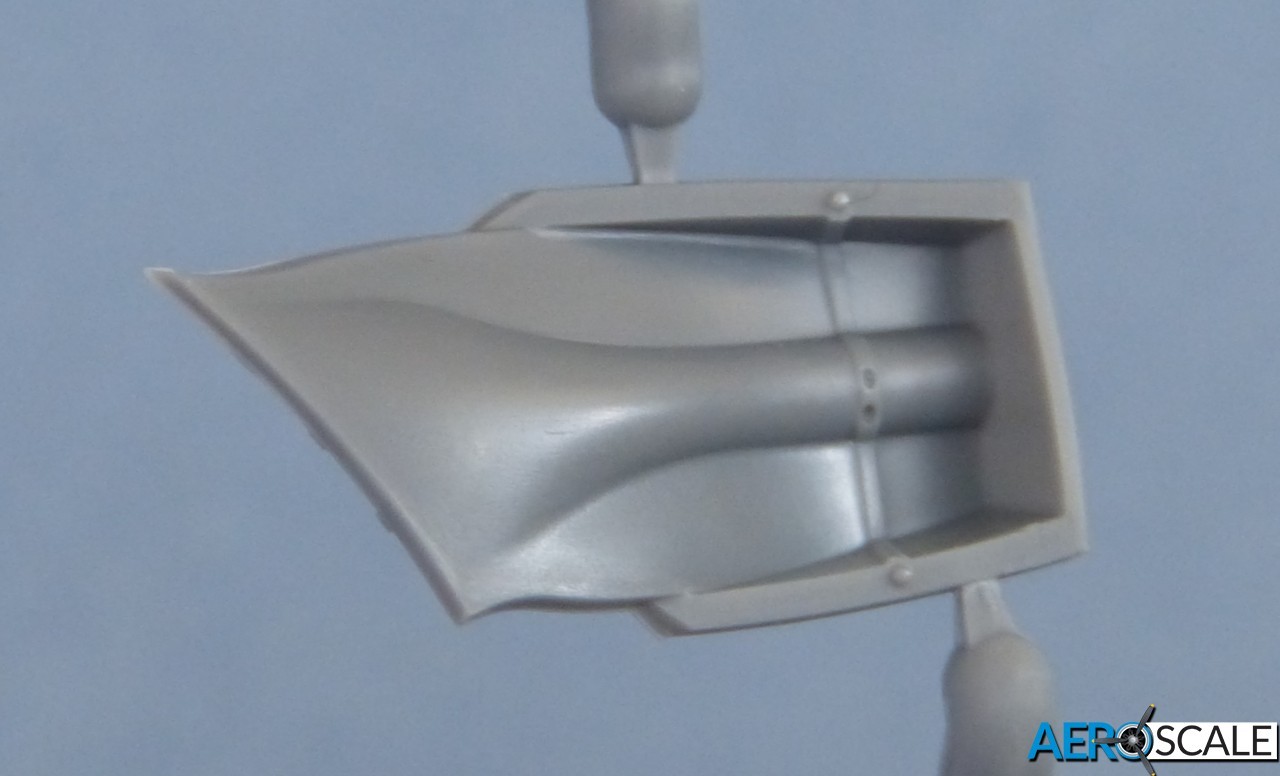
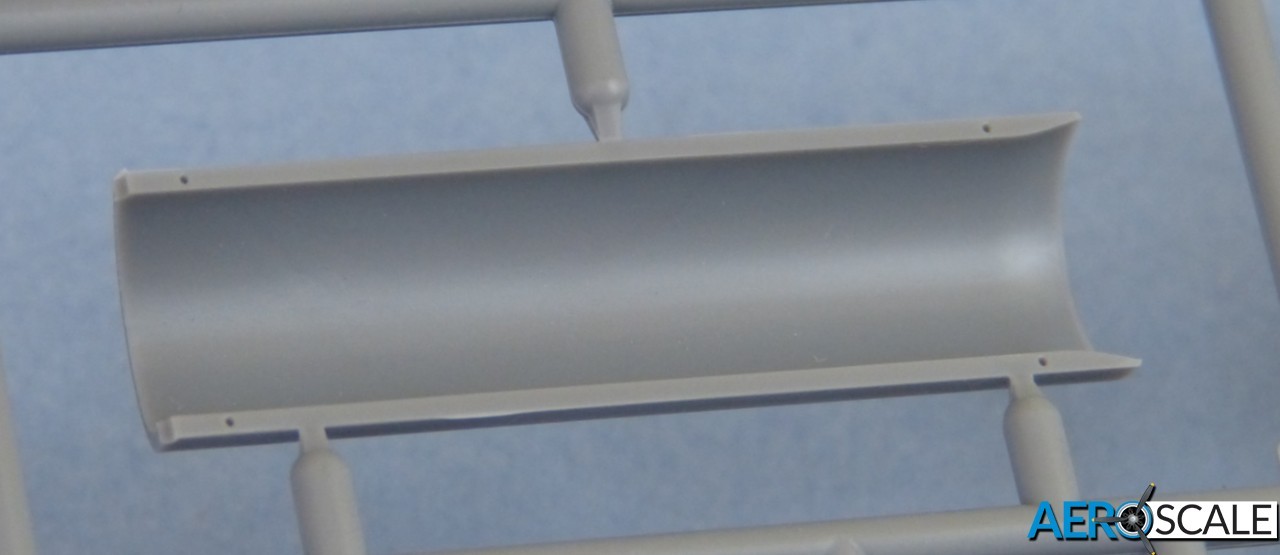
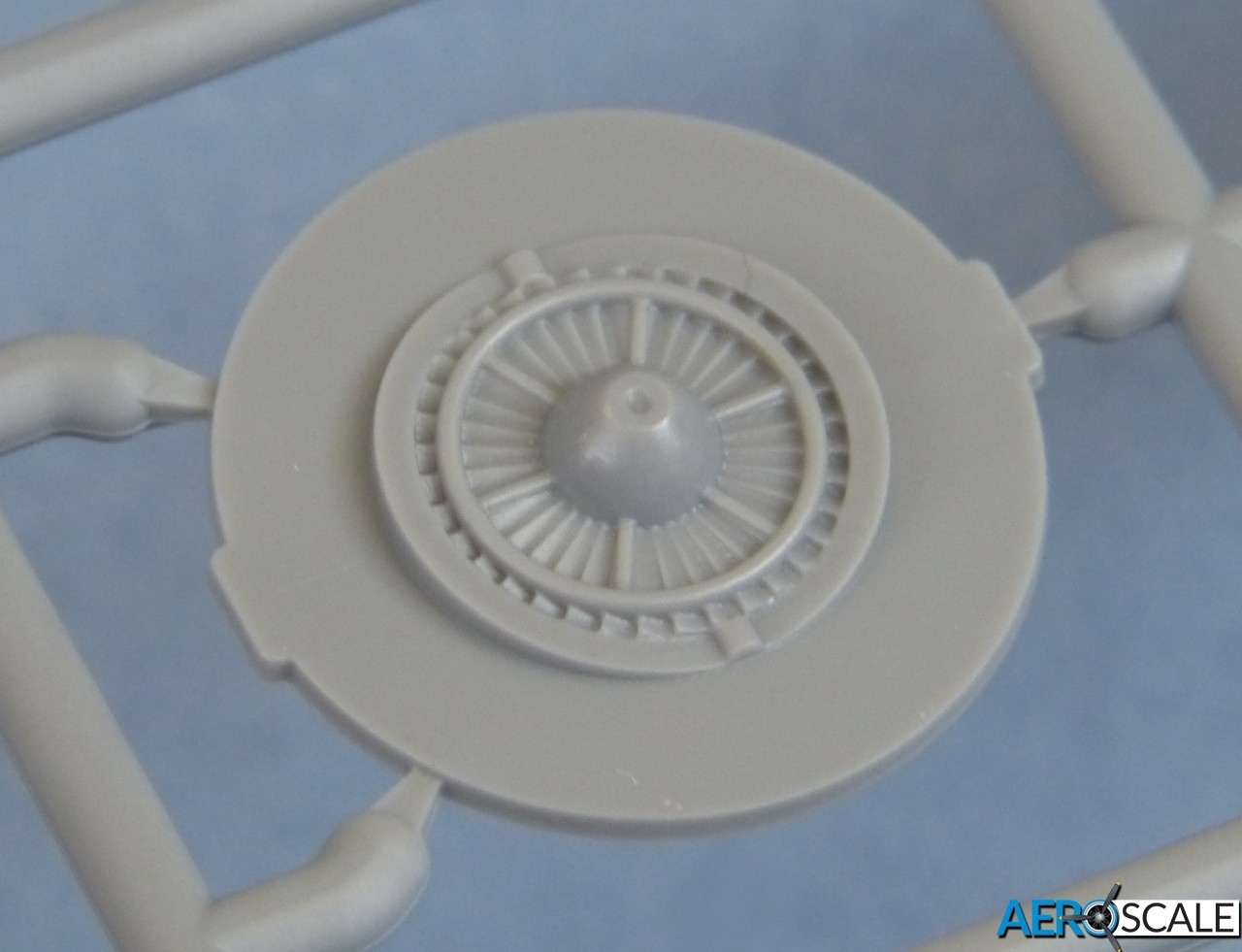
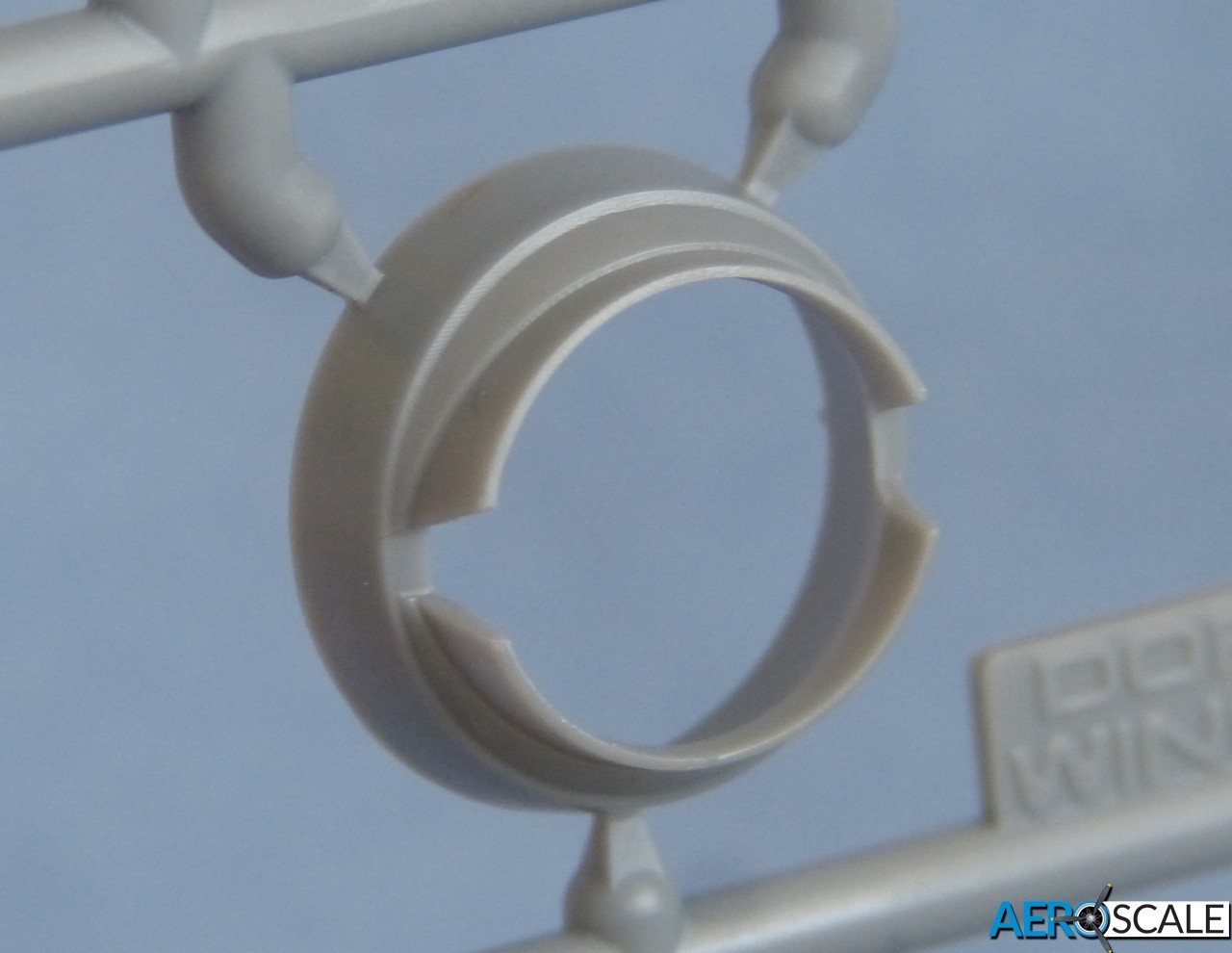
The jet inlets are fitted with vanes to split the airflow and are closed off further back to avoid a see-through fuselage. At the rear there is a jet pipe and a blanking plate with an impression of the engine's afterburner. Finally, there's a choice of jet nozzles.
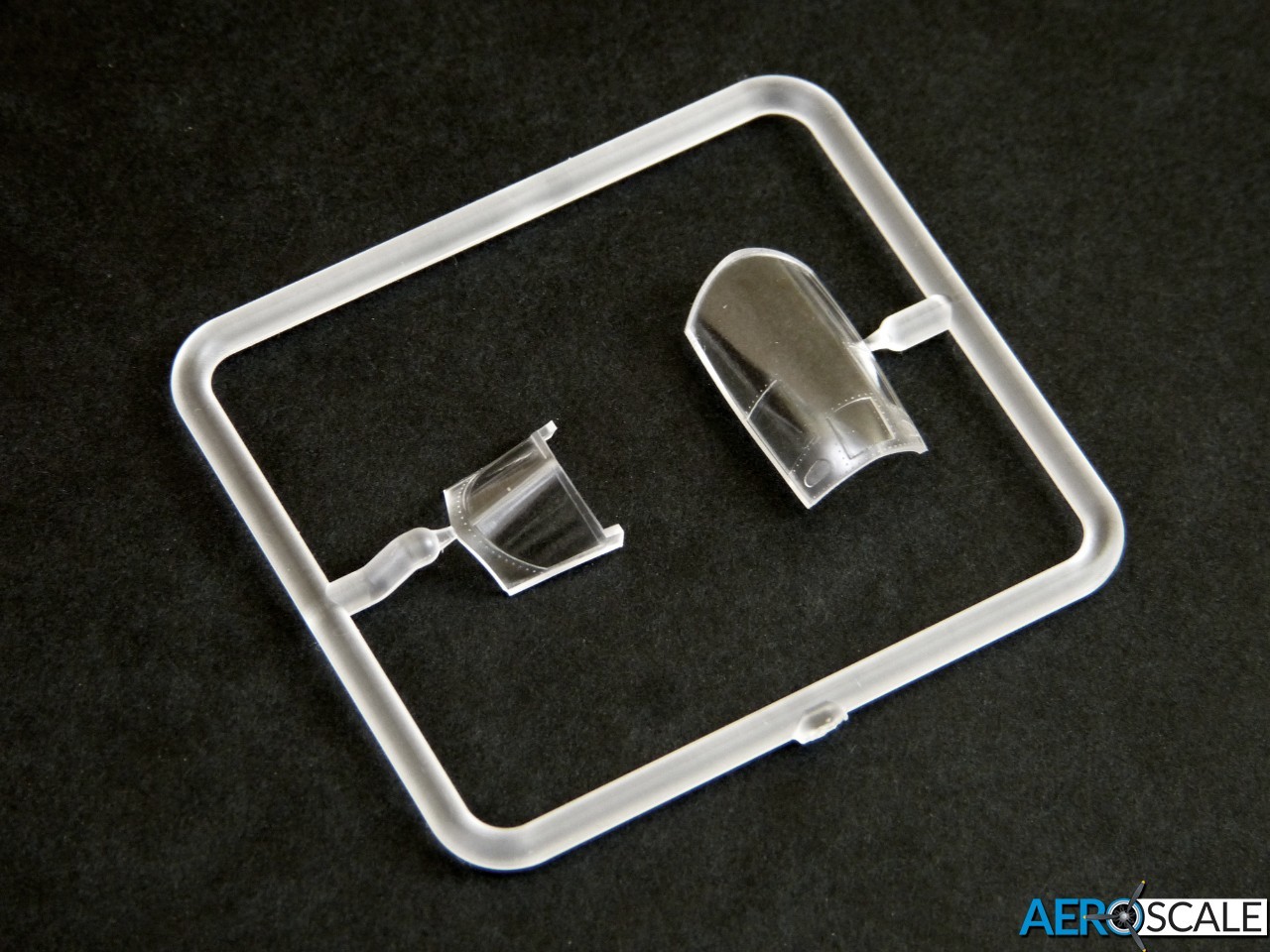
Rounding things off is a neatly moulded canopy - split into a windscreen and main section, so you could pose it open although this isn't shown in the instructions. The parts are quite thin and the frames and small windows are crisply defined. A nice touch is the inclusion of a set of vinyl masks to make painting simple.
Instructions & Decals
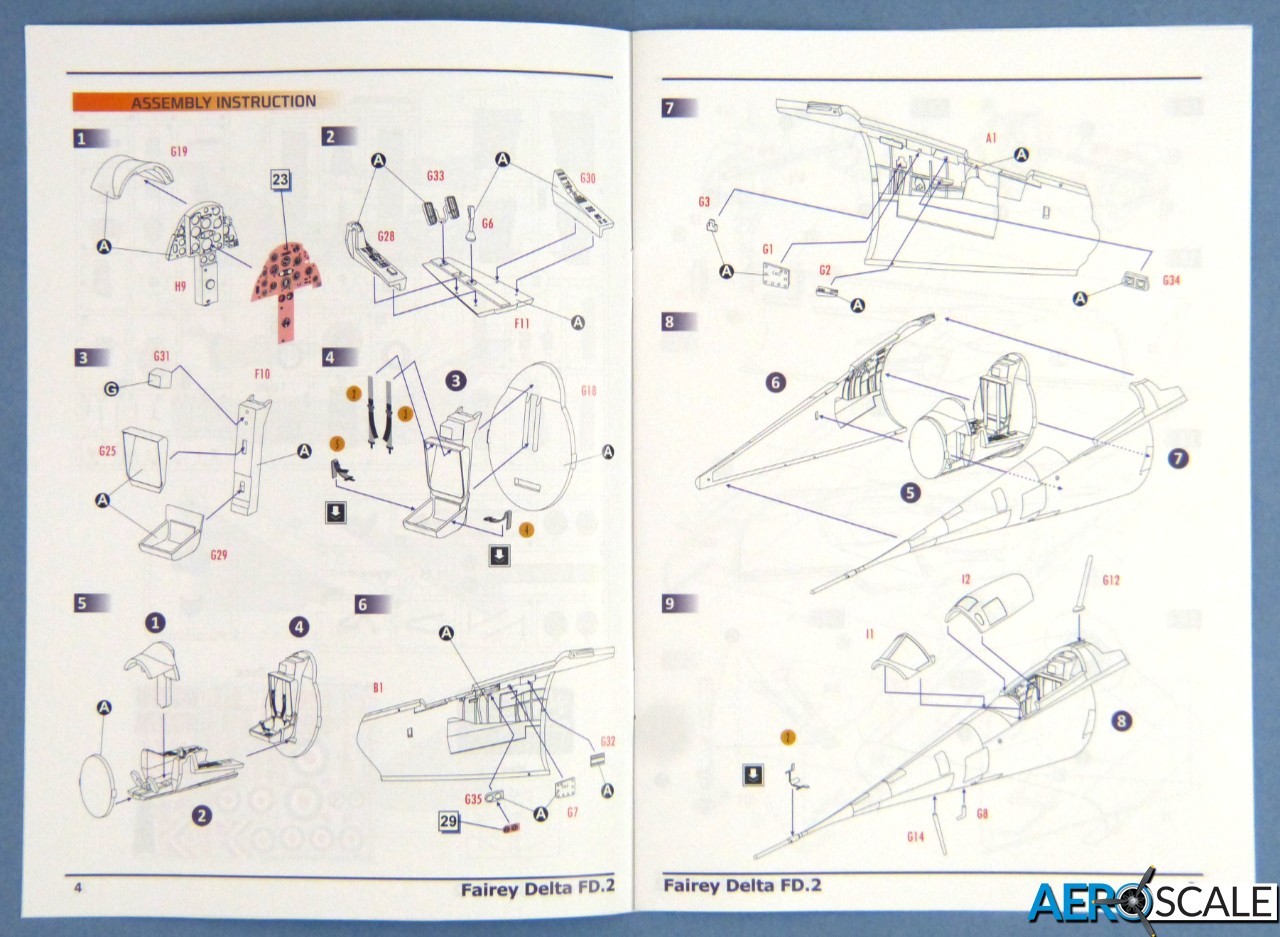
Dora Wings provide a high quality 15-page A5 construction and painting booklet that's printed in colour on glossy stock. The assembly diagrams are clear and well laid out, breaking construction down into 29 stages.
Colours are keyed to details throughout with a table of matches for Mr Hobby, Tamiya, AMMO MIG, Hataka and LifeColor paints, along with a couple of BS381C references for exterior finishes.
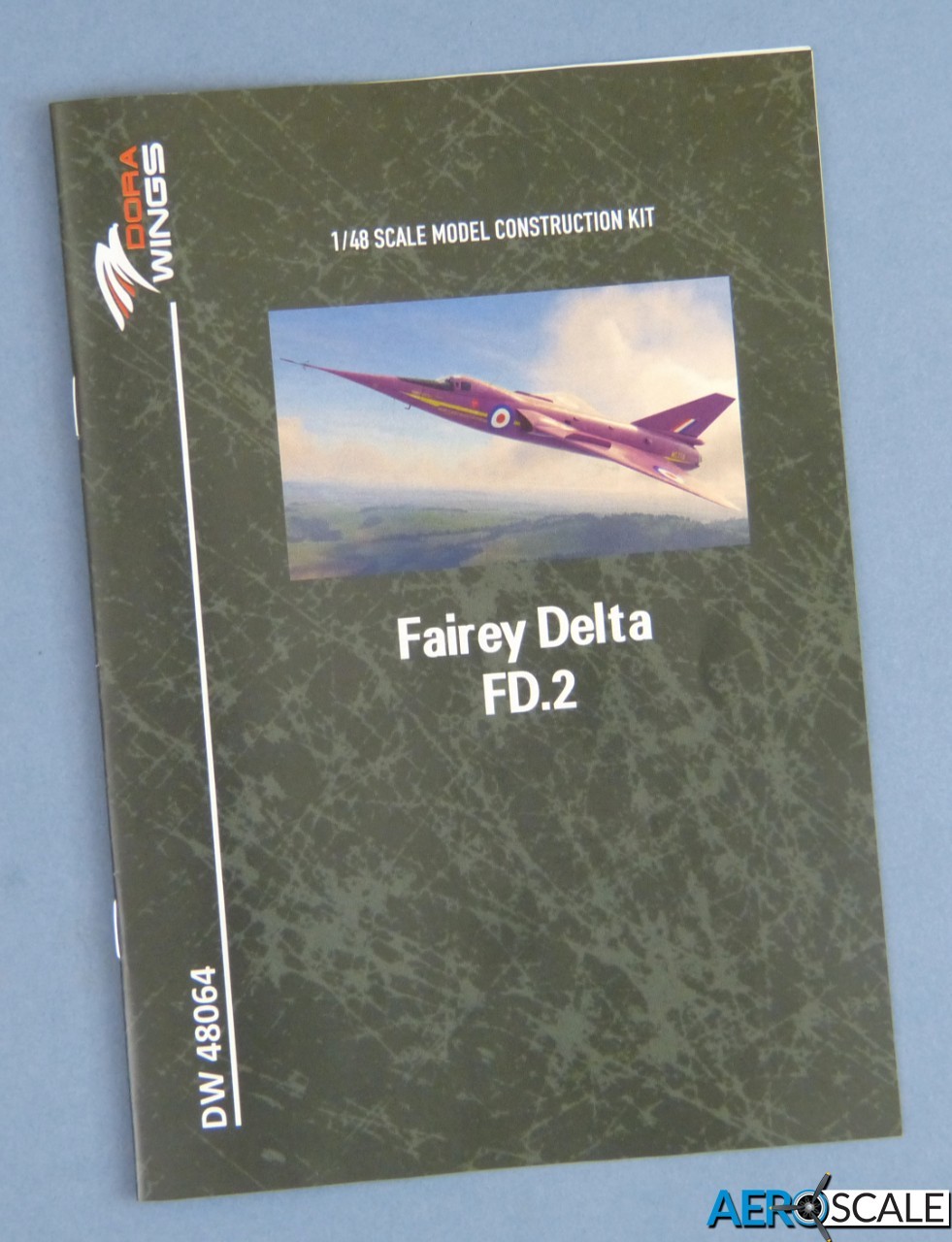
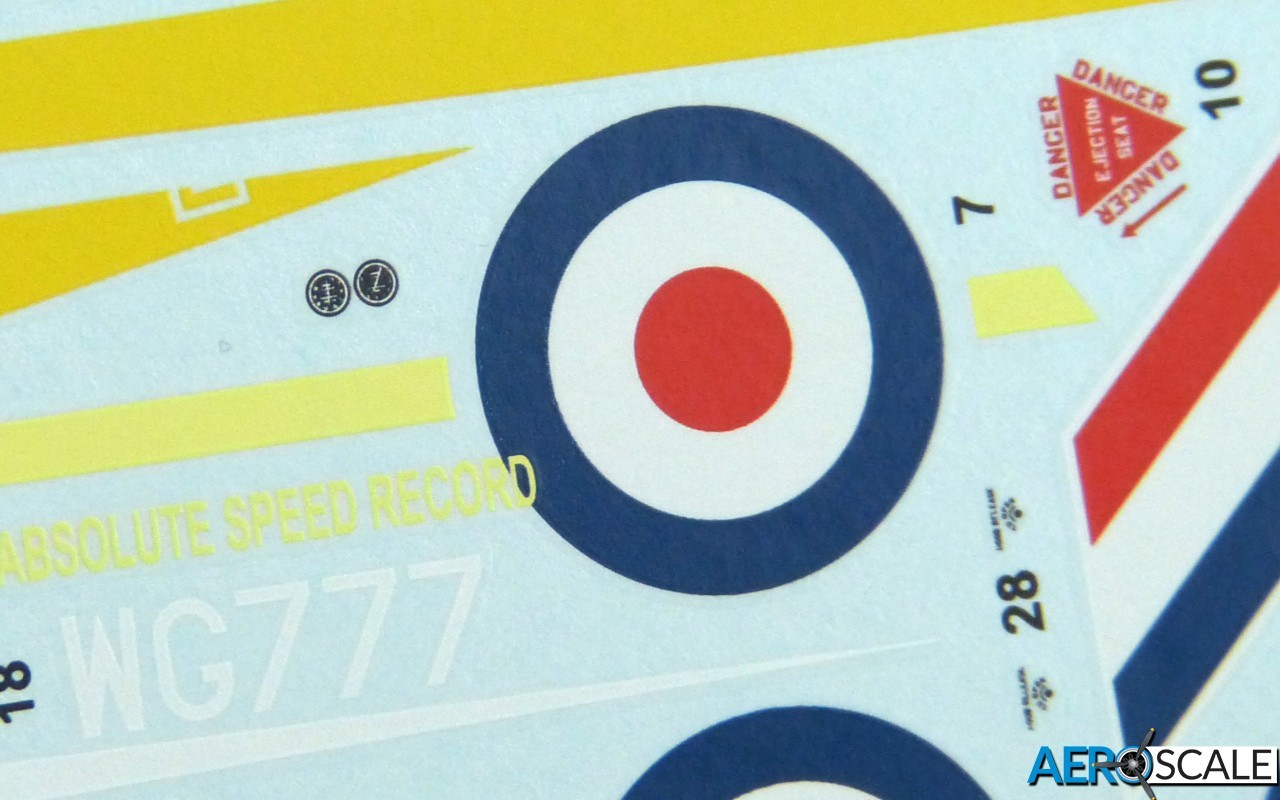
Decals are provided for 4 colour schemes sported at different times by the two Delta 2s that were built:
1: s/n WG774, March 1956
2: s/n WG774, September 1955
3: s/n WG777, as exhibited at the RAF Museum, Cosford
4: s/n WG774, SBAC Show, Farnborough, 1958
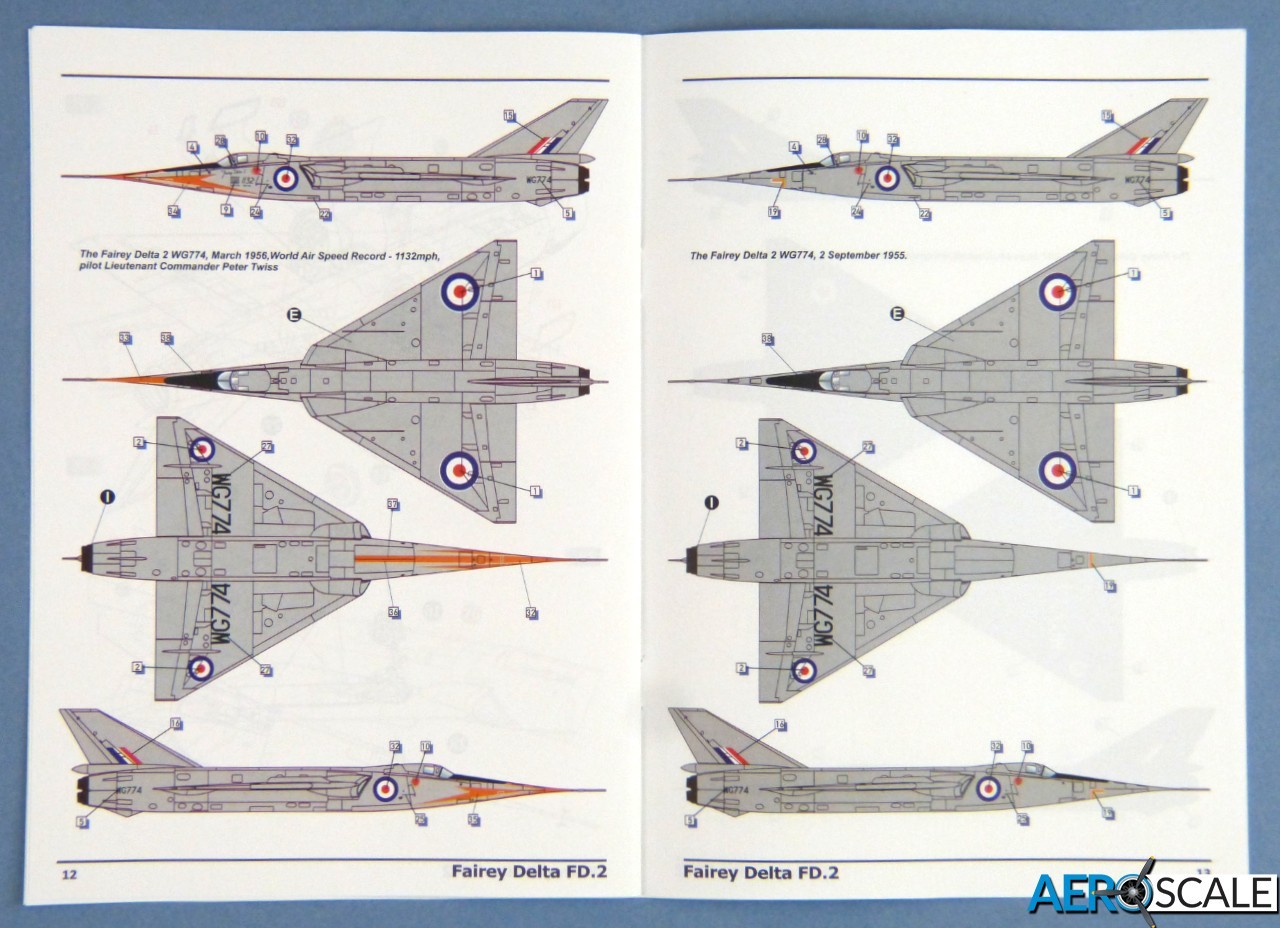
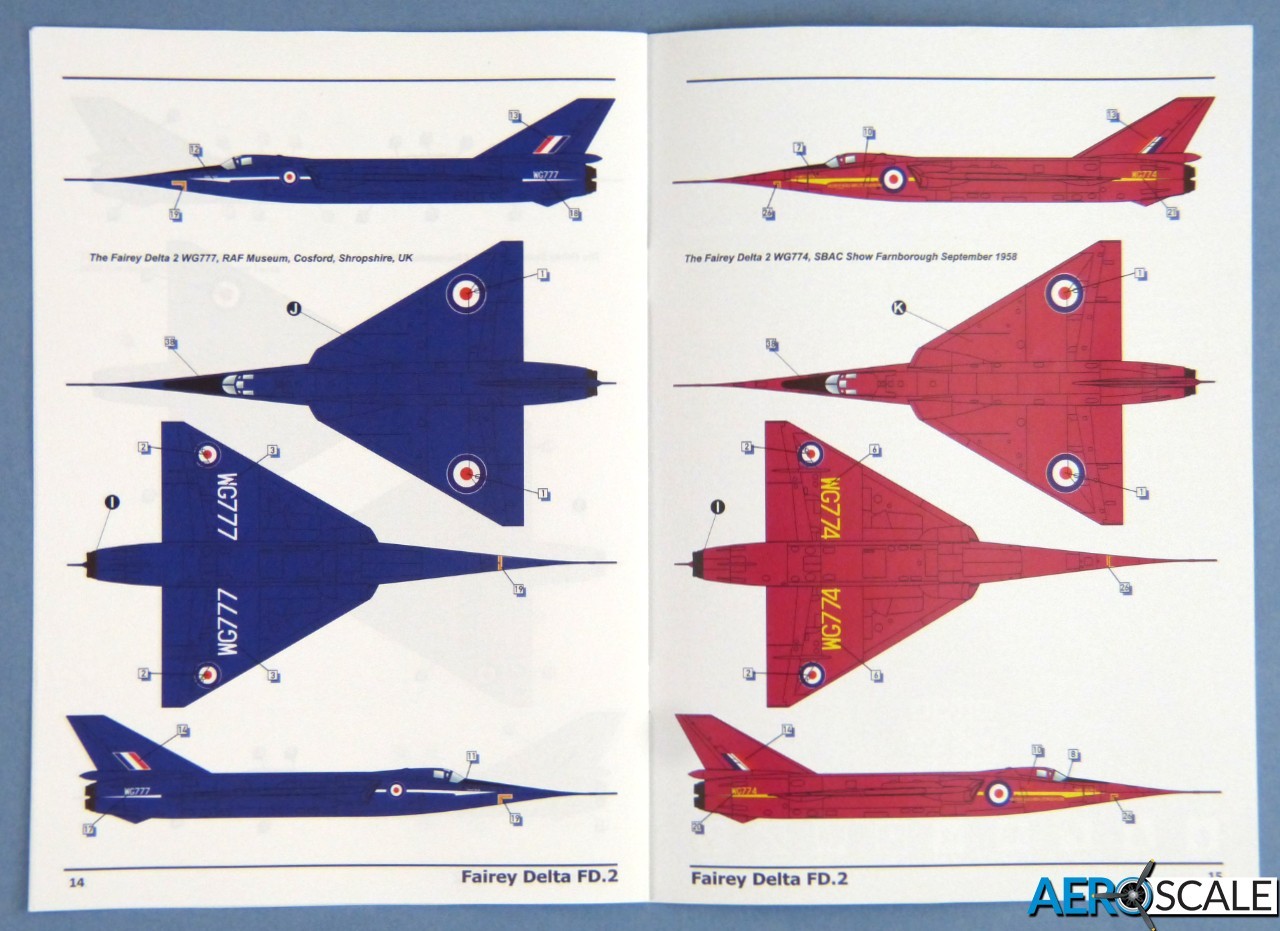
The first two are polished n/m, while the third is overall Aircraft Blue and the last is a glorious Dark Violet. While I love the challenge of polished n/m, the idea of Dark Violet is simply irresistible, so that's what I'll go for!
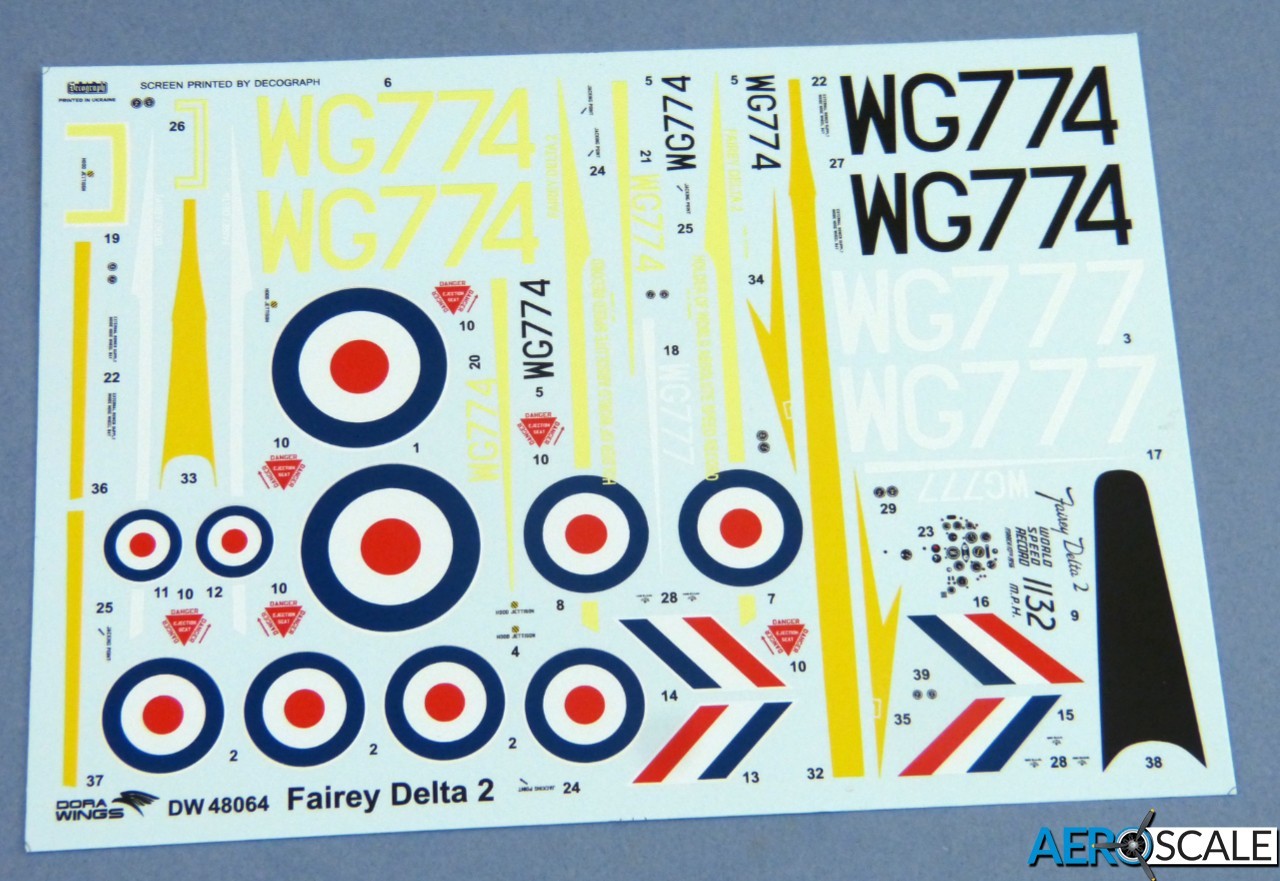
The satin-sheen decals are printed by Decograph and look to be excellent quality, with accurate colours, pin-sharp registration, and minimal excess carrier film.
Conclusion
Dora Wings have produced an excellent kit of an aircraft that marked an important milestone in the history of flight, and which also sadly typifies the many missed opportunities that plagued British aviation from the late 1950s and beyond. The model looks to be quite a straightforward build for anyone with a little experience, and will be a real head-turner in any line-up of 1:48 scale classic jets with its striking looks and colour schemes. I'm getting this straight onto the workbench!
Many thanks to Dora Wings for the review copy.
Kit #DW48064 - Fairey Delta 2 is available now from Dora Wings at an introductory price of 30.00 Euros (normally 34.00 Euros)
Please remember, when contacting retailers or manufacturers, to mention that you saw their products highlighted here - on AEROSCALE