











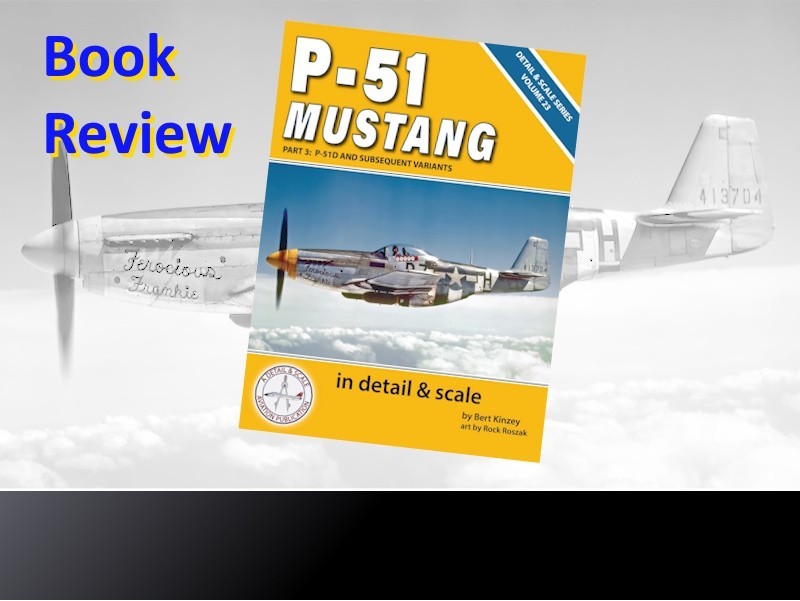
With the release of volume three, Detail & Scale bring its comprehensive examination of arguably aviation’s most famous fighter to a fitting conclusion. After covering the Allison-powered Mustangs in Part 1 and the Merlin-powered “razorback” variants in Part 2, this final volume tackles the definitive bubble-canopy P-51D, the P-51K, reconnaissance variants, the lightweight P-51H, and a summary of postwar and experimental derivatives.
The book follows the now-familiar Detail & Scale formula. An introductory history traces the development and operational use of the late-war Mustangs before moving into extensive technical coverage of the aircraft itself. Carefully annotated drawings highlight production changes between major variants, making it easy to identify the subtle differences we modelers often care deeply about. From the early P-51D production blocks through later aircraft with the dorsal fin fillet, the P-51K, reconnaissance F-6 variants, and the distinctive P-51H, the evolutionary story is presented clearly and (fittingly) in great detail.
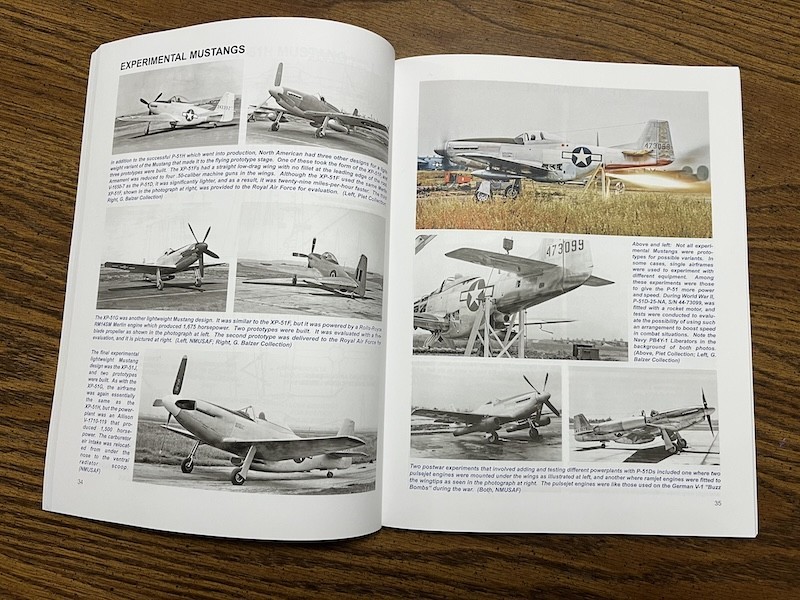
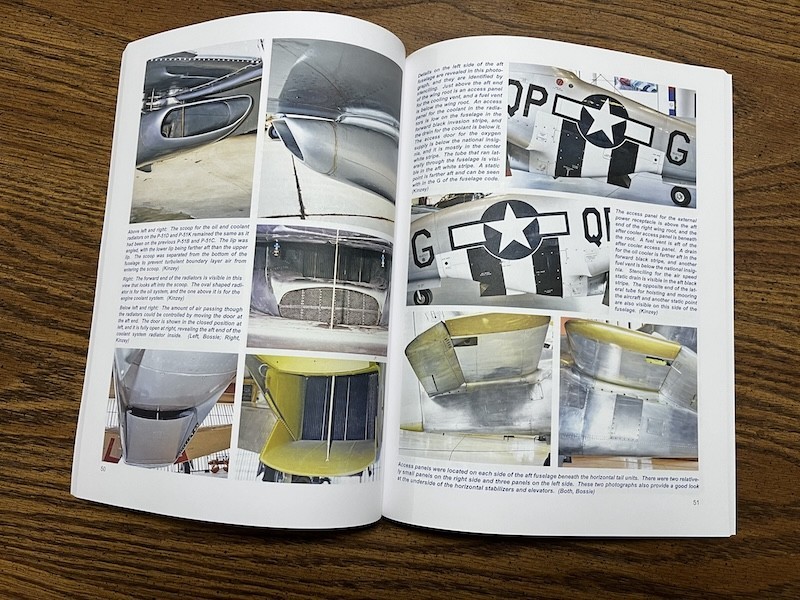
The real heart of the volume is the photographic walkaround section, and it is every bit as impressive as readers have come to expect. The photography is superb throughout. Images are crisply rendered, well exposed, and reproduced at a size that allows even minute details to be seen clearly. Close-ups of the Merlin engine installation, hydraulic reservoir, oil tank, ducting, wiring runs, exhaust shrouds, and internal structure provide exactly the sort of reference material that modelers spend countless hours searching for online.
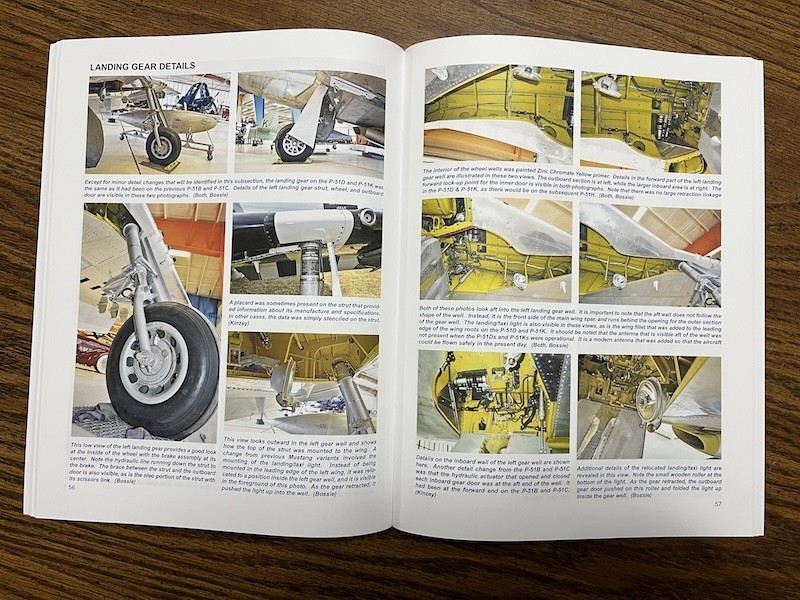
And as I noted in my reviews of previous volumes, the photographs are very well-rendered in print. The captions consistently point out production differences, explain what the reader is seeing, and identify components that might otherwise be overlooked. It’s the sort of editorial attention that takes the book from just a collection of photographs to a genuine reference work.
The annotated scale drawings clearly illustrate features such as early and late vertical tails, landing gear revisions, exhaust fairings, radio mast arrangements, and numerous other external differences between production blocks. These visual comparisons make identifying the correct configuration for a specific aircraft remarkably straightforward, saving modelers from piecing together information from multiple, often unreliable, sources.
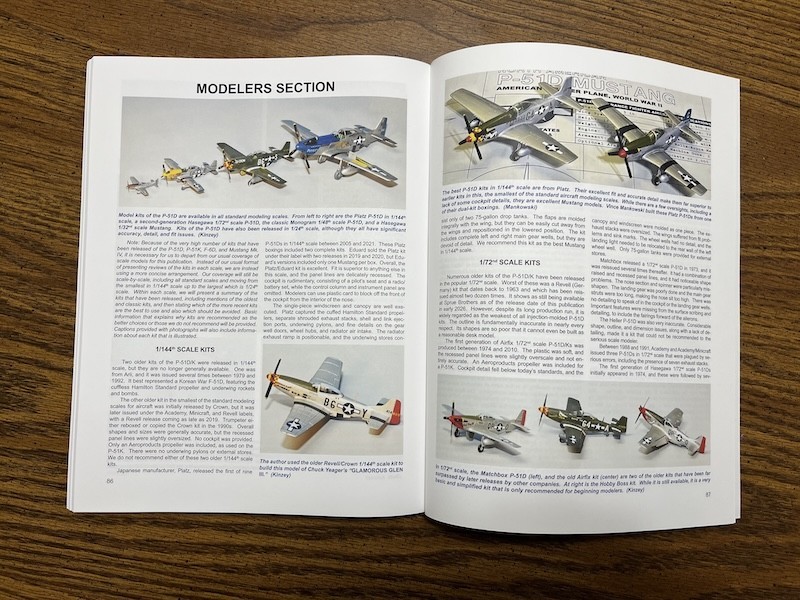
For some reason, I particularly enjoyed the final chapter in this volume, which covers the various kits available (and not-so-available) from 1/144 scale all the way to 1/24. The authors are quick to point out that the sheer volume of D and K-model Mustangs has forced them to change from their usual format and resort to a summary of the various offerings instead. But fortunately, the chapter doesn’t suffer because of that. Even in abbreviated form, it is far more than a collection of brief “in-box” impressions. Each kit is evaluated with the benefit of current knowledge, noting strengths, weaknesses, accuracy issues, and recommended corrections where appropriate.
The reviews are thoroughly up to date. The authors have incorporated the latest releases and reassessed older kits in light of newer competition. I know I speak for many when I say that I often rely on quick summaries from Scalemates or scattered forum discussions to evaluate kits, often when standing in the hobby shop aisles or mouse hovering over the "buy" button. Having an experienced and thoughtfully written comparison in one place is invaluable. Rather than forcing readers to sift through conflicting opinions across the internet, the book provides balanced, practical guidance that genuinely helps when choosing the right kit for a project. Theres’s also something to be said for having everything in one place instead of having to comb the internet to find a review.
For anyone with an interest in the P-51, whether historian, enthusiast, or scale modeler, volume three is an easy recommendation. For those who already own Parts 1 and 2, this volume completes the set exactly as one would hope.
Quite simply, this is a worthy finale to an exceptional series, and one that will undoubtedly remain a frequently consulted reference long after the latest Mustang project leaves the workbench.
Thanks to Detail & Scale for sending us the review sample. You can find out more about this book and get links to ordering the print and digital versions of the book at www.detailandscale.com. You can find the review at P-51 Mustang in Detail & Scale: Part 3.