











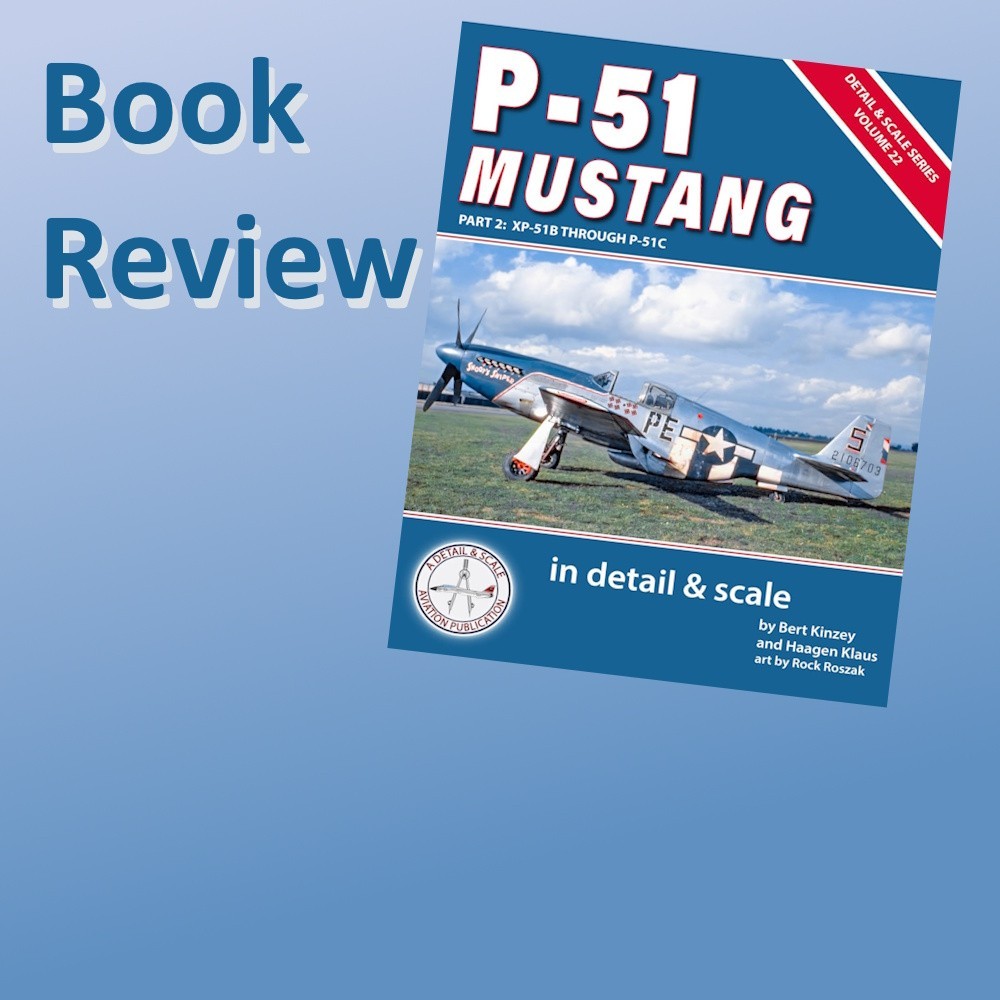
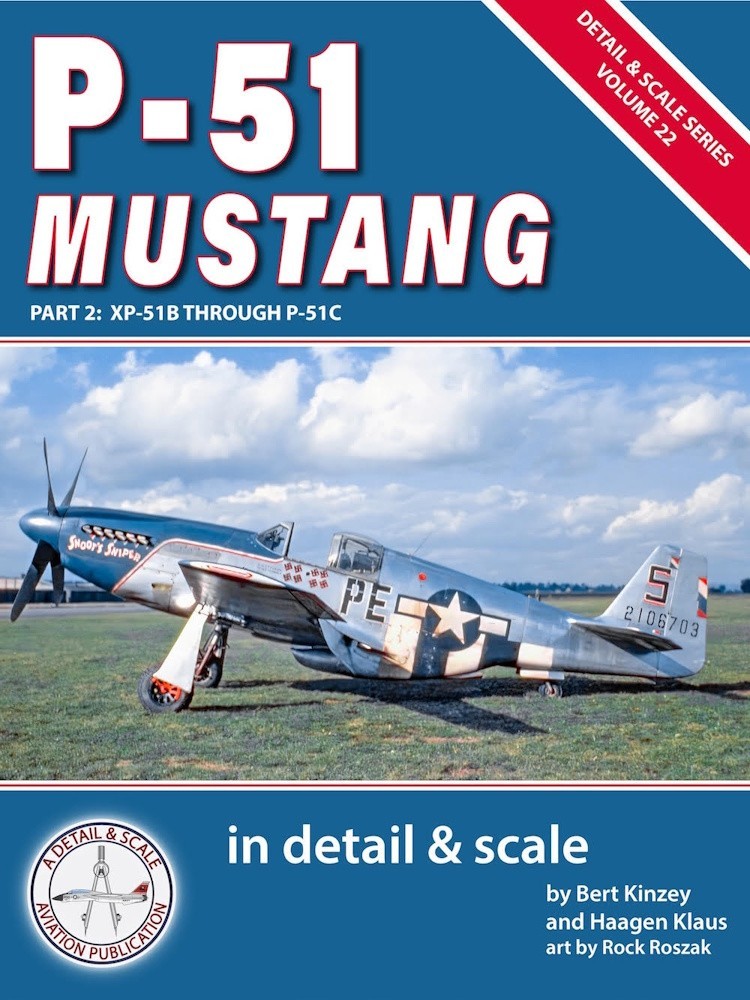
Detail & Scale is back with their second installment in their three-part series on North American’s famous Mustang fighter, and yet again, they’ve knocked it out of the park. While the B/C variants of the P-51 are more well-known than their earlier, Allison-engined siblings, they are still underappreciated compared to the ubiquitous D-model. This book is an excellent step in solving that problem.
As always, the book is a perfect mix of history and photos. Authors Bert Kinzey, Haagen Klaus, and Rock Roszak dive into the early history of the British attempts to squeeze more performance out of the already-excellent Mustang by shoehorning a Merlin engine into the airframe. As the authors note, this was done in characteristically British fashion, with all aerodynamic and aesthetic considerations set firmly to the side. But once North American picked up the efforts into the production line, increased the height of the fuselage to account for the size difference of the Merlin engine, and faired things over gracefully, a legend was born.
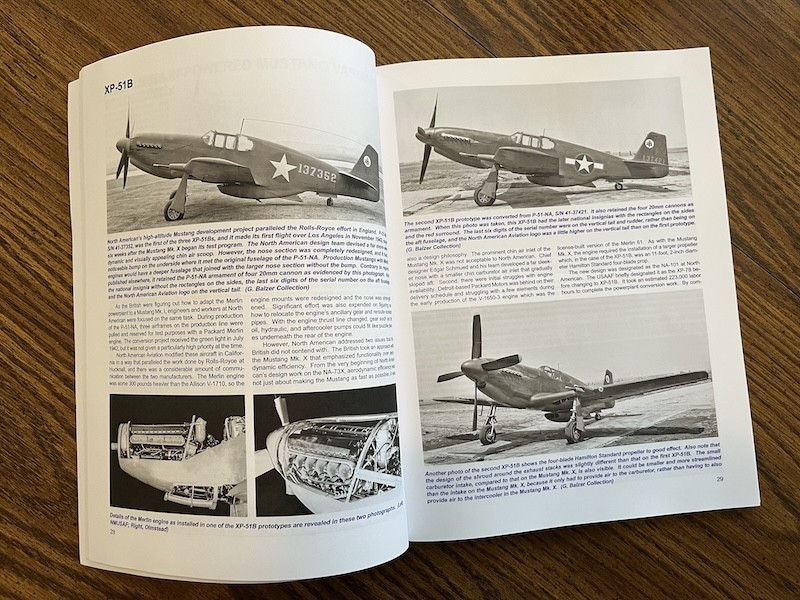
On that note, just as with Part 1, the authors do a great job debunking the persistent idea that the P-51A, and then the P-51B/C, were somehow deficient and only truly achieved their potential with the bubble-top D model. North American designers were fully aware of the Allison engine’s limitations and built the P-51A to take full advantage of that engine’s strengths. Then, with a new engine, the P-51B/C gained altitude potential. But it was fully the equal of the D model in performance. We’ve all heard wartime pilots and modern warbird pilots say they prefer the performance of the B/C over the D. When fitted with a Malcolm hood—another British contribution to this American stallion—it’s easy to see why.
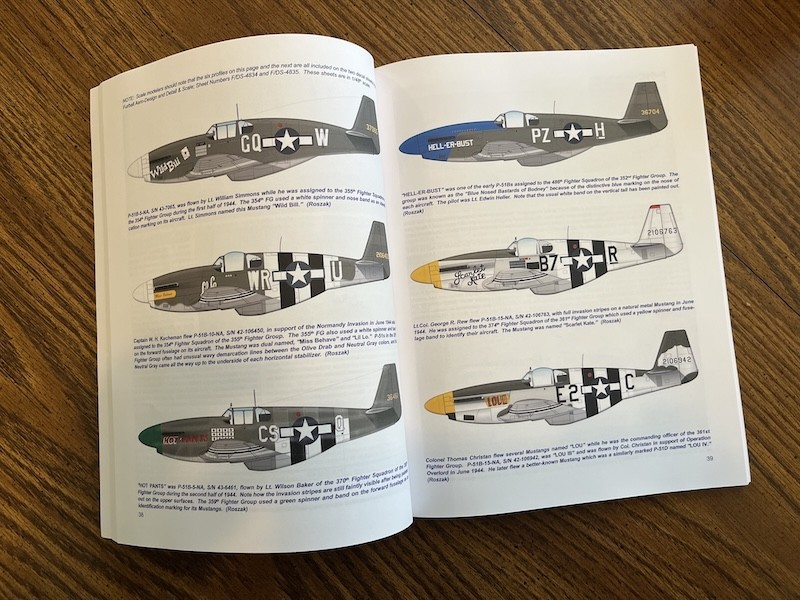
The photos are the usual mix of excellent color photographs and less-common black and white photos. I particularly appreciated the range of color photos from different theaters of the war, allowing the modeler to get a detailed sense of how different environments affected different camouflage patterns. There’s an entire section dedicated to the British Mustang Mk. X, an interesting high-altitude test airframe I’d never seen before.
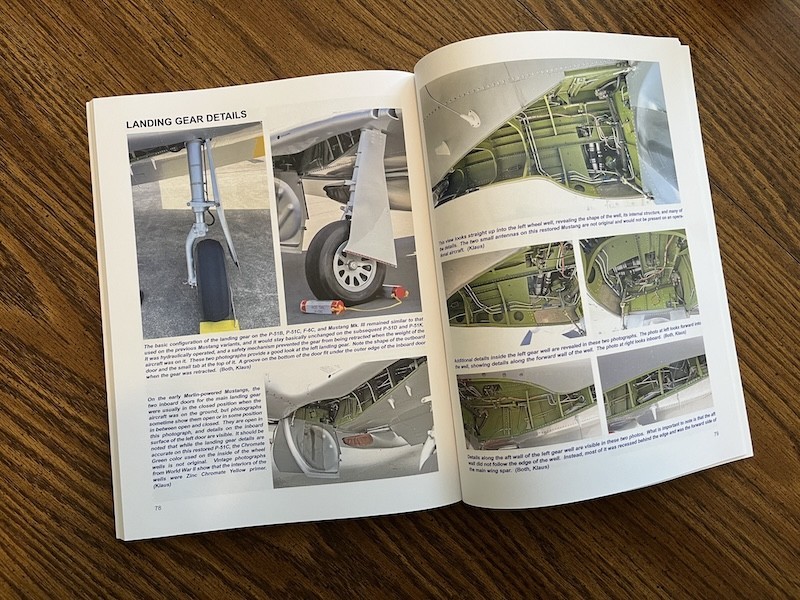
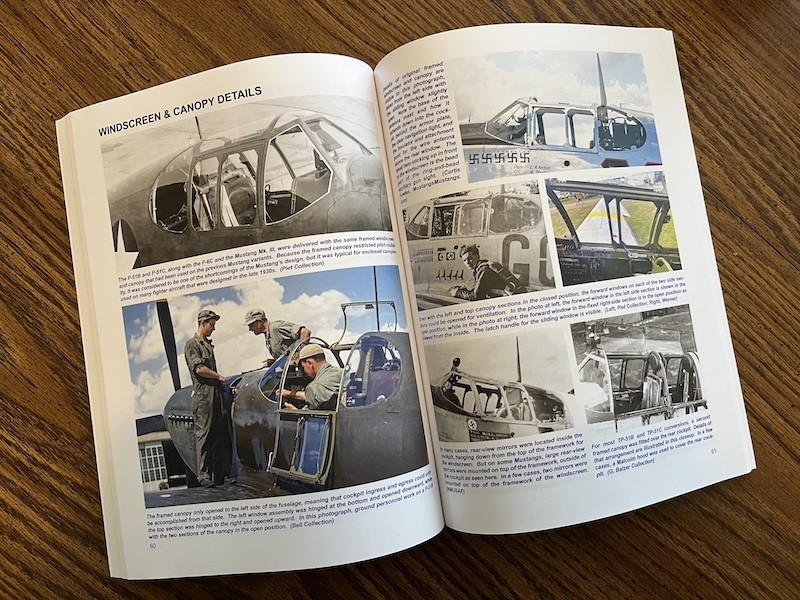
Additionally, as you’d expect from a book under the name “Detail & Scale,” there are dozens of detail photographs of accurate modern restorations and wartime examples giving the scratchbuilder plenty of material to work with. There are entire sections covering the cockpit details, windscreen and canopy, propeller, Packard Merlin engine, fuselage and wings, internal armament, external stores, landing gear, and tail sections. There are also detailed photos of the ad hoc canopy arrangement on the two-seat TP-51B/C variants.
As mentioned in review of Part 1, this book offers an excellent chance to have in print form, the answer to often-Googled questions. In my case, it’s been useful to finally have an answer to the issue of which seats were used in the B/C Mustangs, what they were called, and of what material they were made, complete with drawings and photos. Additionally, the extensive pictures of the canopy framing will be helpful for some of my upcoming builds.
As always, the “Scale” portion of the book was appropriately detailed and includes some upcoming developments I wasn’t aware of. The authors’ modeling skills are impeccable, and the built-up kits shown are excellent representations of each offering. It was here that I learned that Eduard and Zoukei-Mura are planning to release 1/32 scale versions of the P-51B/C variants.
All in all, this is a “must add” book for any modeler who enjoys building the Mustang fighter. With as many books on the P-51 as I have, this one has nevertheless become the first one I’ll grab when solving a problem at the workbench.
Thanks to Detail & Scale for sending us the review sample. You can find out more about this book and get links to ordering the print and digital versions of the book at www.detailandscale.com. You can find the review at P-51 Mustang in Detail & Scale: Part 2