











Foreword
Japanese Navy Air Force (IJNAF) bombers and fighters stunned America when they attacked the Philippines on December 8, 1941, flying distances not though possible by Allied intelligence. The A6M2 Zero was in effect the first strategic fighter and for the early months of the war, a relative handful of Zeros convinced the Allies there were thousands of them flying from secret bases near Allied airfields. Zeros spearheaded Imperial Japan's bewildering early offensives across the Pacific, usually sweeping all before them, and continued to show up where unwanted through 1943. Indeed, recent research shows that Mitsubishi's A6M type (Allied code-names "Zeke" or "Hamp" but always colloquially "Zero") generally held its own against more advanced, powerful Allied fighters through 1943. Like Britain and their Spitfire, the Zero is so enshrined in Japanese culture that their version of the F-16, the Mitsubishi F-2, is known as the Viper Zero.
Then came the specially trained very-long-range (VLR) pilots and the P-51D Mustang. They did in 1944-45 did what the elite pilots in the Zero did in 1941-43, and under equally extreme physical strain. P-51 held significant advantages over all IJNAF and Japanese Army Air Force (IJAAF) fighters, and took the war to Japan's soil. Japanese fighter pilots had no real answer for a properly flown P-51. Even if they did, the quality of Japanese aircraft manufacturing and servicing of fighters compared to the P-51 was even more lopsided, as was pilot training and experience.
Reminiscent of the Luftwaffe's first years against the Soviet Air Force over the Eastern Front - as reflected by the United States Navy's 'Great Marianas Turkey Shoot" - the VLR squadrons savaged the Japanese, only restricted by lack of Japanese airborne aircraft.
As Osprey describes that history;
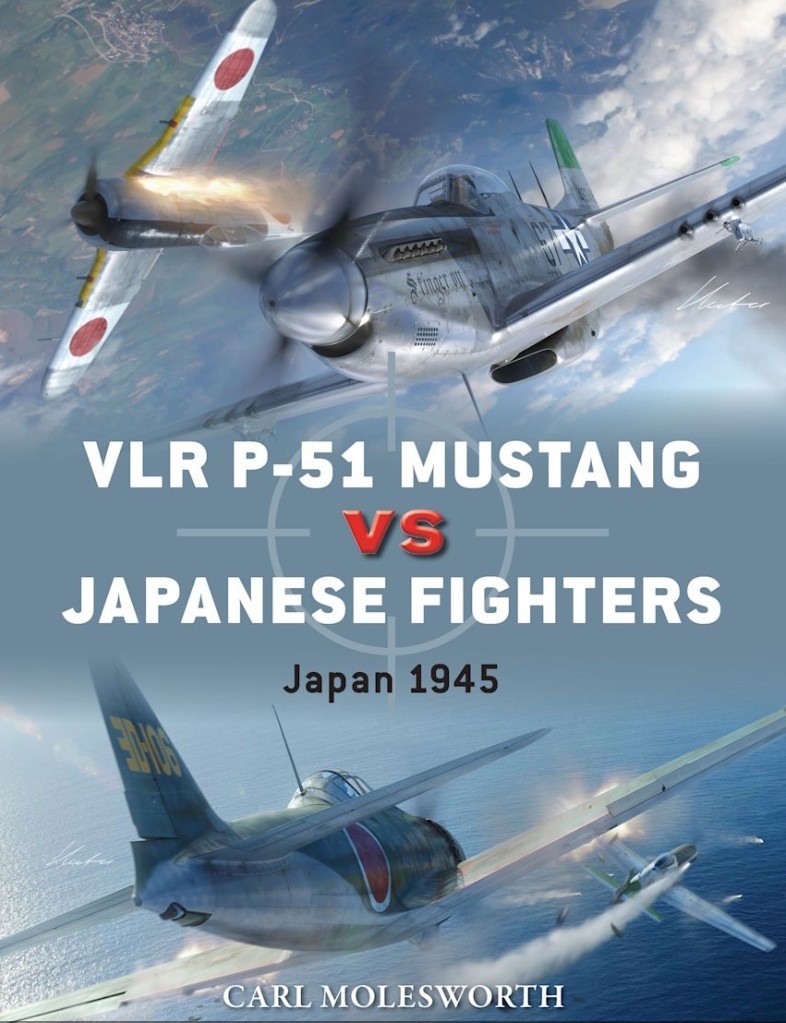
For four months in 1945, the skies over Tokyo saw USAAF P-51 Mustang pilots clash with Imperial Japanese Army Air Force (IJAAF) and Imperial Japanese Naval Air Force (IJNAF) fighters in some of the most intense aerial battles of the Pacific War. The Japanese marshalled ten different fighter types to defend the relatively small and well-defined target area, but the already iconic Merlin-engined P-51D Mustang, with its game-changing Very Long-Range (VLR) capabilities, would prove more than a match for their combined forces.
In this engaging new study, respected Pacific War historian Carl Molesworth employs combat reports and first-hand accounts to tell the story of how VII Fighter Command's Mustang pilots went from escorting B-29 bombers to actively seeking out enemy aircraft to attack. Newly commissioned armament, cockpit and battlescene illustrations, as well as a wealth of archive photos, bring the narrative to life, giving a vivid and illuminating sense of what it was like to be a fighter pilot in the air war over Japan in 1945.
Introduction
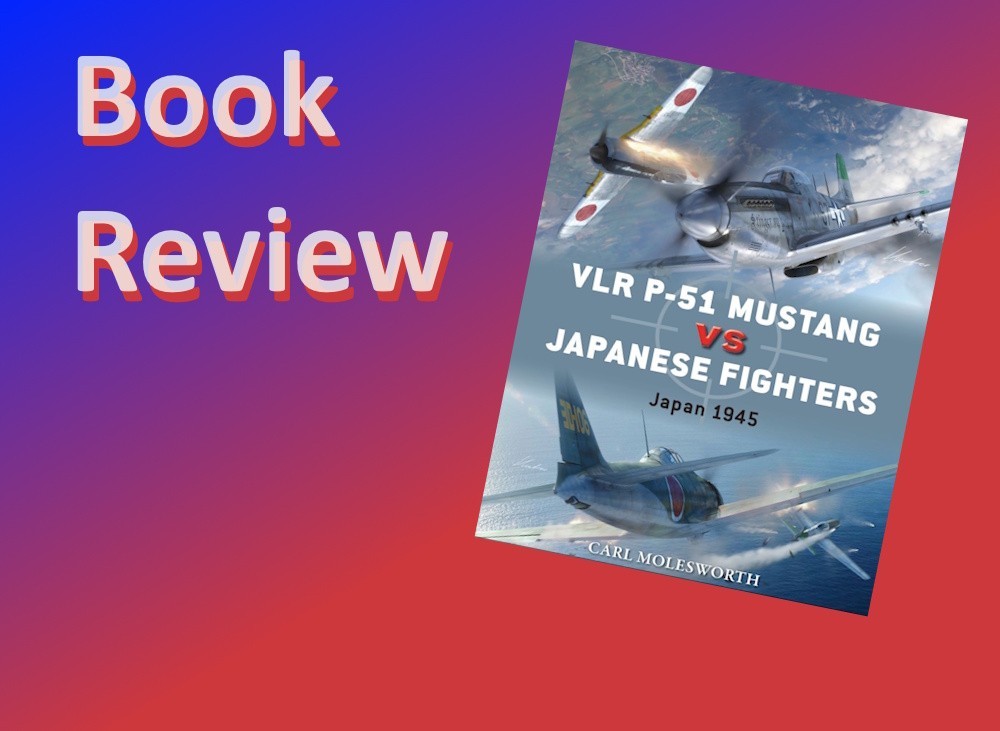
VLR P-51 Mustang vs Japanese Fighters, Japan 1945 is a recent title from Osprey Publishing, catalogued with ISBN 9781472866400. Authored by Carl Molesworth, and illustrated by Gareth Hector and Jim Laurier, this 10 x 7 inches 80-page book it is the 147th title of Osprey's series Duel, and available in paperback, ePUB, Mobi, and PDF. The text is supported with colour artwork plates and maps; black & white and colour photographs and illustrations.
Modelers, historians and enthusiasts can find a wealth of worthwhile information and images in this product.
Author Molesworth wrote a more in-depth history of VLR units for Osprey, which can viewed here: VLR P-51 Units of the Pacific War.
Content
VLR P-51 Mustang vs Japanese Fighters follows the standard format of Osprey Duel books, with topic arranged thusly;
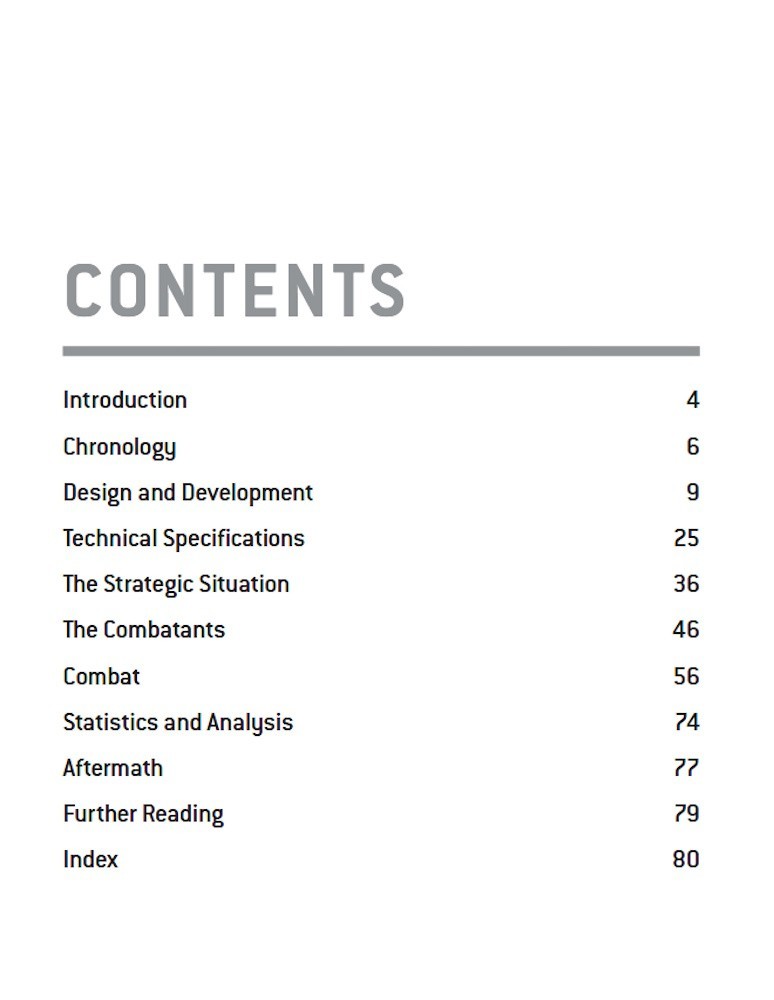
If you are a fan of the Ki-43-III “Oscar,” Ki-45 “Nick,” Ki-46 “Dinah,” or J1N1 “Irving”, I regret to mention they are not described in this book. Mentioned but not described. Otherwise, Design & Development recounts the fighters in this book through 16 pages, four of the P-51 and twelve for the Japan's contenders. The author explains key features and characteristics of the aircraft concisely, and even explains Japanese nomenclature. Which Japanese airplanes you wonder?
1. A6M5 Reisen (Zero-sen) "Zeke"
2. J2M3 Raiden ("Thunderbolt") "Jack"
3. N1K2-J Shiden-Kai (“Violet Lightning”) "George"
4. Ki-44 Shoki ("Demon Killer") “Tojo”
5. Ki-61 Hein (“Swallow”) "Tony"
6. Ki-84 Hayate (“Gale”) "Frank"
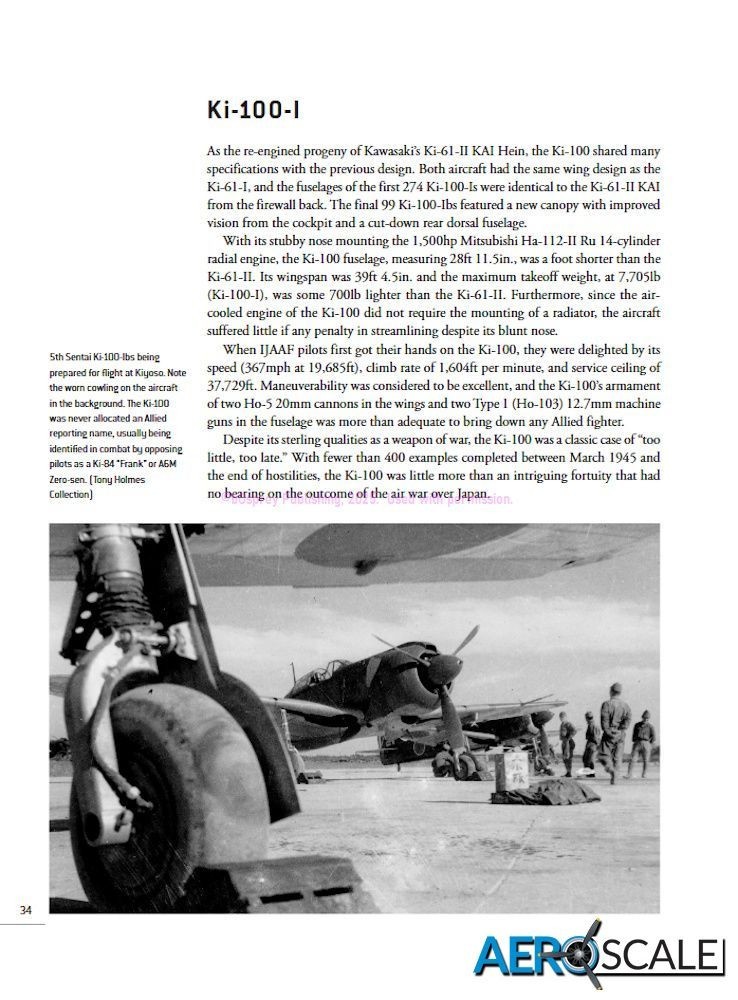
7. Ki-100
Each fighter receives a good description of its models and variants, and summary of its war accolades. Sixteen pages of Technical Specifications describes all eight fighters in equally good detail. Several illustrations support the text.
The Strategic Situation, and The Combatants recount the pressure Japan was under when P-51s first crossed its coast. Researchers should appreciate the accounts of Japan's table of organization and equipment (TO&E) for defending against the Allied offensive, information with which I was no acquainted. This includes lookout posts and radar, and other means of detection. For the P-51s, the effort to take Iwo Jima is discussed.
We also learn of the disparate mindsets and techniques involved in forging fighter pilots between the two countries. A Japanese pilot relates:
The rigidity of this weeding-out process was forcibly brought home to us on the very eve of our graduation. On that same day, one of the remaining students was expelled. A shore patrol discovered him entering an off-limits bar in the town of Tsuchiura to celebrate his “graduation.” He was premature in more respects than one. Upon his return to the billet, he was ordered to report at once to his faculty board. By way of apology the student knelt on the floor before the officers, but to no avail.
Training regiments, and combat tactics and formations are discussed.
The book features two biographies, VLR pilot Captain Willis E. Mathews and legendary IJNAF Lieutenant JG Sadaaki Akamatsu, who after taking on numerous P-51s in an obsolescent Zero, was praised by a VLR pilot that, “He made us look like a bunch of truck drivers.”
The main even for most of us starts on page 56 with Combat. VLR missions were long and could not cycle frequently, thus were relatively few. However, some dogfights were as large as those over Germany, with hundreds of fighters writhing over Honshu. The chapter is organized by specific mission dates. VLR groups and squadrons are named, often with specific pilots. As are a couple of Japanese accounts. In some instances, Japanese casualties are mentioned by name.
An example of a pilot's recount is a unique kill by a VLR pilot:
I dropped external tanks and led the squadron down into them. I fired two rockets head-on into the formation, which split them all up. One Tony pulled away straight, and I hit him in the tail with a rocket. A large piece of his tail surface broke off and the rocket exploded directly in front of the enemy. The Tony fell straight down out of control, trailing coolant.
Another described his kill:
...I saw a Tony going in the opposite direction about 1,000ft lower. I made an overhead attack on him but couldn’t get the right amount of lead, so on the recovery from 500ft below I gave him a short burst from close range. Overshooting, I pulled up over him and rolled on my back. From this position I could see the left side of his engine burning. He then started about a one-needle-width turn to the left, and I dropped back on his tail. From this position I fired a three- or four-second burst from about 300ft. His right wing came off at the middle panel.
Another pilot described the feeling of diving with this squadron from 20,000 feet to machine gun and rocket an airfield. Not all are American accounts, such as a whole page account of dogfighting by Mustang killer Maj. Yohei Hinoki, and a shorter account by Lt Yutaka Morioka, who fought with a hook as a prosthetic hand. Those are but a few examples of first-hand accounts.
Finally, Statistics and Analysis, and Aftermath sums up the war between the VLR P-51 and Japanese, which was expected to last much longer than it did. It mentions that the P-51 had multiple tasks over Japan and VLR attrition, and explains why more of the thousands of existent Japanese warplanes were not shot down by them. We also learn of surviving US and Japanese aircraft.
As expected, Mr. Molesworth's writing is clear and flows smartly. I noted no typos.
Photographs, Artwork and Graphics
Photographs
Modelers will appreciate the gallery of images. They are suitable for source material for research and detail, and inspirational for dioramas. These include a range of professionally composed, exposed and developed photographs, to amateur shots, and grainy gun camera frames. Some photos look like they were reproduced from newspapers or motion picture films. All are relevant and useful. At least two color photos graces the pages, one from the campaign.
Illustrations
Japanese 1945 fighter formation.
P-51 fighter formation.
P-51D-20 Mustang Cockpit as seen from the pilot's view, keyed to 69 components.
Ki-44 IIb Shoki Cockpit as seen from the pilot's view, keyed to 51 components.
Two-page combat scene of Capt Jim Van Nada in P-51D-20 44-63756 SHARPIE killing a "Tojo".
Tables
VII Fighter Command Aces by pilot, group, and victory score.
IJAAF Pilots claiming P-51 victories by pilot, unit, and Mustang kills.
IJNAF pilots claiming P-51 victories by pilot, unit, and Mustang kills.
Maps
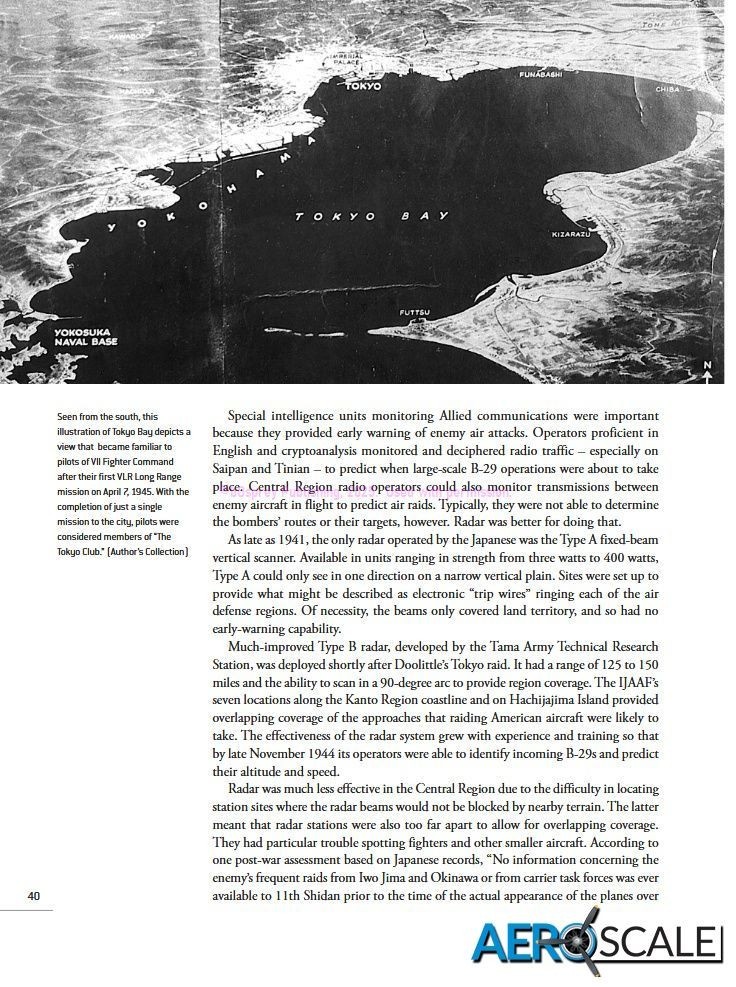
Locations of the fighter bases used by IJAAF and the IJNAF units tasked with defending Tokyo Bay during 1945.
Routes and ranges for Iwo Jima-based P-51D Mustang groups.
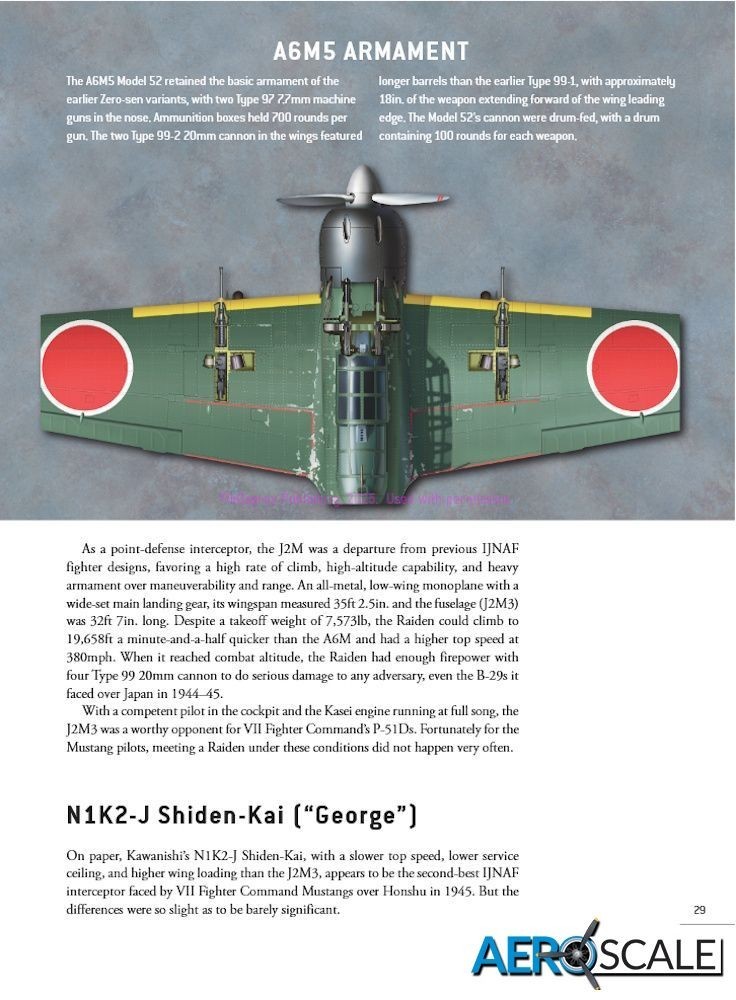
One of several cut-aways
Briefing material of the period
Original color
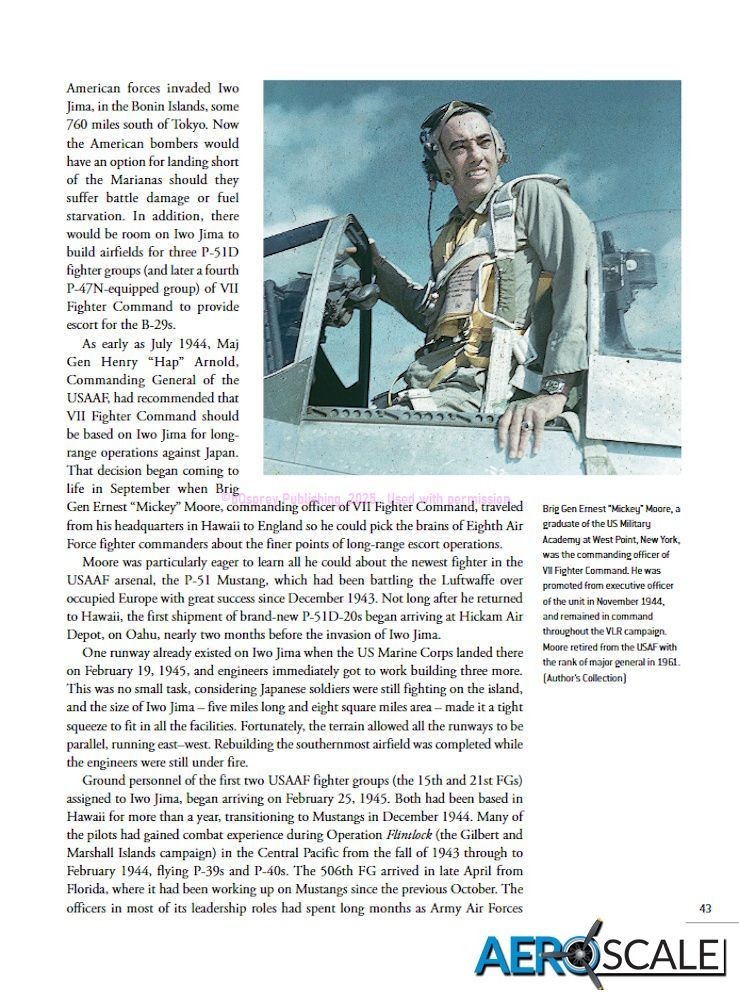
Detail and diorama ideas
Conclusion
VLR P-51 Mustang vs Japanese Fighters from Osprey is another fascinating Duel title of a story of the P-51 not given as much attention as their European brothers. This book focuses on the P-51 against Japanese fighters during a short, violent wind-down of the Pacific War, directly over the Japanese militarists' homes, against determined defenders fighting for their homes and families.
Though truncated by the 80-page format we are provided with a good deal of data and information with which to understand the aerial participants. Photographs and artwork support the text, and other graphics say more than dozens of other pages of text could.
Those who made the flights were inductees of the elite “Tokyo Club”. While Japanese pilots fought over friendly territory, leaving the speck of Iwo Jima and out of sight of land except for hostile territory, VLR P-51 pilots flew what could be considered the most demanding, punishing flights of any single-engine, single-pilot mission of the war. In doing so, they provided the cover so that the B-29s could try to bomb more effectively and ensured many more bomber crews got home safely. They also took the war to the personal low-level missions of bombing and strafing that really chewed up Japanese air forces. I highly recommend this title.
Thanks to the wonderful people at Osprey Publishing for providing this book to review. Please remember, when contacting retailers or Osprey, to mention that you saw their product highlighted here - on AeroScale.