












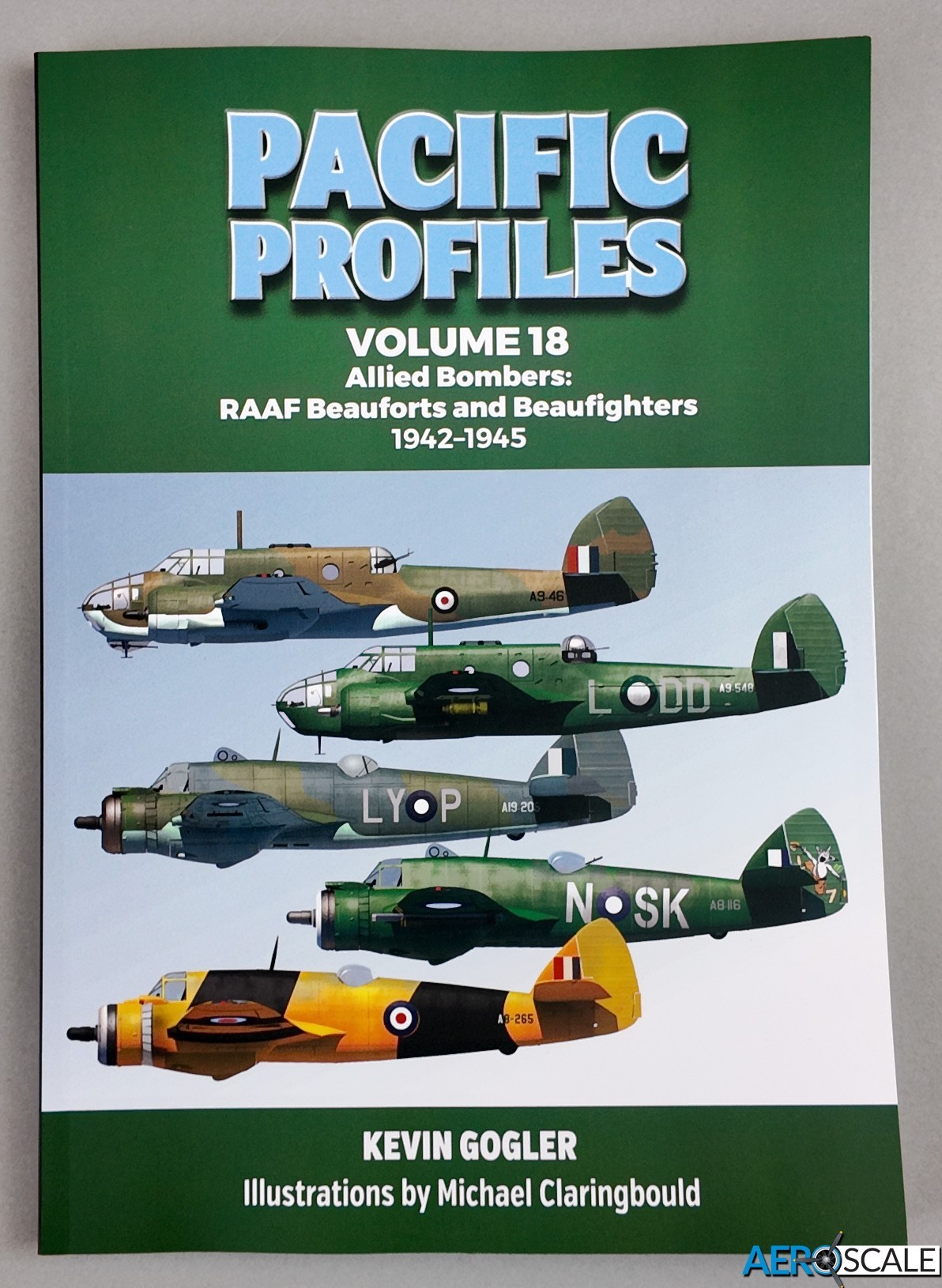
The latest volume in Avonmore Books' Pacific Profiles series turns the spotlight onto the Bristol Beaufort and Beaufighter in RAAF service. Author Kevin Gogler's 120-page 250 x 176mm softbound book combines a comprehensive overview of the types' production in Australia, along with their service on a squadron-by-squadron basis. This is all accompanied by excellent artwork by Michael Claringbould, with dozens of high-quality profile views backing up well-chosen period B&W photos to provide a very useful reference for modellers and aircraft enthusiasts alike.
RAAF Beaufort and Beaufighter Overview
The book begins with a description of the Beaufort and Beaufighter and their respective roles in the Pacific Theatre. It's interesting that in both cases the RAAF eventually used the aircraft somewhat differently to the RAF, with the Beaufort finding a new niche in the direct support of ground troops, and the Beaufighter not being deployed as a torpedo-bomber despite its success in that role elsewhere. A number of Beauforts were also configured as "Beaufreighters", a light transport version, with the gun turret removed and the rear fuselage reprofiled and faired smoothly towards the tail.
Next follows a list of the serial numbers for each of the Beaufort and Beaufighter variants used by the RAAF, both UK- and Australian-built, along with a summary of their distinguishing features. This is very welcome as a crucial aid when identifying any given airframe from a photo with a view to modelling it accurately.
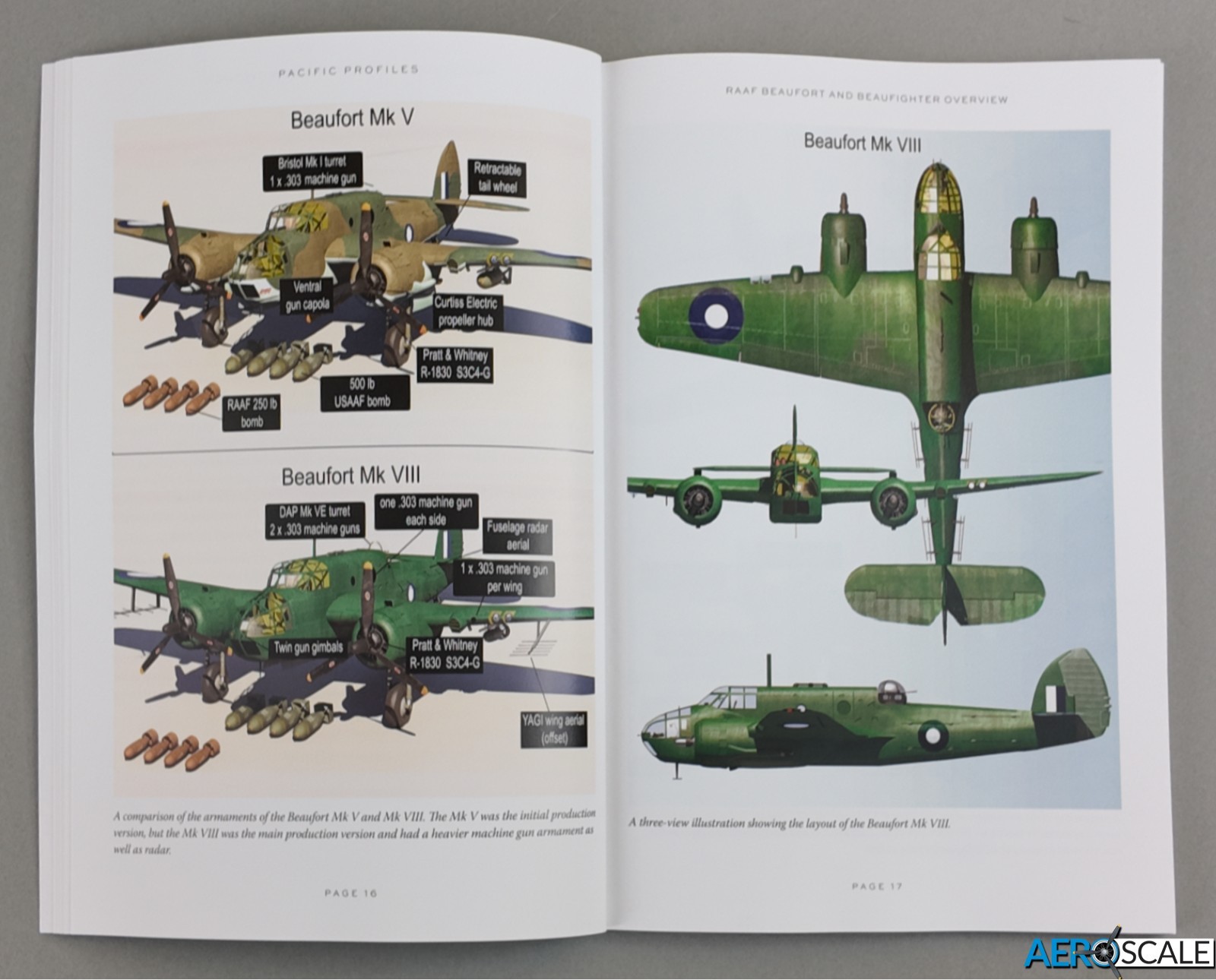
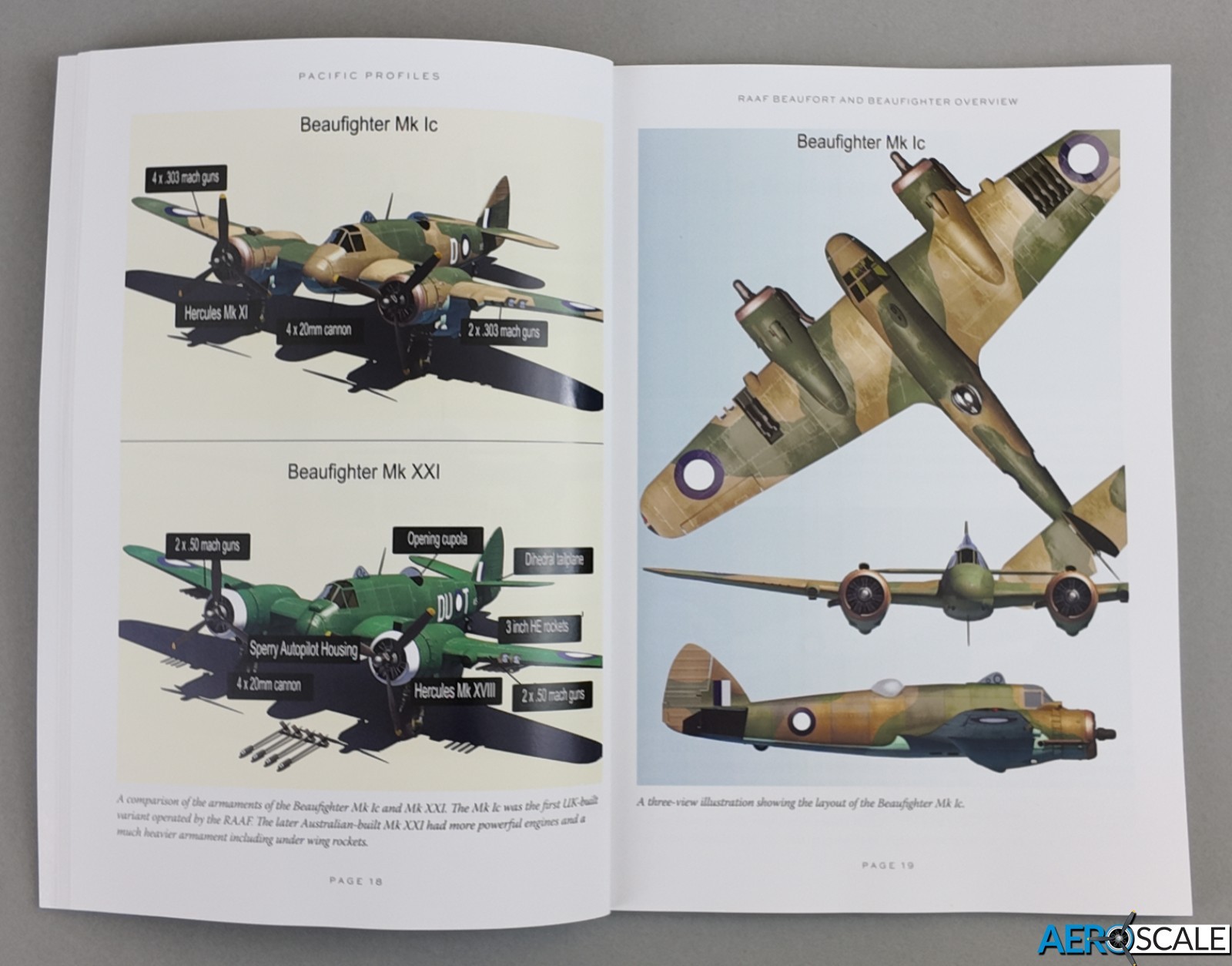
The chapter concludes with excellent comparison colour artwork of two representative versions for each aircraft - a Beaufort Mk V vs. a Mk VII, and a Beaufighter Mk 1c vs. a Mk XXI - with specific differences clearly highlighted. There are a number of important changes to note from a modelling perspective, such as the prominent Sperry autopilot "blister" added ahead of the windscreen on the Beaufighter and, more crucially, the completely revised fin on Australian-built Beauforts. High Planes Models have a 1:72 modification set for this (and a "Beaufreighter conversion), but at the time of writing I think it'll required some scratch-building to convert the 1:48 ICM kits of the Beaufort.
Building the Beaufort and Beaufighter in Australia
The author then describes the remarkable story of the production of the Beaufort and Beaufighter in Australia. Prior to WWII, Australia was almost totally dependent on foreign imports for military hardware, and planners realised the vital importance of establishing domestic production in any future conflict when supplies by sea might be threatened.
This was especially true for the RAAF, because the Australian aviation industry was still in its infancy, with no experience in the production of modern high-performance aircraft, let alone the capacity to build them. No longer able to rely on importing aircraft and components from the UK and the USA, the entire supply chain and production infrastructure had to be built up from scratch, drawing on all sectors of Australian industry to supply the aircraft needed by the RAAF.
Camouflage & Markings
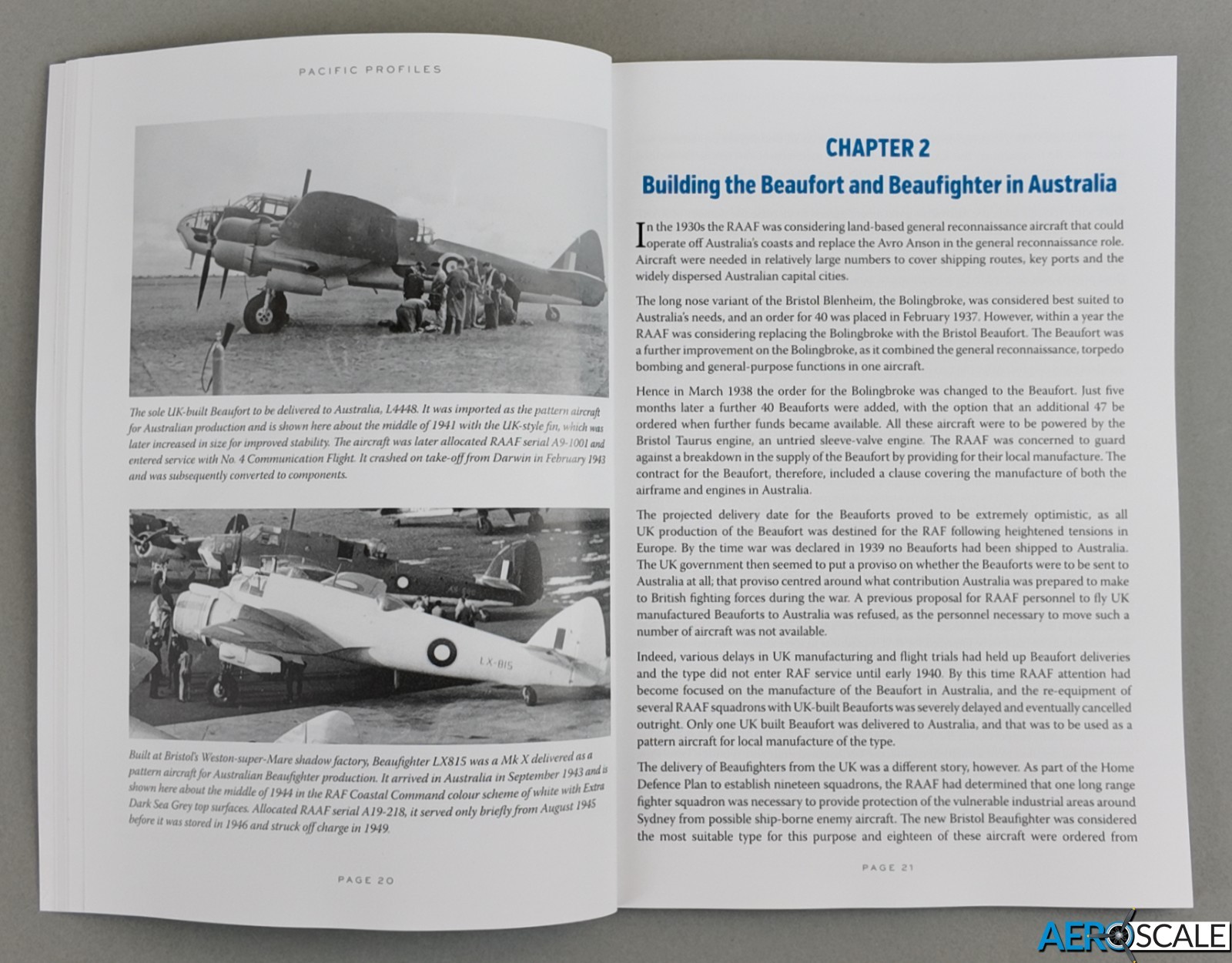
Along with getting the details correct, top of the list for modellers is ascertaining the correct colour schemes, so Chapter 3 will be essential reading, as it describes the development of RAAF camouflage and markings as applied to the Beaufort and Beaufighter. While early aircraft broadly matched their RAF counterparts, the Australians soon introduced colours of their own that were better suited to local conditions. The RAF's Dark Green and Dark Earth were replaced with richer colours, Foliage Green and Earth Brown respectively, and Sky undersides were often painted in a pale pastel Sky Blue.
Later on, the RAAF dispensed with disruptive camouflage entirely and combat aircraft were painted in overall Foliage Green, while later still, some aircraft in secondary roles could be seen stripped back to natural metal.
National insignia initially followed standard RAF practice, but in 1942 the red areas were overpainted in white in accordance with US policy to avoid possible confusion with the Japanese Hinomaru roundel. The postwar years saw Australian national markings revert to their RAF equivalents before, in 1954, the distinctive RAAF kangaroo roundel was introduced that remains in use today.
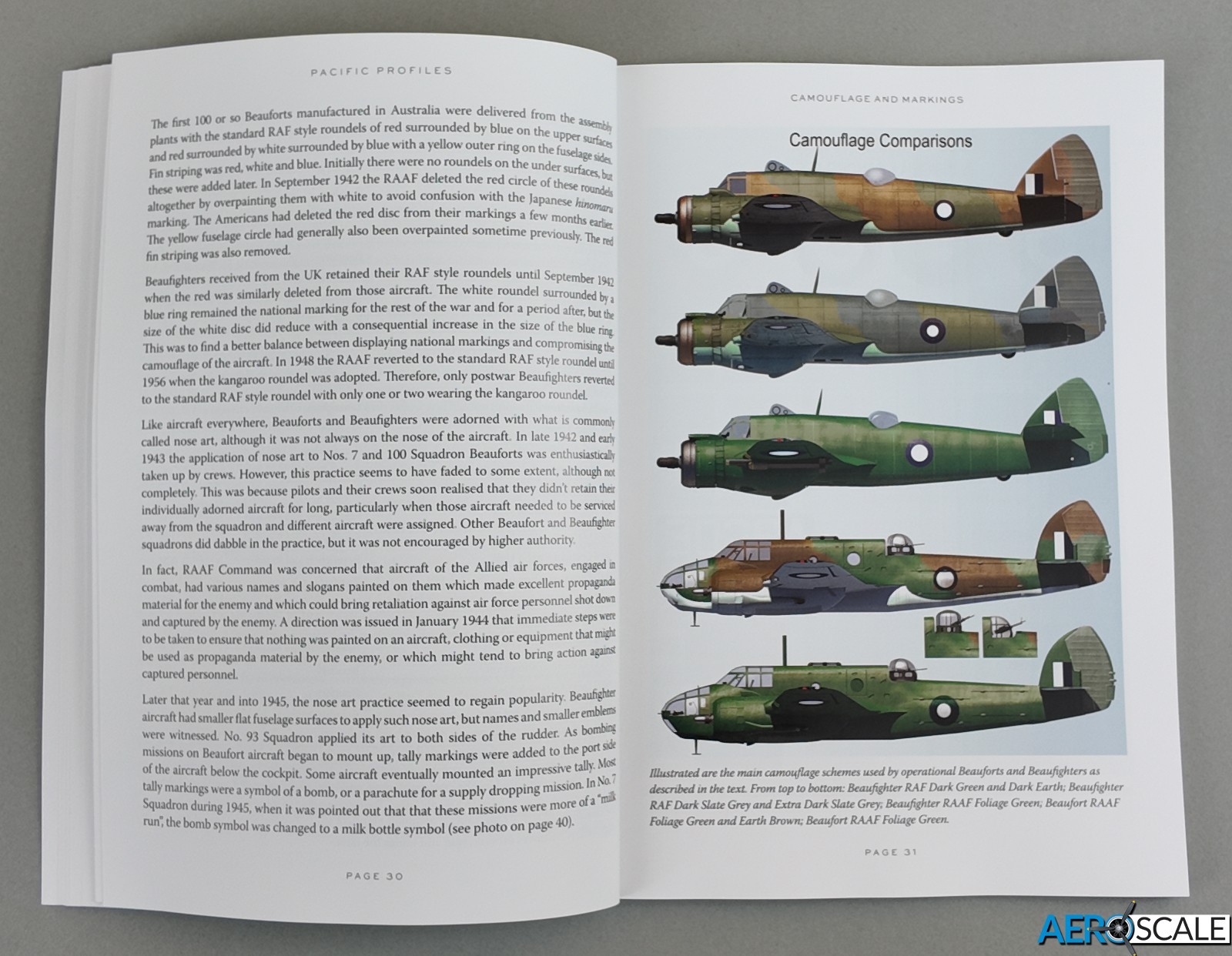
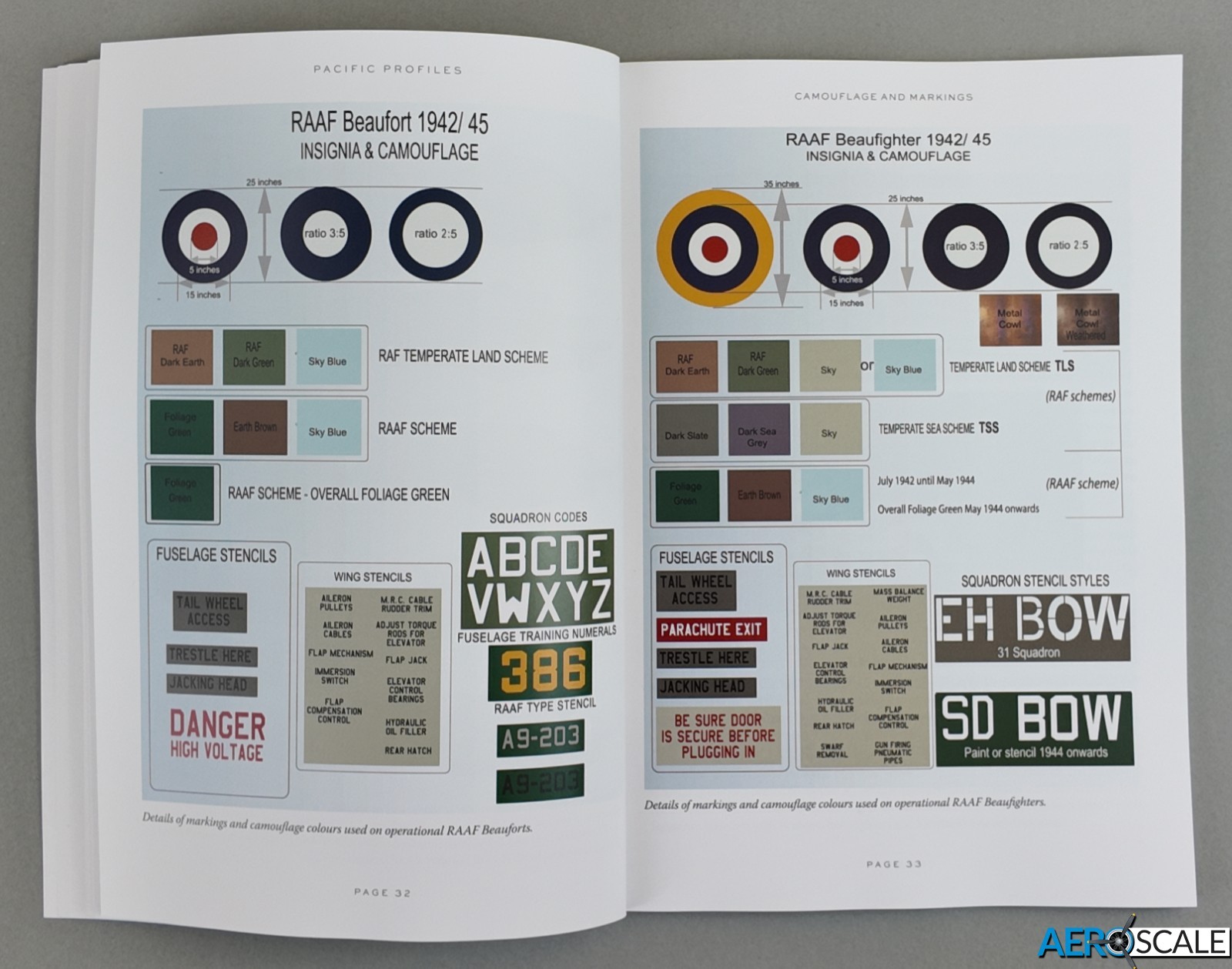
The chapter also explains the RAAF markings system for squadron codes and serial numbers, along with showing details of servicing stencils, plus a list of the unit codes for the twenty-seven RAAF squadrons that operated the Beaufort and Beaufighter.
Squadron Histories
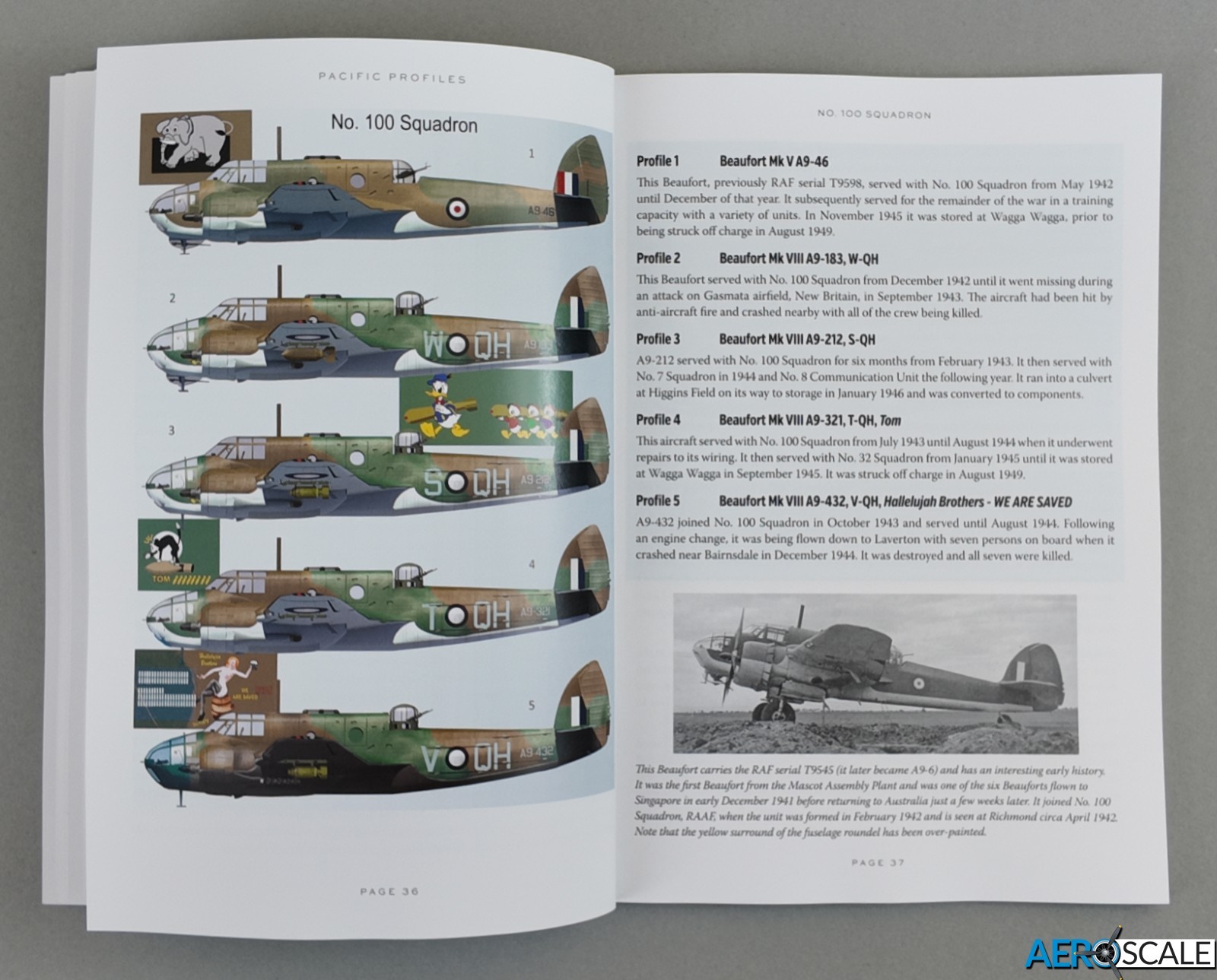
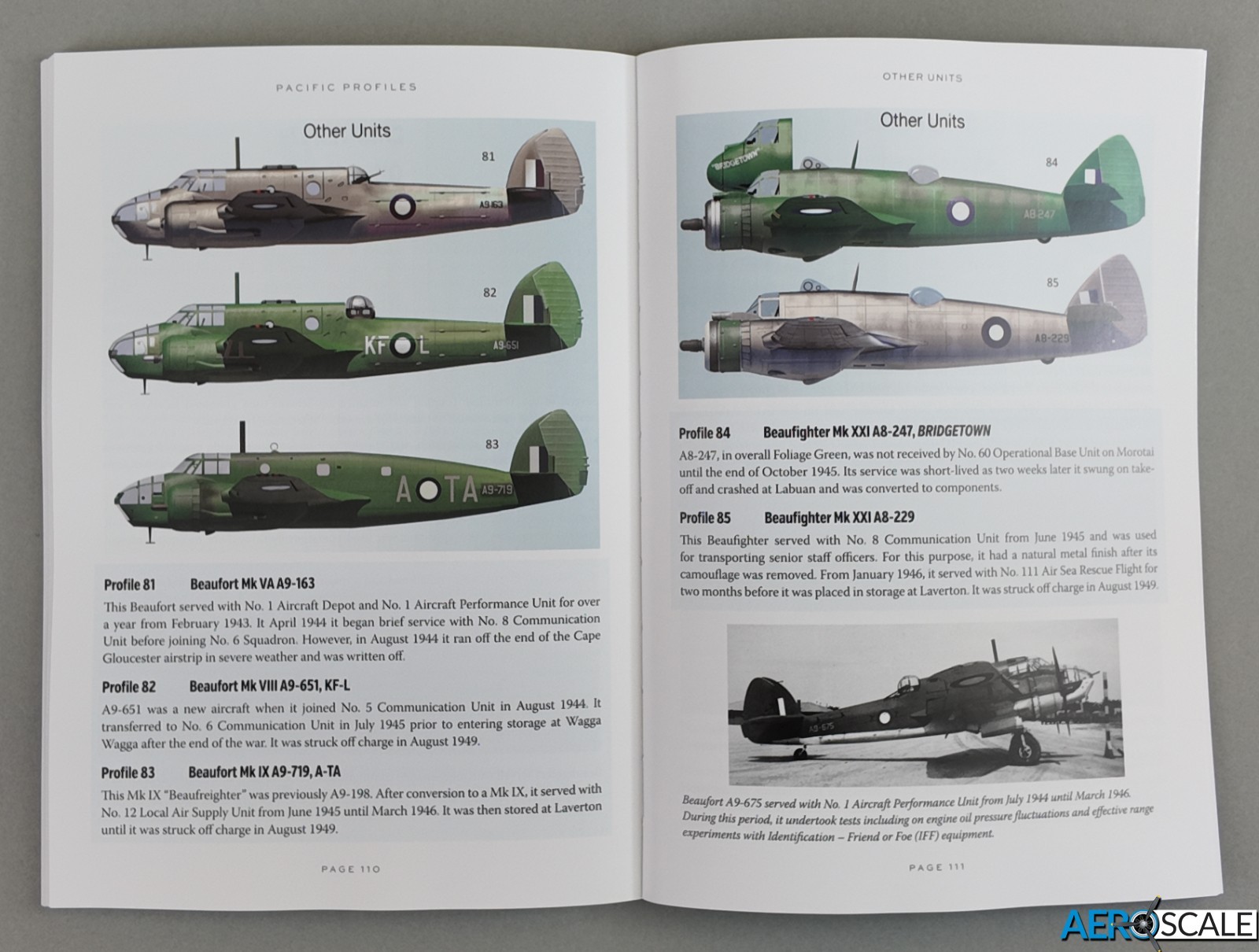
At this point the book takes a different path to other books I've read, and the remaining sixteen chapters are each devoted to individual RAAF squadrons. On average this includes a page or two of a unit's history from its formation to the end hostilities, with details of the squadron's role, where it operated from, and specific actions in which it participated. All this can be pinpointed on maps at the front of the book, and every chapter includes very useful original B&W photos with excellent captions.
But arguably the best is yet to come from a modelling standpoint, because each chapter also features high quality profile artwork of a selection of the aircraft operated by the squadron, complete with details of nose-art etc., and accompanied by short descriptions of the history and eventual fate of the particular aircraft.
This all adds up to a treasure trove of information for anyone interested in modelling RAAF Beauforts and Beaufighters, and it's a format that I find excellent, with a bonus for me being that the compact size of the book makes it ideal to have handy at the workbench.
Conclusion
I've thoroughly enjoyed Kevin Gogler's study of the RAAF's Beauforts and Beaufighters, and I will definitely look out for more titles in Avonmore Books' Pacific Profiles series. It's a title that will appeal to aircraft enthusiasts and modellers alike, and it does a fine job in paying tribute to the crews that fought in some of the harshest conditions of WWII, along with the enormous national effort necessary to provide them with the aircraft they flew.
Many thanks to Avonmore Books for the review copy.
Pacific Profiles Volume 18 Allied Bombers: RAAF Beauforts and Beaufighters 1942-1945 (ISBN 978-0-9756423-8-2) is available now from Avonmore Books - Price: $36.95 plus P&P
Please remember, when contacting retailers or manufacturers, to mention that you saw their products highlighted here - on AEROSCALE