












HISTORY:
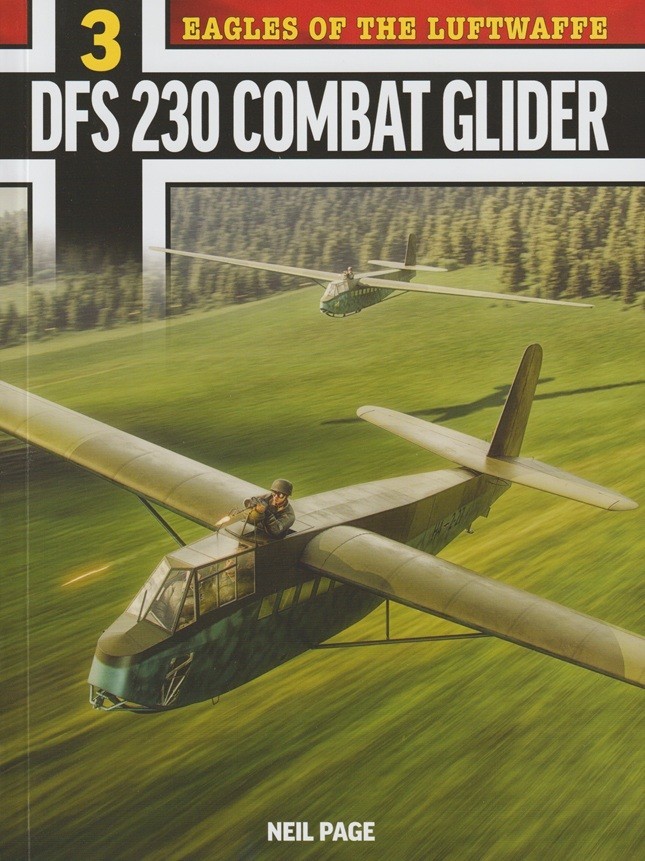
** When it came to daring raids during the Second World War, the Luftwaffe’s airborne troops, the Fallschirmjäger, had a secret weapon - the DFS 230 combat and assault glider. Ében Émael, Corinth, Crete, Gran Sasso, Drvar and the Vercors are synonymous with the type – which could carry nine fully-equipped troops, dive towards its target at a steep angle and land within 20m of it.
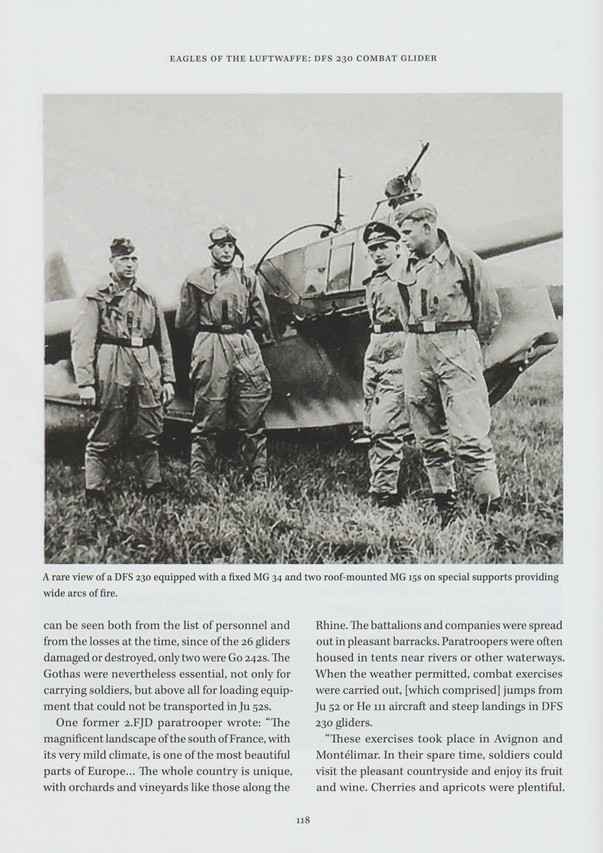
As a ‘Lastensegler’ it was also frequently used for freight and could quietly deliver up to 1,200kg of cargo, even into areas considered too difficult and hazardous for successful supply drops by conventional means. For particularly difficult landing areas, it could optionally be fitted with up to three machine guns.
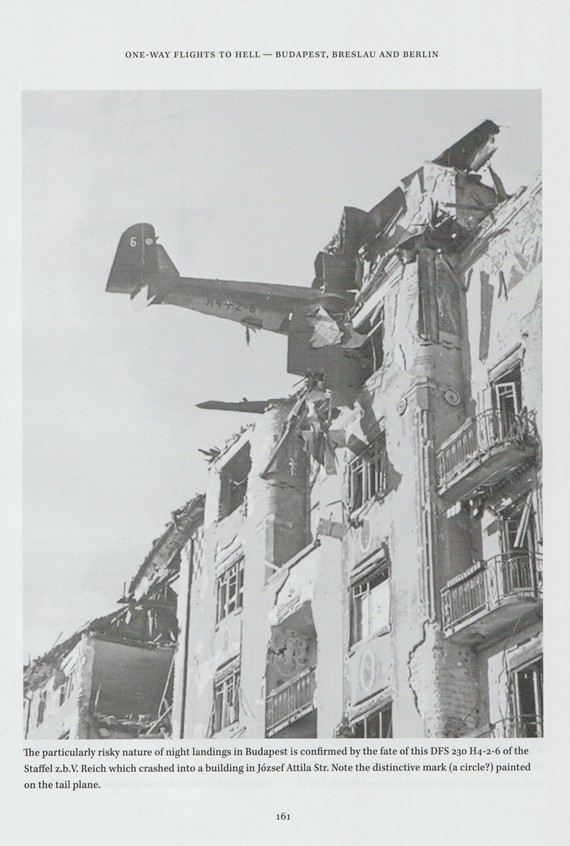
Designed during the mid-1930s, the DFS 230 entered service in 1939 and was operated throughout the war in every theatre where German forces were involved in the fighting. A DFS 230 was probably the last aircraft type to put down in the inferno of Hitler’s encircled capital city just days prior to the dictator’s suicide on April 30, 1945.
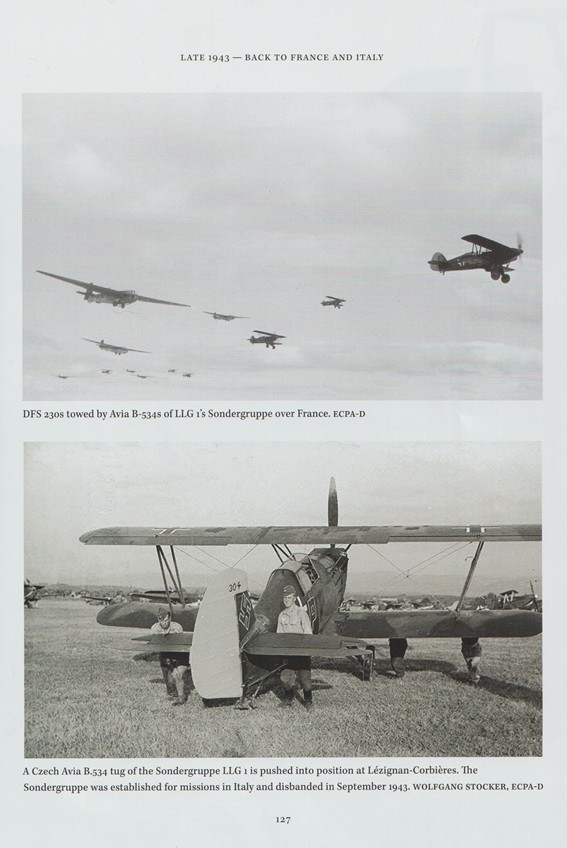
The type could be towed into the air by almost any powered combat aircraft – from Dornier and Stuka bombers to venerable Heinkel biplanes – dropping its wheeled landing gear on take-off and touching down on a skid. Around 1,600 DFS 230s were built from 1939 to 1943 and up to a dozen are thought to survive today.
Even though the DFS 230 was flown by some of the Third Reich’s best aviators, there are no accounts in English that have told the full story of the type or related something of what it was to fly, fight and die in the DFS 230 – until now. In “Eagles of the Luftwaffe: DFS 230”, Luftwaffe enthusiast Neil Page, author of the two-part Luftwaffe Fighters series from Tempest Books, describes both the type’s development and its service history and explores the fates of its pilots.
** Quoted from the book’s back cover.
THE BOOK:
Tempest Books has released DFS 230 Combat Glider as Number 3 in their Eagles of the Luftwaffe series of books. It is a 182-page softcover book, 7.24 x 0.39 x 9.69 inches in size. Included with the text are black and white and color photographs. The book has a 2025 copyright, a publication date of February 28, 2025, and the ISBN is 978-1-9117-0426-3.
CONTENTS:
Introduction
1. Gliding and the Origins of the DFS 230
2. Blitzkrieg in the West! Ében-Émael and the Albert Canal Bridges
3. Establishment of Luftlandegeschwader I and ‘Sea Lion’ Preparations
4. ‘Marita’ and ‘Merkur’ – (I) Corinth (II) Einsatz Kreta
5. The DFS 230 in Action in the East – Ösel 1941
6. Special ‘Ops’ in North Africa
7. The ‘Kessel’ Battles and the Kuban
8. Late 1943 – Back to France and Italy
9. ‘Unternehmen Eiche’ – Gran Sasso and the Rescue of Mussolini
10. Operation ‘Rösselsprung’ – Knight’s Move Against Tito
11. Vercors – with KG 200 in Combat Against the French Resistance
12. One-Way Flights to Hell – Budapest, Breslau and Berlin
Afterword
Index
THE TEXT:
Author Neil Page provides a well written and informative text detailing the German DFS 230 Combat Glider and it’s use during World War Two. The text goes into great detail in all areas as outlined on the contents page, please refer to the list of contents that I have provided for the areas that are covered. Neil Page goes into great detail with a no-nonsense type of writing that provides a wealth of information on the DFS 230 Combat Glider and it’s use before and during the war on the different fronts and in specific actions such as at Ében-Émael and the rescue of Benito Mussolini at Gran Sasso. There are detailed accounts discussing the results of what happened to the gliders, pilots and passengers upon successful and unsuccessful landings. Also discussed are what the conditions were that allowed for successful landings and what negative factors caused landing mishaps. The pre-war training and use of the gliders is discussed as well as changes made to them, their use in combat on the various fronts, their successes and failures and other such information is discussed and covered well. In addition to his own words, Neil Page has also provided quotes from personnel involved with the glider in one form or another such as a German aerospace engineer as well as German commanders, group leaders, pioneers, parachutists as well as the glider pilots themselves. Also provided are quotes from official German military documents and post war interviews and other sources. I feel that Neil Page has covered the German DFS 230 Combat Glider and it’s use during World War Two well and has provided the information in an easy-to-read format which the detailed oriented reader will benefit from. Neil Page doesn’t use what I refer to as fluff writing where a large amount of non-essential extra text is provided just to help fill the pages. As I read through the text, I didn’t notice any spelling or grammatical errors. Grammar and spelling might not be an important factor to everyone however it is something that I take notice of and pass on my findings. This is a well-written history that will be of great use and interest to the knowledgeable German DFS 230 Combat Glider enthusiast as well as the individual that is new to this World War Two aircraft and wants to learn about its history. Anyone wanting to add an excellent reference and history book on the German DFS 230 Combat Glider during World War II to their personal library will be pleased with this very informative book.
THE PHOTOGRAPHS:
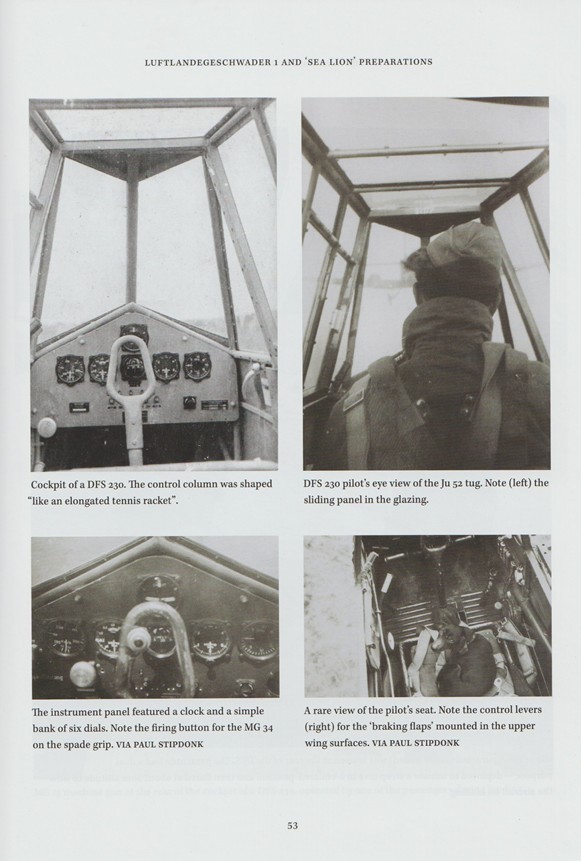
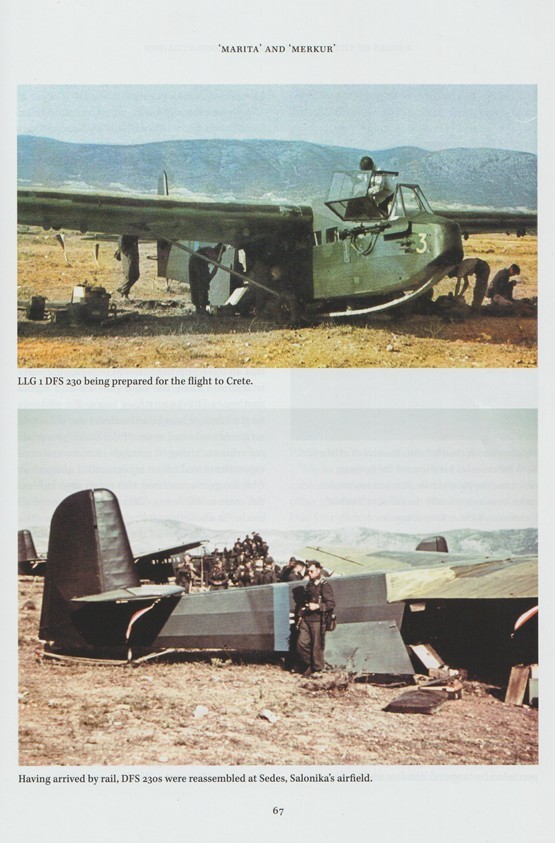
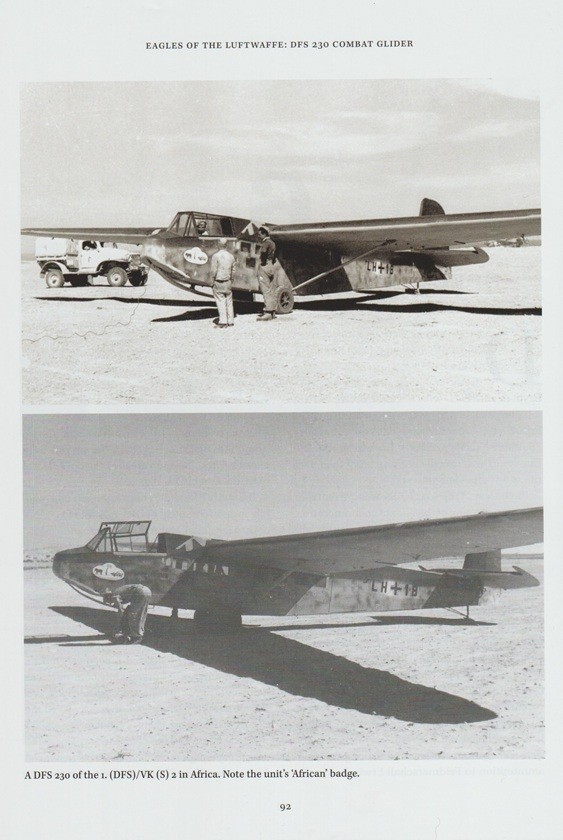
A total of 182 black and white photographs and 13 color photographs are included in this volume. Author Neil Page chose subject specific photographs and did not include photographs that strayed from the main subject of the book. Something that I was appreciative of, regarding the photographs, is that a majority of them are not overused photographs that tend to turn up in numerous publications. This is due to the fact that several of the photographs were loaned to the author and are from rescued personal collections and photo albums of German military personnel that took the photographs, and they were directly involved with the glider and glider operations during World War Two. Some of the photographs that I found to be of particular interest to me were the internal photographs of the aircraft showing the pilot’s controls and other internal features such as the skeletal frame. I also found the photographs of the damaged gliders to be interesting as well as they show just how fragile the aircraft were. Other photographs that I found to be interesting were those of the various tug aircraft such as the German Junkers JU 52 and the German Heinkel HE 45, as well as the captured Czechoslovakian Letov Š 328, shown towing the gliders to be interesting. Another interesting photo is of a glider in the snow showing how barbed wire had been wrapped around the landing skid to aid in stopping on the snow and ice. The photographs range from wide angle photographs to close-up detailed photographs. The detailed photographs focus on subjects such as specific parts of the gliders, aircraft markings and battle damage, military personnel and their uniforms, small arms and other such subjects. The images are a combination of in-action photographs, photographs removed from motion pictures to photographs that have been staged for the photographer as well as official military personnel profile photographs. Most of the photographs are clear and easily viewable; however, a few of them are somewhat blurry and a few of them appear to be too dark, while others appear to be too light. This can be typical for the period of discussion, and the quality of the photographs is of no fault of the author, and they take nothing away from the book. The majority, if not all, of the photographs will prove to be of great interest to anyone interested in the German DFS 230 Combat Glider, and its combat use during World War II, as well as the scale aircraft and figure modeler, due to the details they contain.
THE CAPTIONS:
The captions are well written and explain the accompanying photographs nicely and are basically condensed history lessons within themselves. The captions go into very specific detail as to the actions taking place, dates and locations, individual’s names and military rank, names of specific uniform items, names of military decorations, military units, weapon nomenclature, the codenames of specific military operations, specific parts on the gliders and their purpose, the type of aircraft and soft-skinned vehicles shown, English translations for German words used and other such information. As I read through the captions, I didn’t notice any spelling or grammatical errors. I was impressed with Neil Page’s captions as they are very helpful to the reader due to their detailed content as opposed to other captions that I have seen that are very brief and lacking in detail.
INFORMATION CHARTS:
There are 2 information charts included in this volume, and they are:
- Specifications of the DFS 230 Combat Gliders, Types A, B and C
- The original glider squadron names of seven squadrons, the new designation of each and who they were assigned to.
CONCLUSION:
This was my first opportunity to review a title in the Eagles of the Luftwaffe series of books, and I can say that I was impressed with this book. This is a very nice reference book that contains a well written informative text, many subject specific photographs, well detailed captions and more, all detailing the German DFS 230 Combat Glider and it’s use during World War II. I would have no hesitation in recommending this book to others as it will be a welcome addition to one’s personal military reference library.
PRICE:
UK £16.99 (Approximately $20.79 or €19.46)
https://www.mortonsbooks.co.uk/books/tempest-books
https://www.casematepublishers.com/
This book, from Tempest Books, an imprint of Morton Books, Ltd., was provided to me by Casemate Publishers. Please mention that you saw the book reviewed here on the KitMaker Network when making your purchase. Thank you.