












Introduction
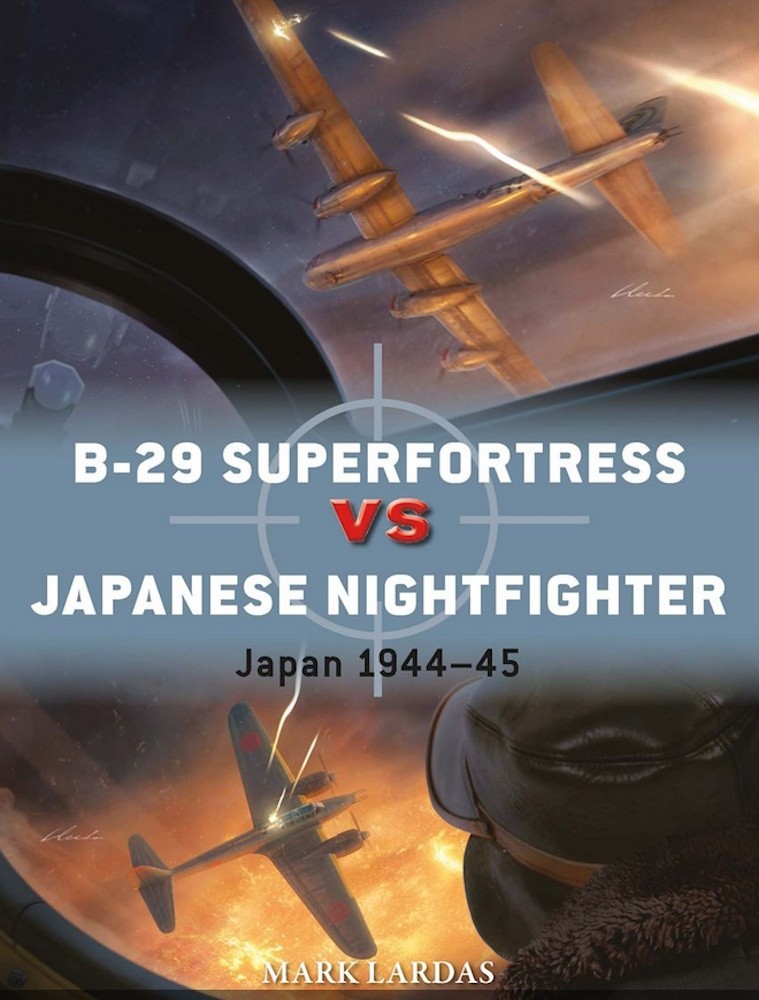
B-29 Superfortress vs Japanese Nightfighter Japan 1944-45 is a recent release from Osprey Publishing Ltd. Authored by Mark Lardas, and illustrated by Gareth Hector and Jim Laurier, it is part of the series Duel. This 80-page softcover book is catalogued with ISBN 9781472865601 and Osprey’s short code DUE 144. It is also available digitally as a PDF or Epub & Mobi.
During the Second World War the only project that cost more than developing the atomic bomb was developing the B-29 Superfortress, an incredibly complex cutting-edge aircraft. Japan fielded good aircraft as well, although they lagged in technologies such as radar. Yet, the Japanese aircraft were reliable while Boeing's B-29 fraught with lethal technical difficulties. Ironically, none of the Japanese nightfighters were designed for such a role while B-29s only fulfilled their mission by abandoning the role for which they were designed.
Osprey tells us:
In this study, Mark Lardas examines the capabilities of the aircraft involved, and reveals the conditions under which both sides fought. He evaluates the cutting-edge technology of both sides and how it affected the outcome of the battle. Maps, tactical diagrams, photographs and specially commissioned artwork bring the action to life as the individual US bombers and Japanese nightfighters fight a classic military duel.
Duel books offer a variety of resources for modelers, who can be educated and inspired by historical accounts and technical topics, and written and visual detail provided.
Content
B-29 Superfortress vs Japanese Nightfighter is told through 80 pages featuring nine chapters, plus front and back matter:
Introduction
Chronology
Design and Development
Technical Specifications
The Strategic Situation
The Combatants
Combat
Statistics and Analysis
Aftermath
Further Reading
Index
Opening the story we are introduced to the attack profile of the B-29 and the technical and operational capabilities of the Japanese nightfighters, in what became the first Tokyo fire raid. Following a chronology is a detailed recounting of the Design and Development of the title aircraft, looking all the way back past B-17s and XB-15s to Zeppelins and British four-engine Handley-Page O/400s of the Great War, and Japan's twin-engined, single-seat Kawasaki Ki-38, and Nakajima's J1N. We learn of the B-29 development and Japan's fielding of the J1N over Rabaul, among other topics.
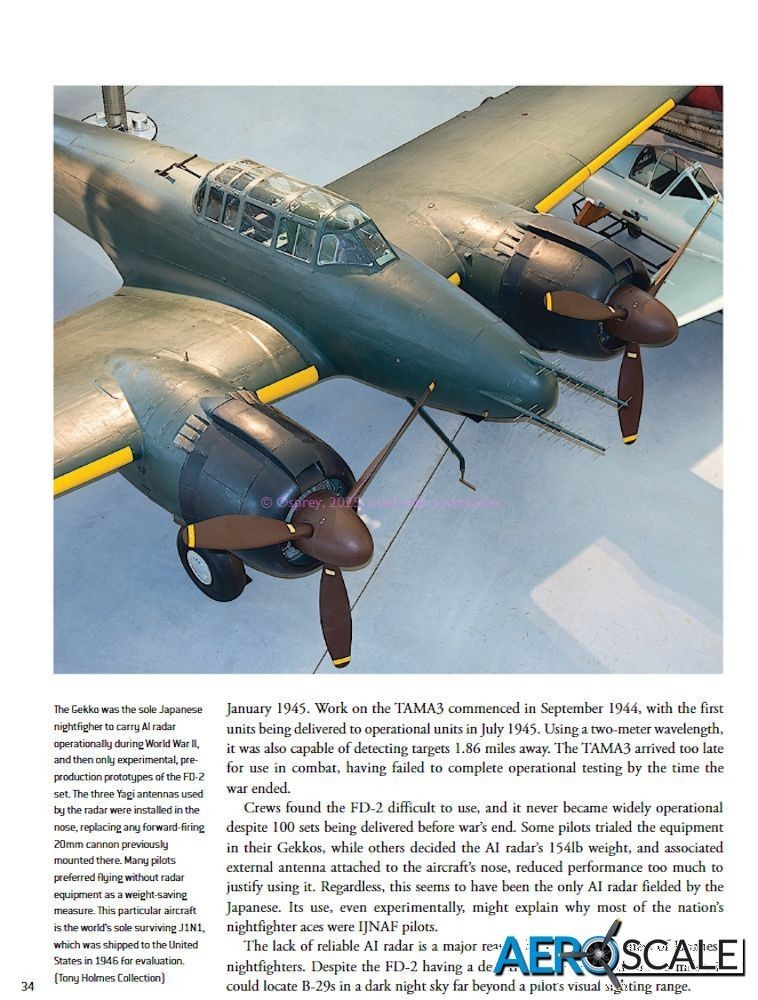
Technical Specifications delivers concise yet informative information about America's B-29 Superfortress, and Japan's Ki-45 and J1N1. (Japan tried many aircraft as nightfighters but those are the two the book covers.) For each the author covers their structure, engines, armament and electronics. That last topic is especially interesting to me as I was not aware of Japan's radar development and performance, i.e., Yagi-Uda directional antenna. An example of the depth of techivcal information the author provides concerns the Japanese N1KF engine:
Its cylinders had a bore of 5.12in. and a 5.9in. stroke, yielding a cylinder displacement of 1.99 liters – a total displacement of 27.9 liters. The engine ran on 92 octane gasoline and weighed 1,300lb.
The Strategic Situation presents the war through five pages. The Combatants presents the facts of aircrews for the U.S. bomber and the Japanese fighter pilots through 10 pages, including short biographies of Robert Knight Morgan (previously of B-17 Memphis Belle fame), and “father” of the IJNAF’s nightfighter force Yasuna Kozono. We learn of the qualities of the men, training regiments and syllabuses, flight experience, and training of particulate crew positions in various tasks:
- Pilot
- Flight engineer
- Navigator
- Bombardier
- Radioman
- Gunner
An example of the detail presented concerns radiomen:
Radio operators undertook a six-month course that involved 720 hours of instruction on the use and operation of aircraft radios. In October 1943, the first five-week radar observer course commenced, and it was open to graduates of the radio operator course. Graduates of the standard officer communications course were also selected for a 15-week radar course. “Ravens” were drawn from men who had completed the latter.
The author discusses flight experience for the adversaries and details the sobering decline in Japanese training as the war progressed.
Combat is the summation of the information of previous chapters, and presents even more. I appreciate how the author begins the chapter with a brief synopsis of the nocturnal aerial cat-and-mouse contest between the bomber and nightfighter. He organizes the explanation of the challenges into three parts:
- The night raid
- Theory of nightfighter interception
- How B-29s defended themselves
We receive a detailed account of what it took to launch a bombing mission, weapons carried, speeds and altitudes, and technical topics such as radar. The tactics and difficulties of intercepting advanced B-29s are also explained. One interesting topic is that night bombing B-29s were to have their defensive armament removed and thus the gunners, yet why General LeMay allowed the gunless gunners to return to flying the missions. After fourteen pages setting the scene we reach five pages recounting actual combat. Finally, Statistics and Analysis and Aftermath summarize the success of Japan's nightfighters against the B-29. The author discusses the problems the Japanese faced and yet makes an interesting, plausible, supposition.
This book is well written and arranged, and flows well. I did not notice any typos or factual errors, and only a single odd description of an aircraft component.
Photographs, Artwork, Graphics
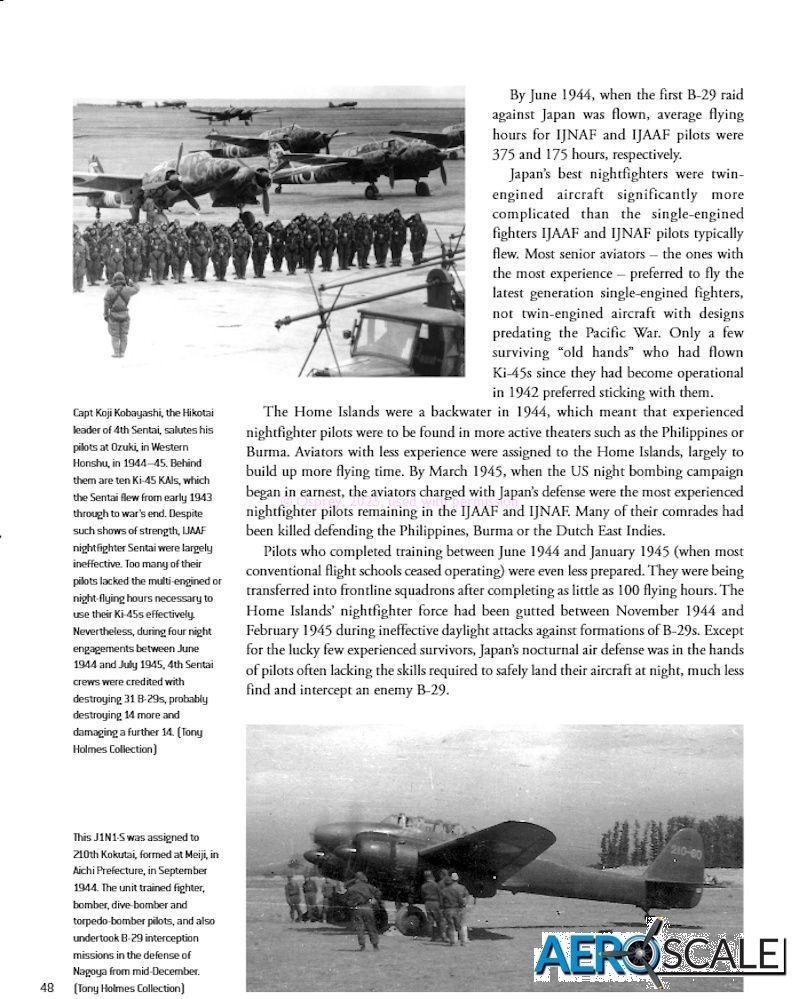
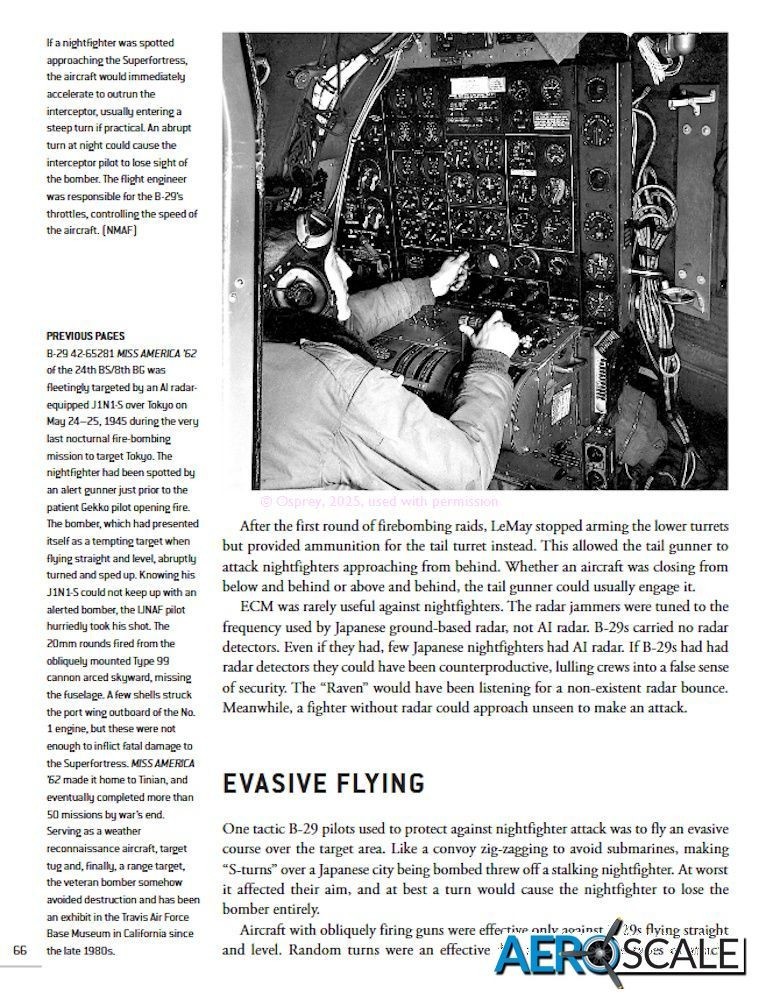
Modelers should find the visual component of this book profitable. Photographic support is good and suitable for illustrating a concept, inspiring a subject, and providing a detailed look at equipment and aircrew. Several may inspire diorama ideas. All wartime photos are black-and-white although there are a couple of color photos by the author of museum aircraft. Many of the photos are new to my eyes. Most are high quality although many are from newsreels or reproduced from print sources. Each is accompanied with informational captions. A selection of images I find particularly interesting are:
- Post-war airfield scene showing a jumble of single- and multi-engine Japanese Naval aircraft, some seemingly factory fresh, and some severely weathered.
- B-29 flight engineer panel.
- Interior of B-29 bomb bay with groundcrew loading bombs.
- Wright R‑3350 Duplex‑Cyclone unbuttoned for maintenance.
Artwork
- B-29 Superfortress
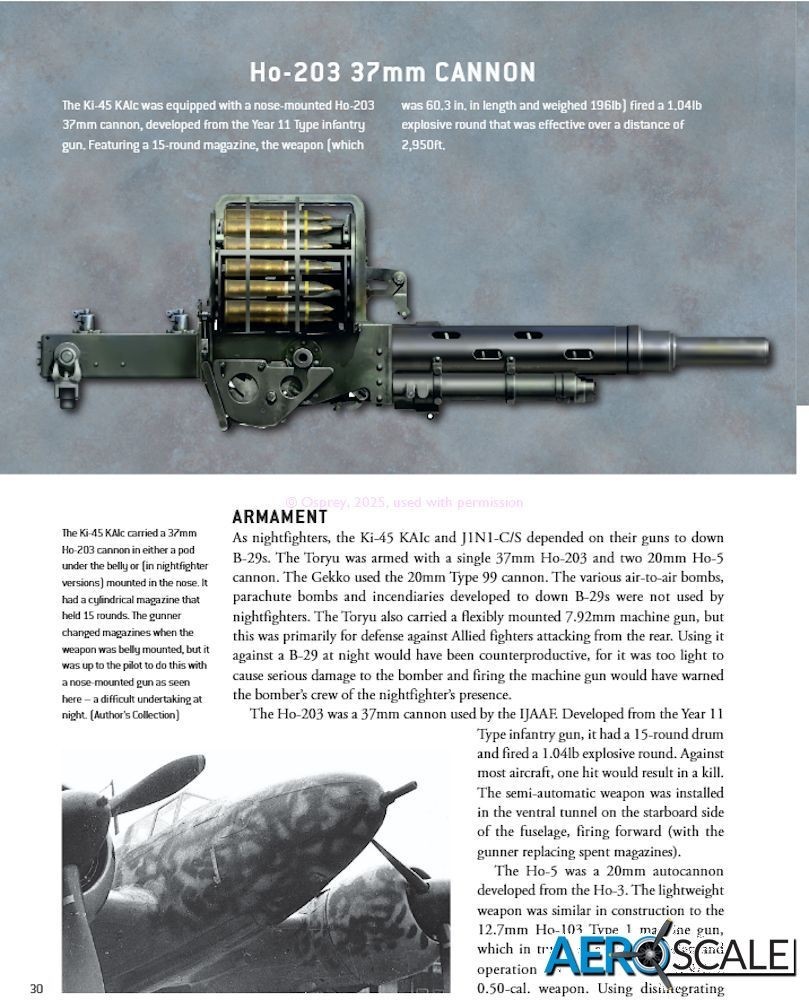
- Ho‑203 37mm cannon
- Ho‑5 20mm cannon
- Ki‑45 Toryu Ho‑5 20mm cannon
- B‑29 Superfortress turret
- Ki‑45 kai-c Toryu
- B-29 cockpit - keyed to 45 components
- Ki‑45 KAIc cockpit - keyed to 55 items
- Two-page combat scene of a B-29 under attack from below by a J1N
Graphics
- Post-war illustration showing a Japanese fighter attacking a B-29 from below
- Three types of fighter attacks: below and behind; above and behind; diving
- Page from an USAAF manual diagramming the Twentieth Air Forces position concerning evasive turns
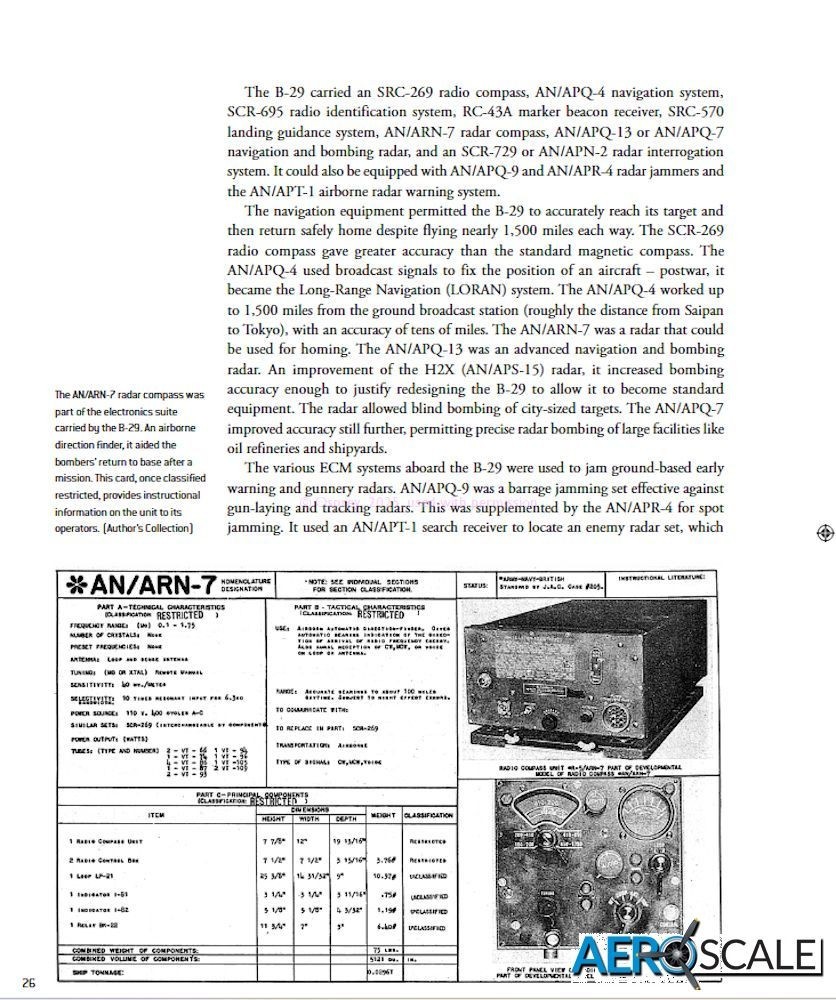
- AN/ARN‑7 radar compass instructional information card
- IJN Type 3, Mark 1, Model 3 early‑warning radar
Map
Japanese Home Islands, operational defense zones of the IJNAF and IJAAF, radar stations, key airfields bombing radius for B‑29.
Conclusion
Personally, I think modelers and historians will appreciate Osprey Publishing's new book B-29 Superfortress vs Japanese Nightfighter Japan 1944-45 as interesting and informative. The author does a good job of explaining the complexity of Japan's air defense network and their nightfighter force, as well as the B-29 and its raids. Technical components and tactics are well presented without requiring an advanced degree to understand. The text is supported with a good selection of images.
The book reacquainted me with what I have read of the subject over the years, and opened my eyes to aspects of the subject I never knew. Thus, I recommend this book.
Please remember to mention to Osprey and retailers that you saw this product here - on Aeroscale.