











Background
The common adage with aircraft is that "if it looks good, it will fly good". Sadly, though, it's not always the case, and if one aircraft disproves the theory it's the Avia S-199 - which earned the richly deserved nickname of Mezek ("Mule") by the Czech pilots who flew it.
The S-199 grew from Czechoslovakia's earlier S-99, a Messerschmitt Bf 109G-10 built after the end of WWII using leftover parts and equipment. All went well until a factory fire destroyed the remaining stock of Daimler Benz DB 605 engines, forcing Avia to seek an alternative powerplant.
The designers settled on the lower-powered Junkers Jumo 211F that was still available at the time and, although they grafted it onto the Bf 109's airframe quite neatly, the resulting S-199 was very unsatisfactory and proved a real handful to fly. The new engine and propeller created far more torque than the DB 605, already an issue with the Bf 109's notoriously narrow landing gear, and the S-199 was plagued by take-off and landing accidents.
A second problem was that the Bf 109G's (and hence the S-99's) primary armament was a cannon firing through the engine, but this couldn't be installed with the Jumo 211F, leaving the S-199 with just a pair of cowl-mounted MG 131 machine guns for its standard armament. To augment this, the aircraft could be fitted with the equivalent of the Luftwaffe's former Rüstsatz VI and mount a pair of MG 151 20mm cannons in gondolas under the wings but, just as with the Bf 109, this had a further negative impact on the S-199's performance.
Despite its problems and unpopularity, over 600 S-199s were built, serving with the Czechoslovakian Air Force and National Security Guard until 1957.
Ironically, though, the S-199 had one major claim to fame as the first fighter aircraft operated by the newly-formed Israeli Air Force, when 25 aircraft were purchased in violation of the international arms embargo that was in place at the time. Unsurprisingly, the S-199 was not a success in Israeli service, proving unreliable and performing poorly in combat, and it was retired as soon as more suitable fighters were available. It did score a number of "kills" against the Egyptian Air Force, though, including a Spitfire - making it the last "Messerschmitt" to score a victory against it's classic adversary.
The Kit
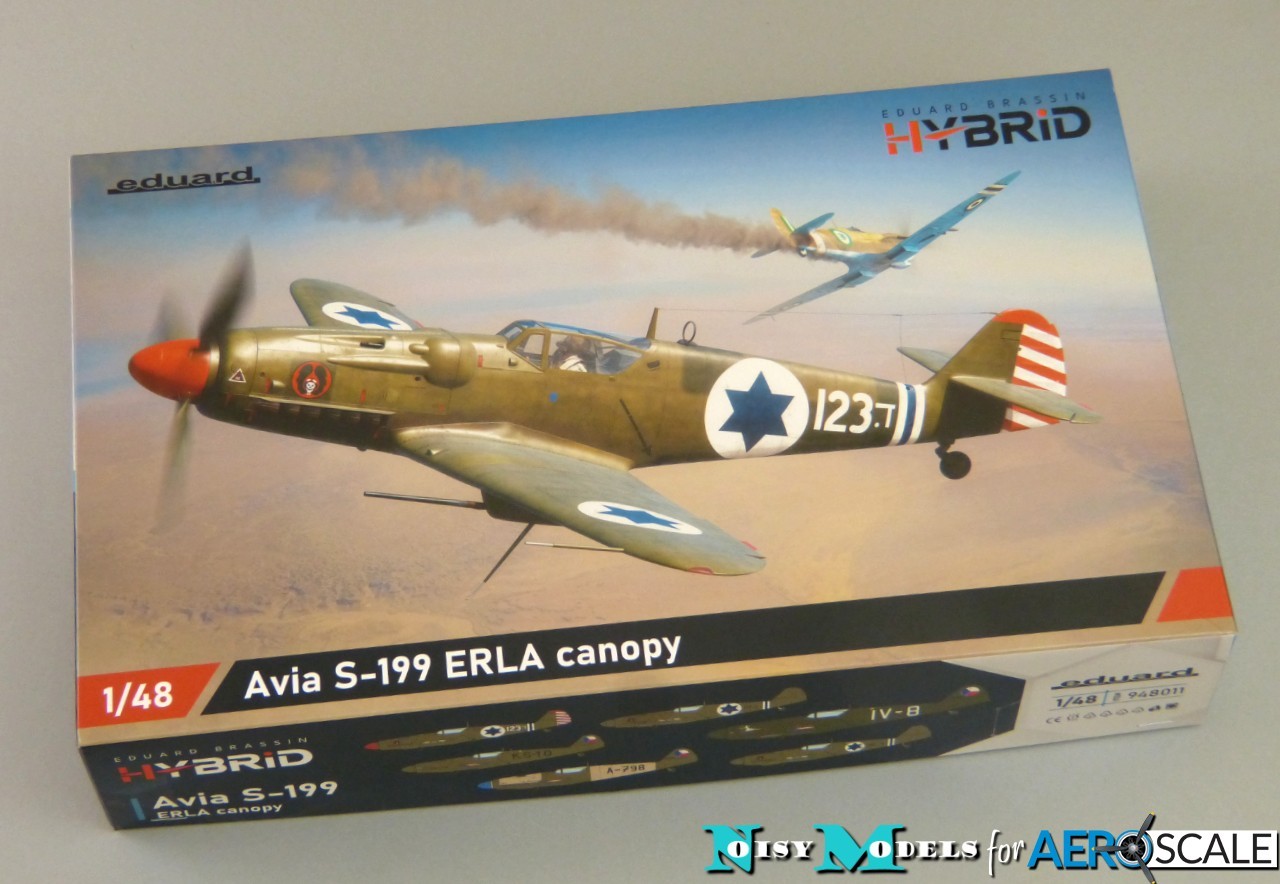

Eduard's S-199 is the first in their new HYBRID range of kits. The idea is quite simple; produce the main airframe components and clear parts using conventional injection moulding, but use 3D-printing for smaller items and all the details such as the cockpit and landing gear. This leap in concept is a clear sign that 3D-printing has matured to the point where it can now be an intrinsic element in kit design.
So, what does this mean in practice? Basically, a much simpler kit in terms of the number of parts, but one which boasts the level of detail of one of Eduard's ProfiPACK releases. Comparing it to the ProfiPACK Bf 109G-14, the HYBRID S-199 has less than half the number of styrene parts, and the photoetched details are done away with entirely (more on that below), resulting in a much quicker and easier build.
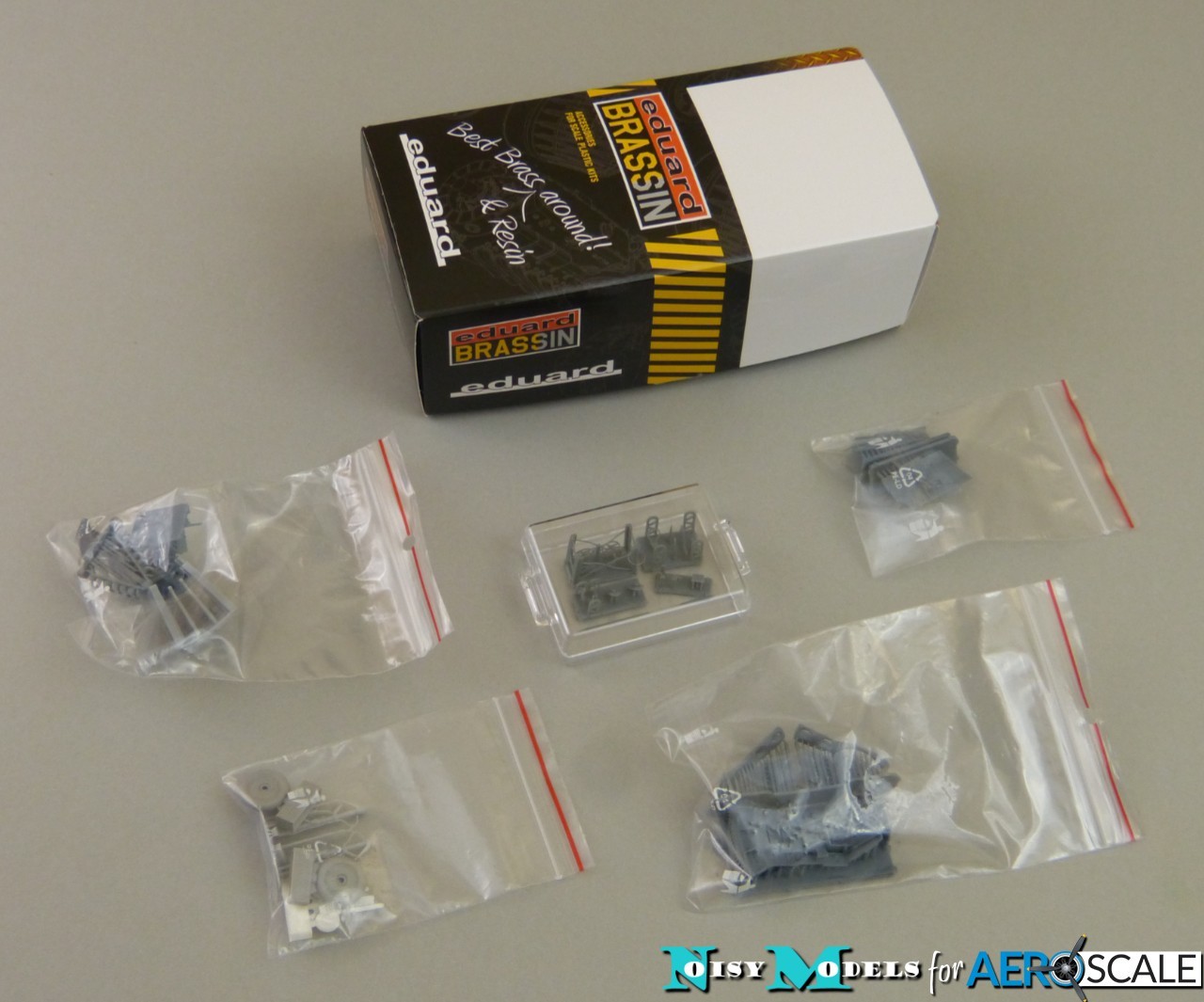
The kit arrives in a classy top-opening box with the main styrene runners bagged together, the clear parts in a separate zip-lock bag, and the 3D-printed parts protected in a seal cardboard packet, with some of the most delicate further protected in a clear plastic case. Sadly, despite Eduard's careful packaging, one of the 3D-printed parts had taken a knock in transit - but, thankfully, it'll be an easy fix.
The kit comprises:
51 x grey styrene parts (+ 11 unused)
7 x clear styrene parts (+ 3 not needed)
34 x 3D-printed parts
4 x resin parts
A sheet of die-cut washi tape painting masks
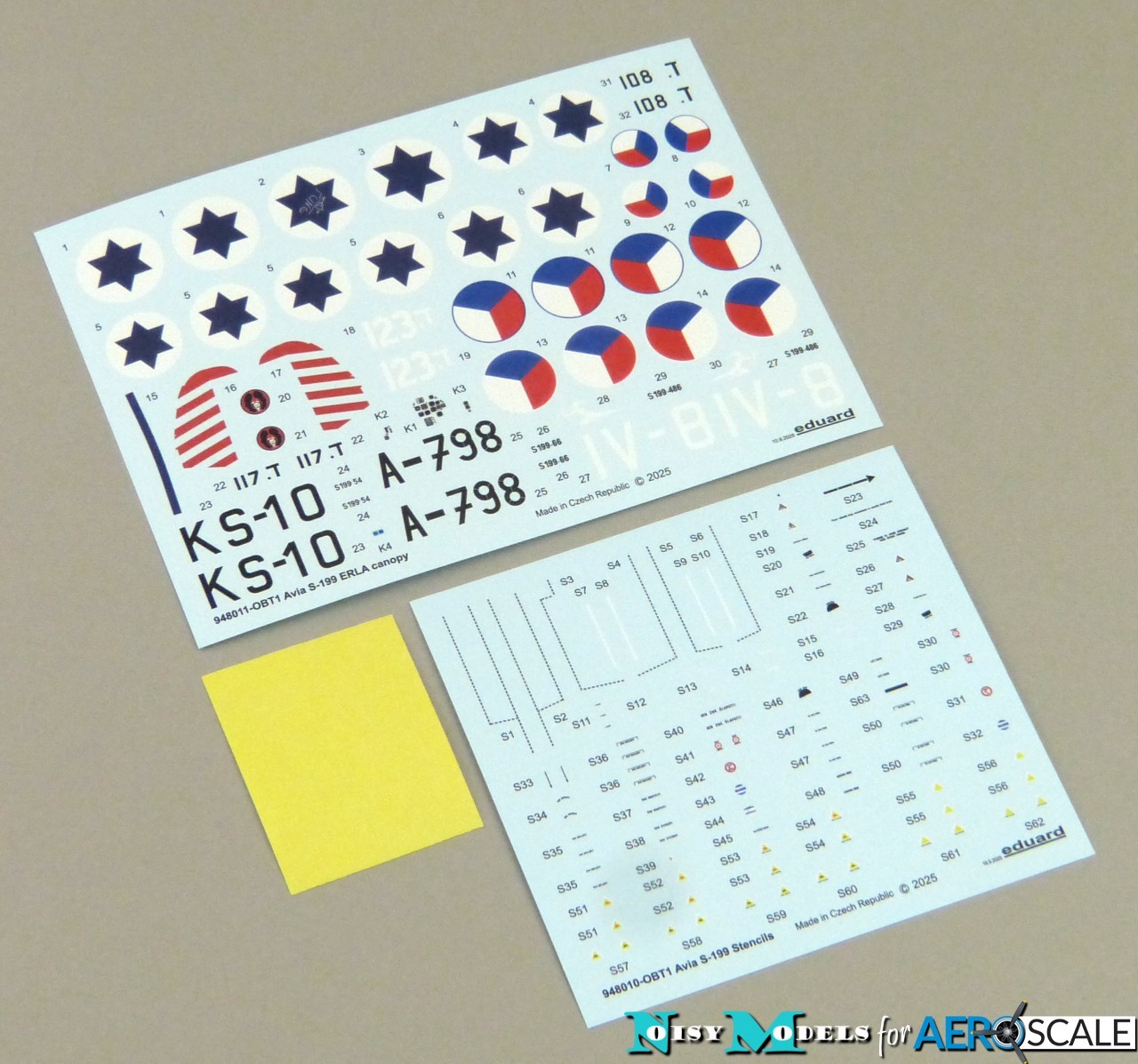
Decals for 6 x colour schemes
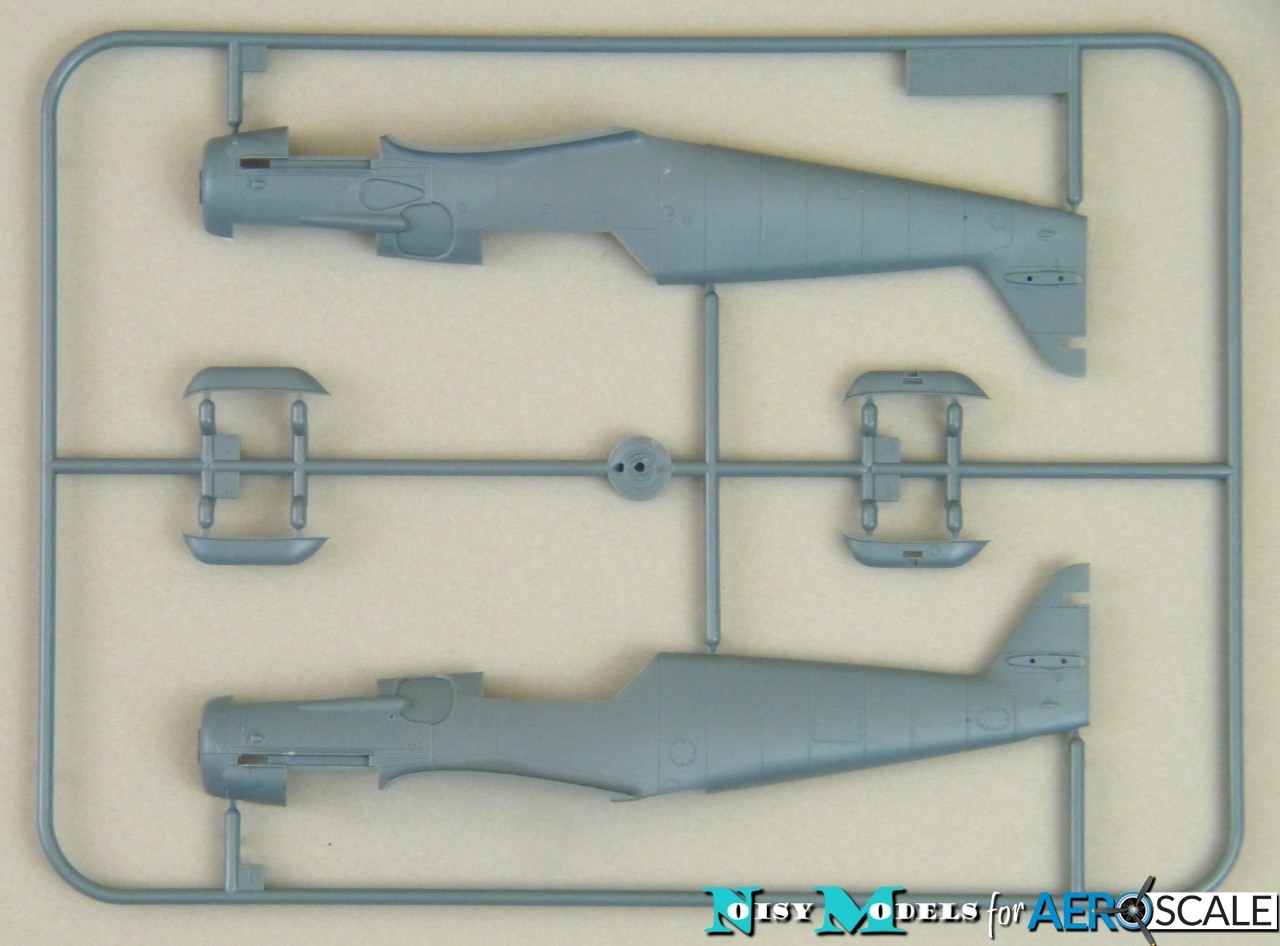
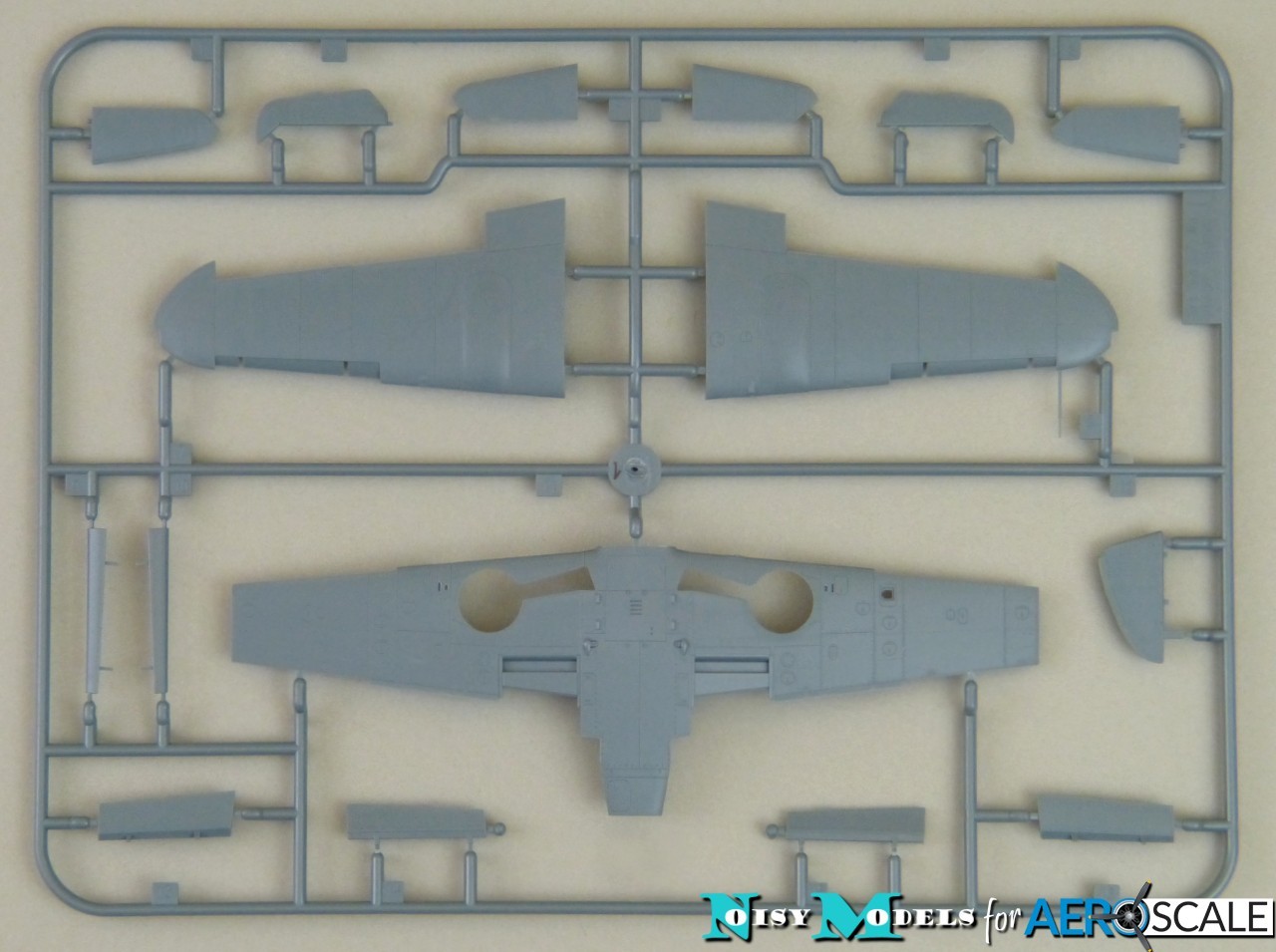
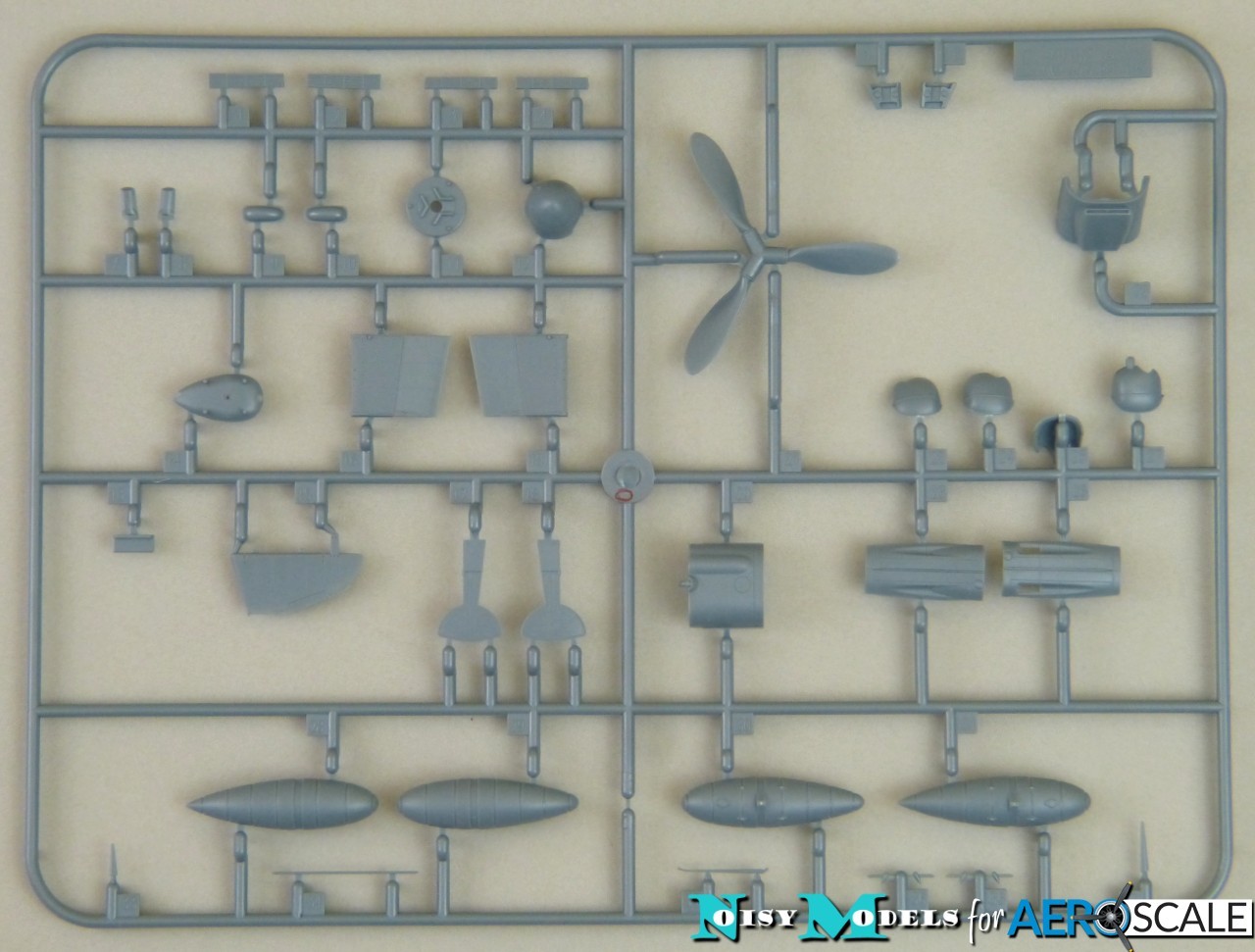
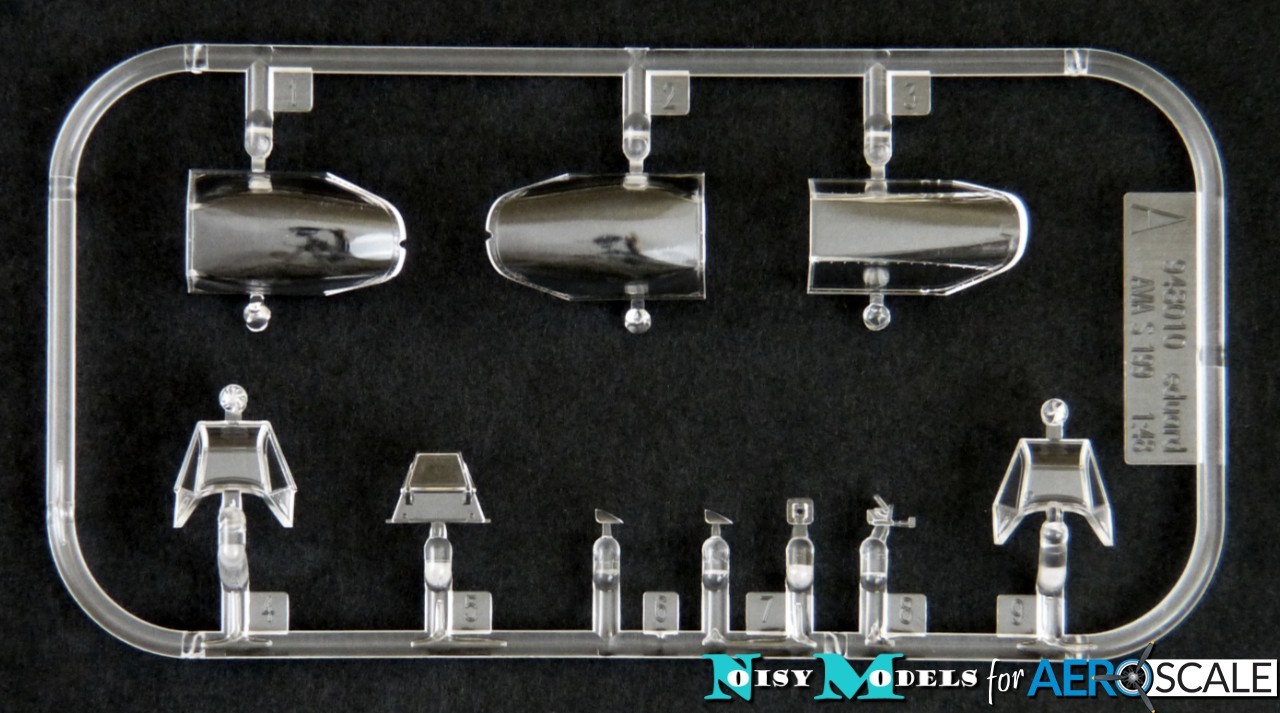
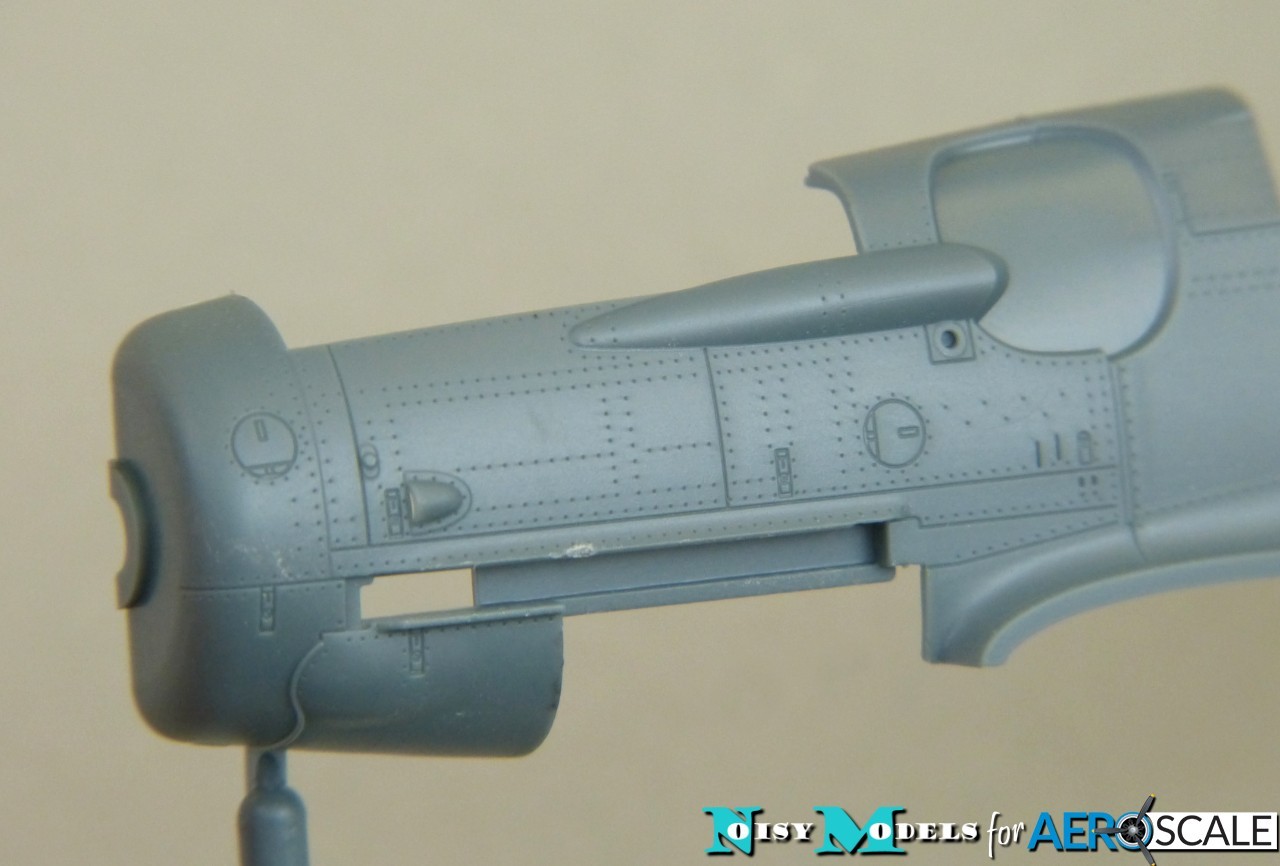
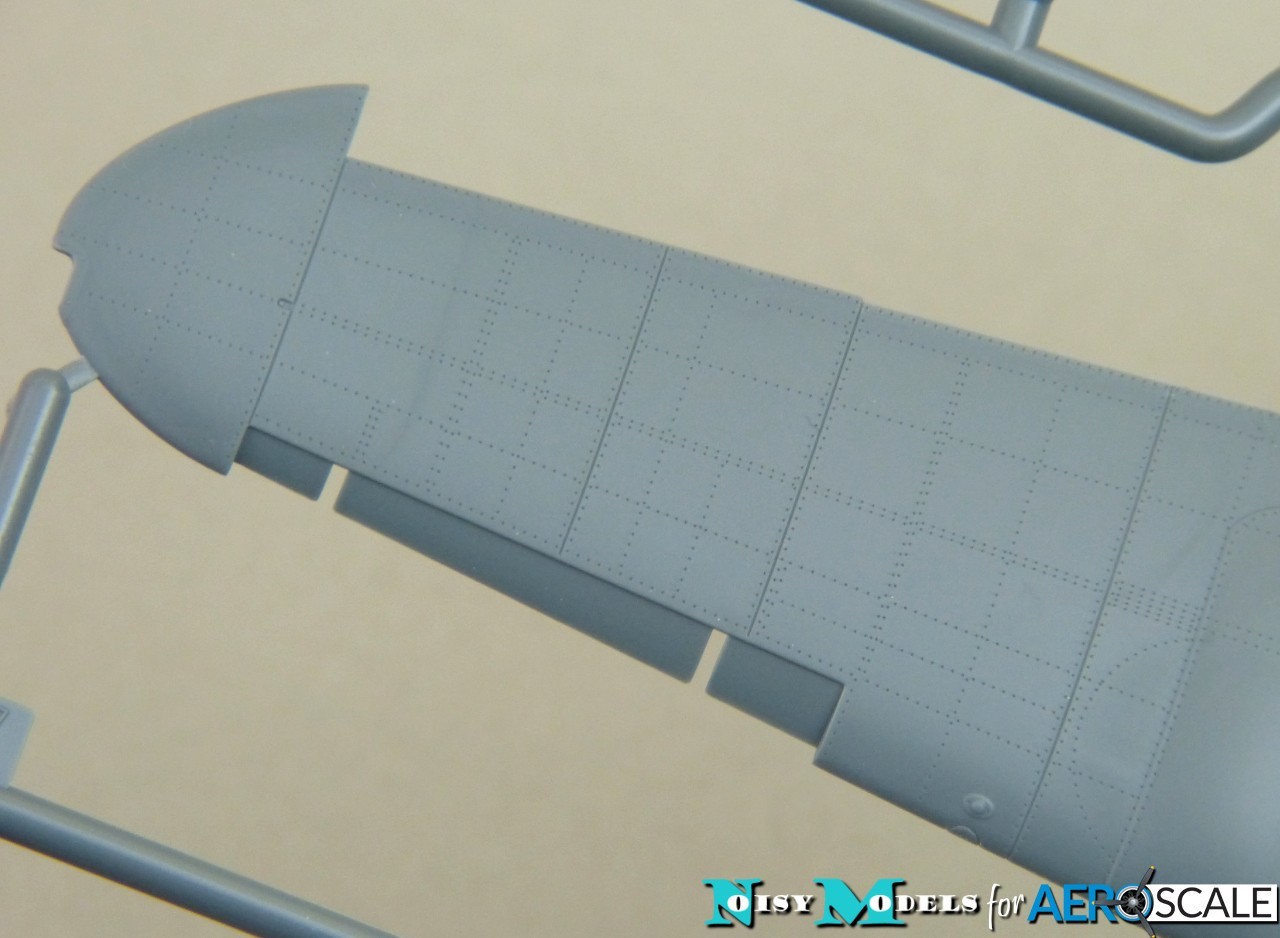
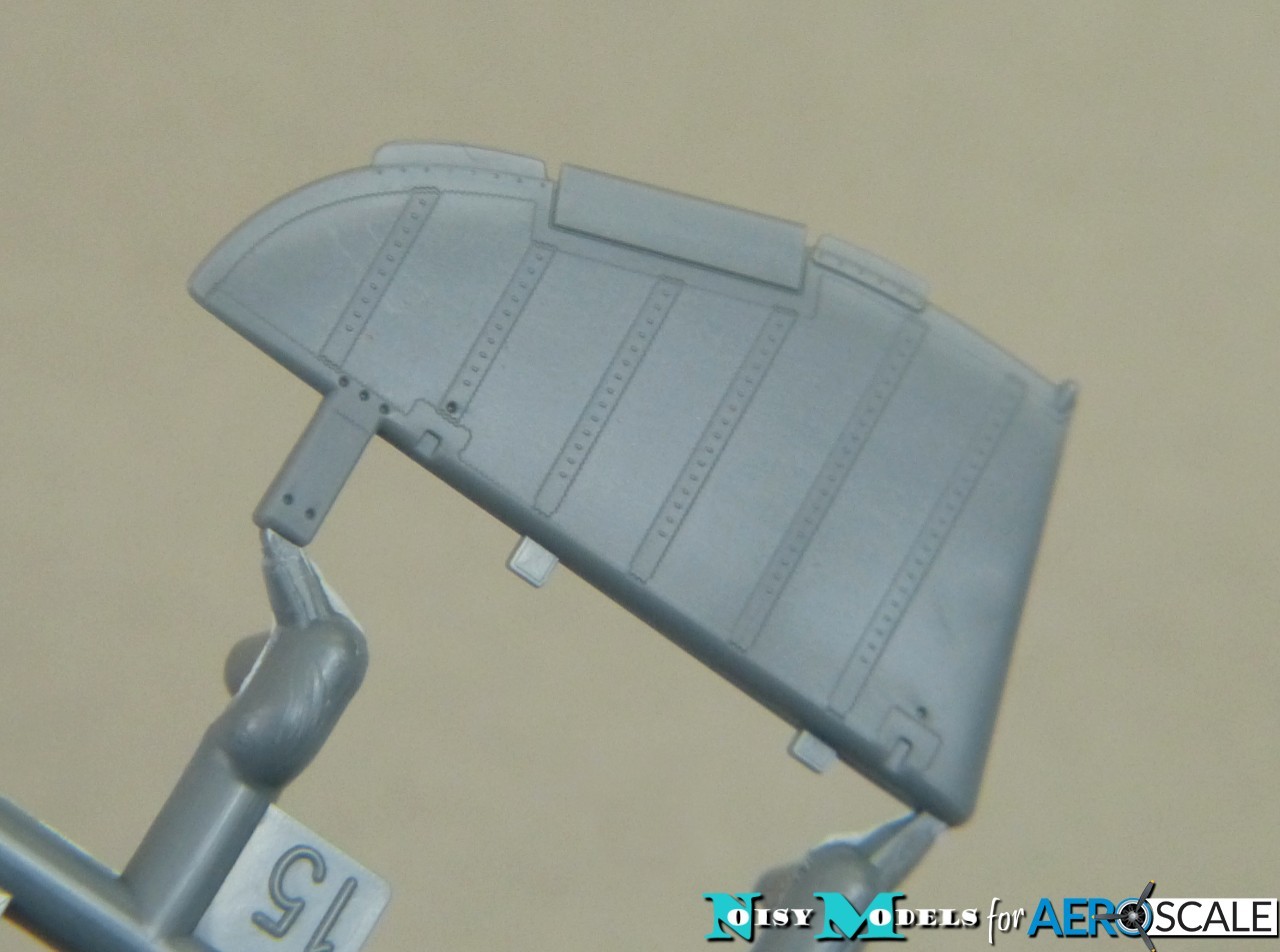
First impressions are overwhelmingly positive. As you'd hope with a new-tool Eduard kit, the plastic parts are flawlessly moulded with beautifully delicate surface detailing. Panel lines are lightly done and the way the embossed rivets are handled puts most other manufacturers to shame. The fabric covered control surfaces are represented with raised rib tapes and stitching - arguably a tad heavy, but easy enough to knock back if you so chose.
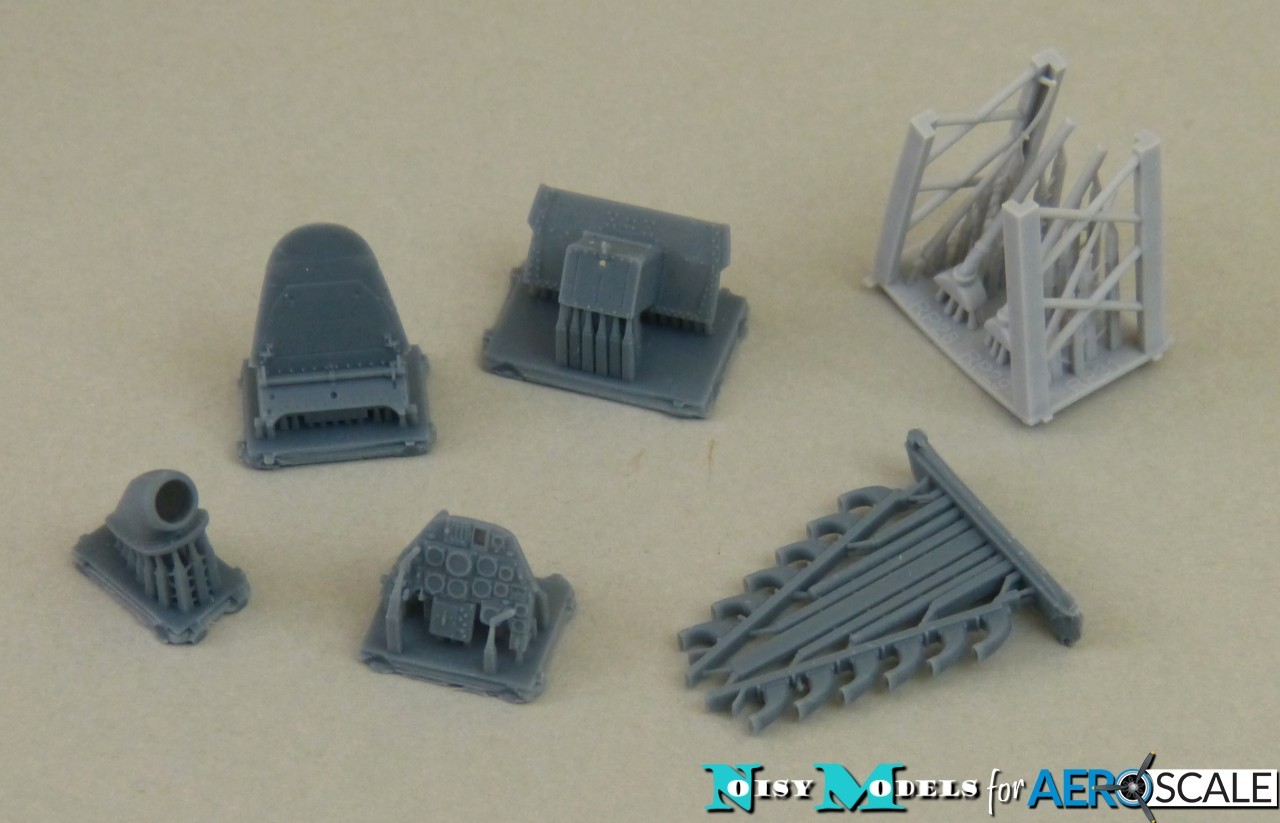
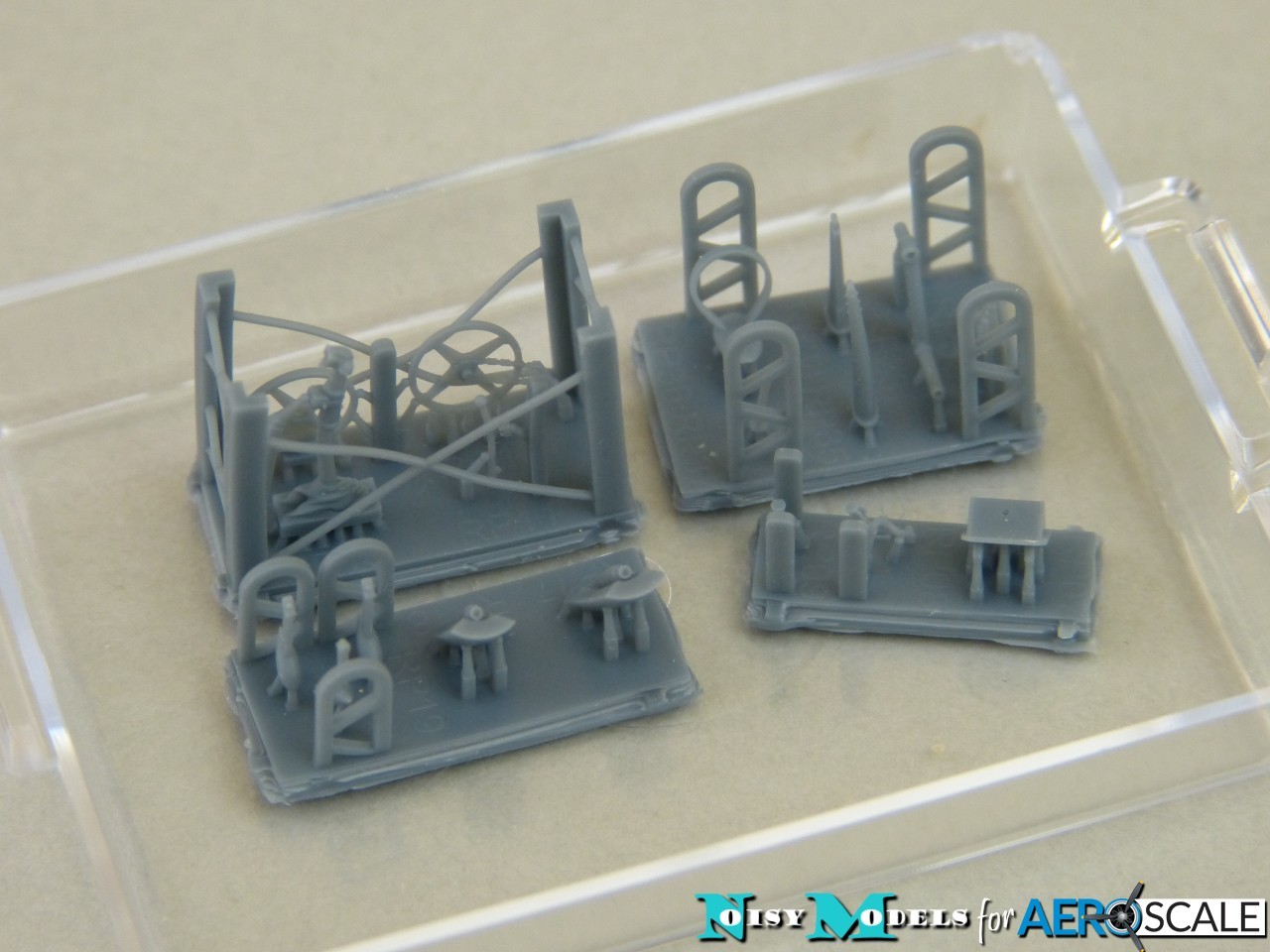
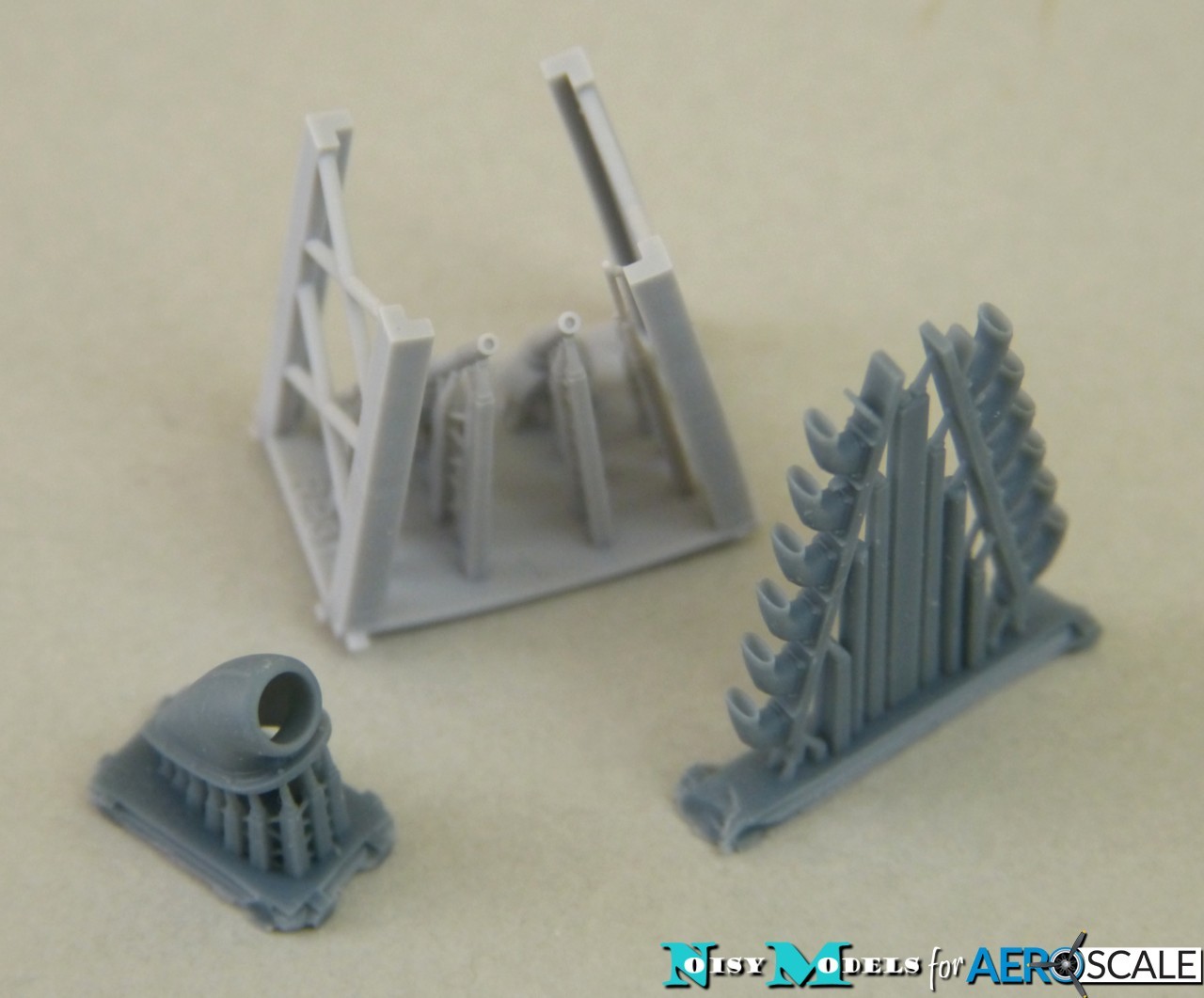
While the styrene parts are great, the 3D-printed and resin pieces are just plain gorgeous! The level of detail is simply incredible, and although you could probably achieve similar results by painstakingly combining resin and photo-etched parts, the difference here is that what would otherwise be complex sub-assemblies are produced as single pieces. All you need to do is remove them from their latticework of supports and they are ready to use with next to no clean-up.
Test Fit
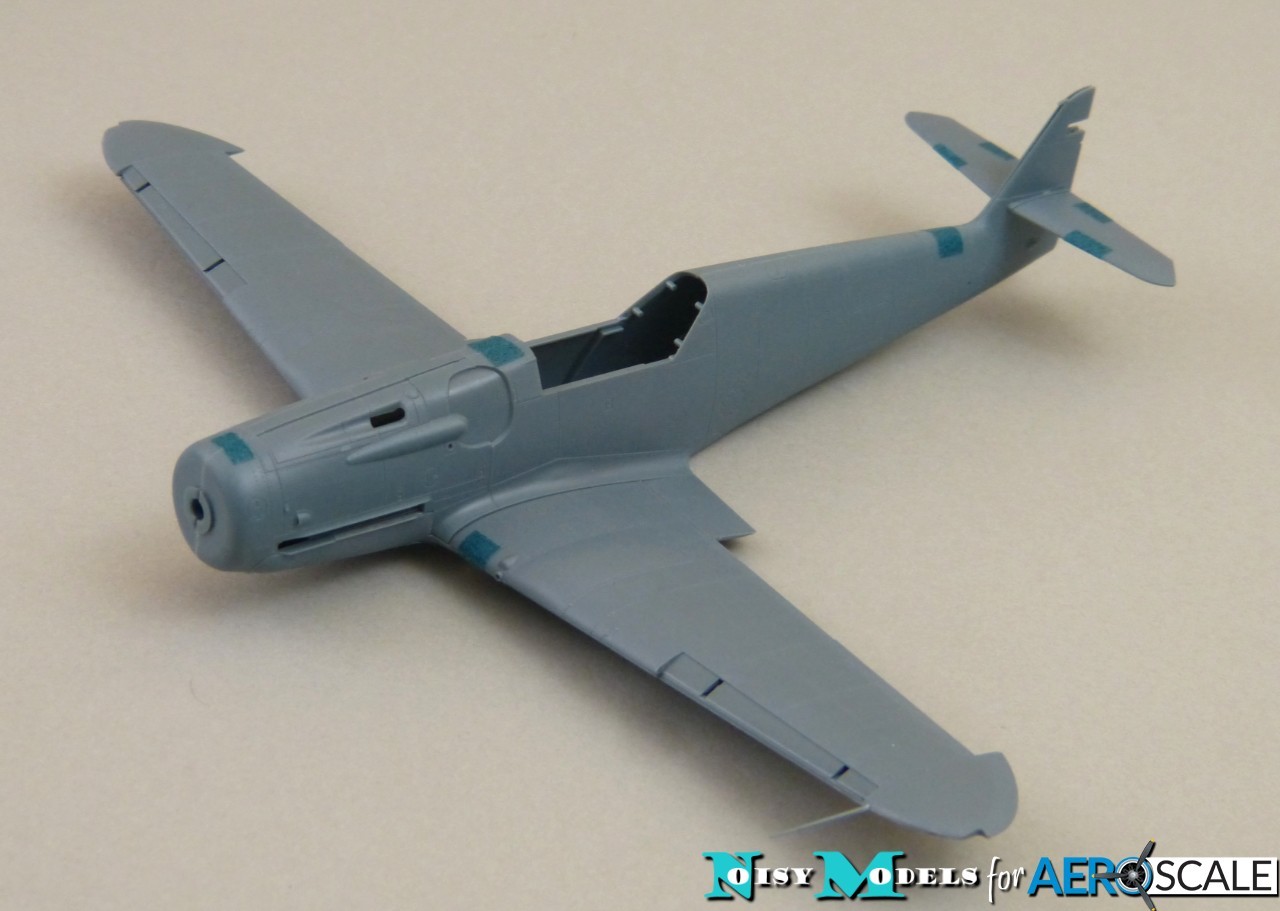
Eduard's new-tool 1:48 mid and late war Bf 109s are a dream to assemble, so there was no reason to think the Avia S-199 would be any different, but I did a dry fit of the main parts anyway. The new fuselage parts all match up very neatly, with a drop-in cowl section for the nose armament and a choice of oil coolers underneath.
The wings fit precisely at the roots even without the cockpit installed, and the tailplanes stay in place with just a push-fit. Basically, the airframe promises to be a hassle-free and filler-free build.

A Few Details
Construction begins with the cockpit, which is made up totally from 3d-printed items. Whereas with the aforementioned ProfiPACK Bf 109G-14 you'd be looking at around 30 parts, here you need just 11 pieces plus a decal for the instrument faces to created a superbly detailed "office".
The star of the show for me is the main cockpit floor and bulkhead, that features and integrally printed seat and rudder pedals. Note: it was one of the delicate rudder pedals that came adrift in transit, so perhaps Eduard pushed their luck one step too far there by not having them as separate pieces. Looking at the detail on offer, the seat has far thinner sides than would be possible with a styrene version, while the rudder pedals come complete with retaining straps that you'd normally have to add individually.
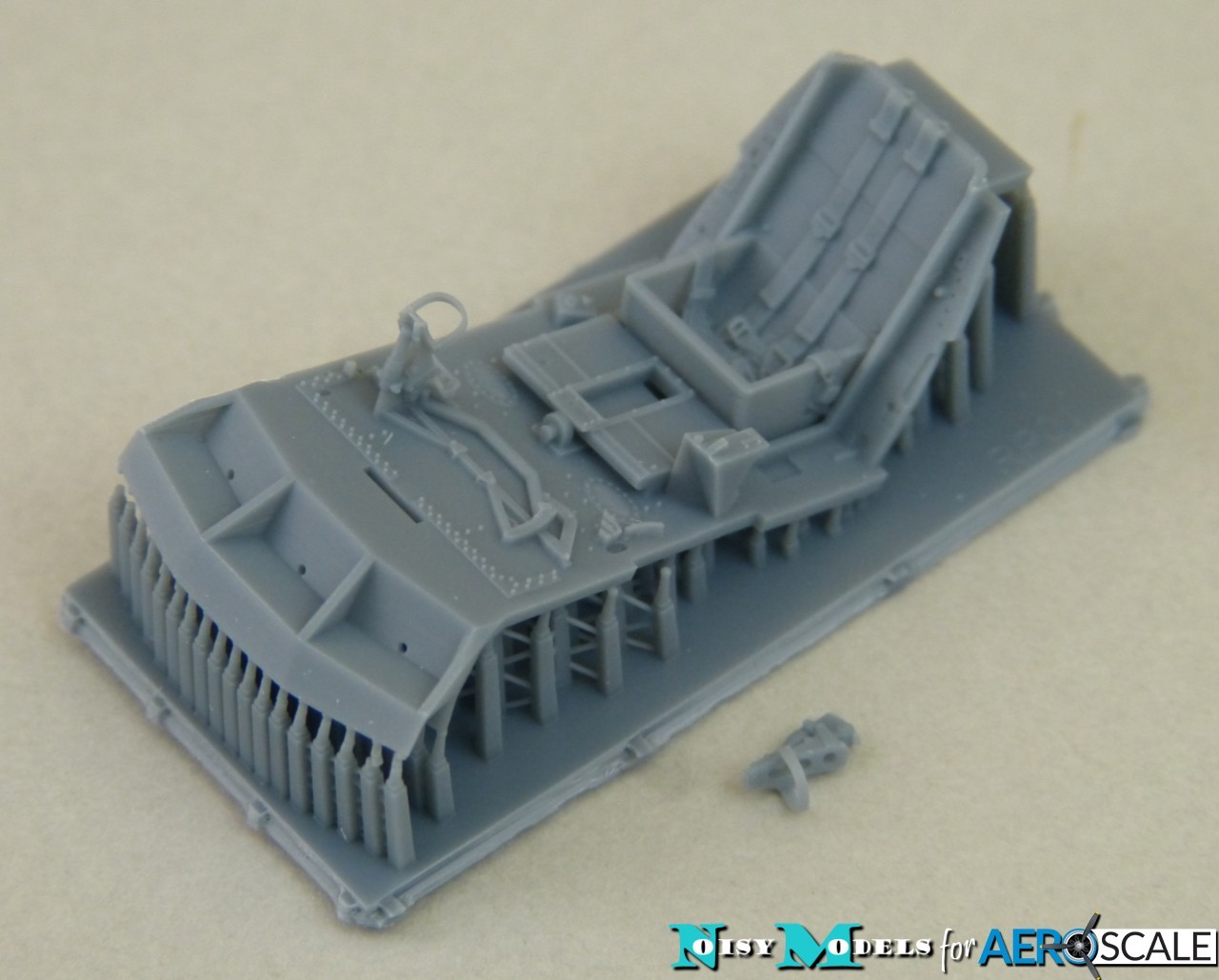
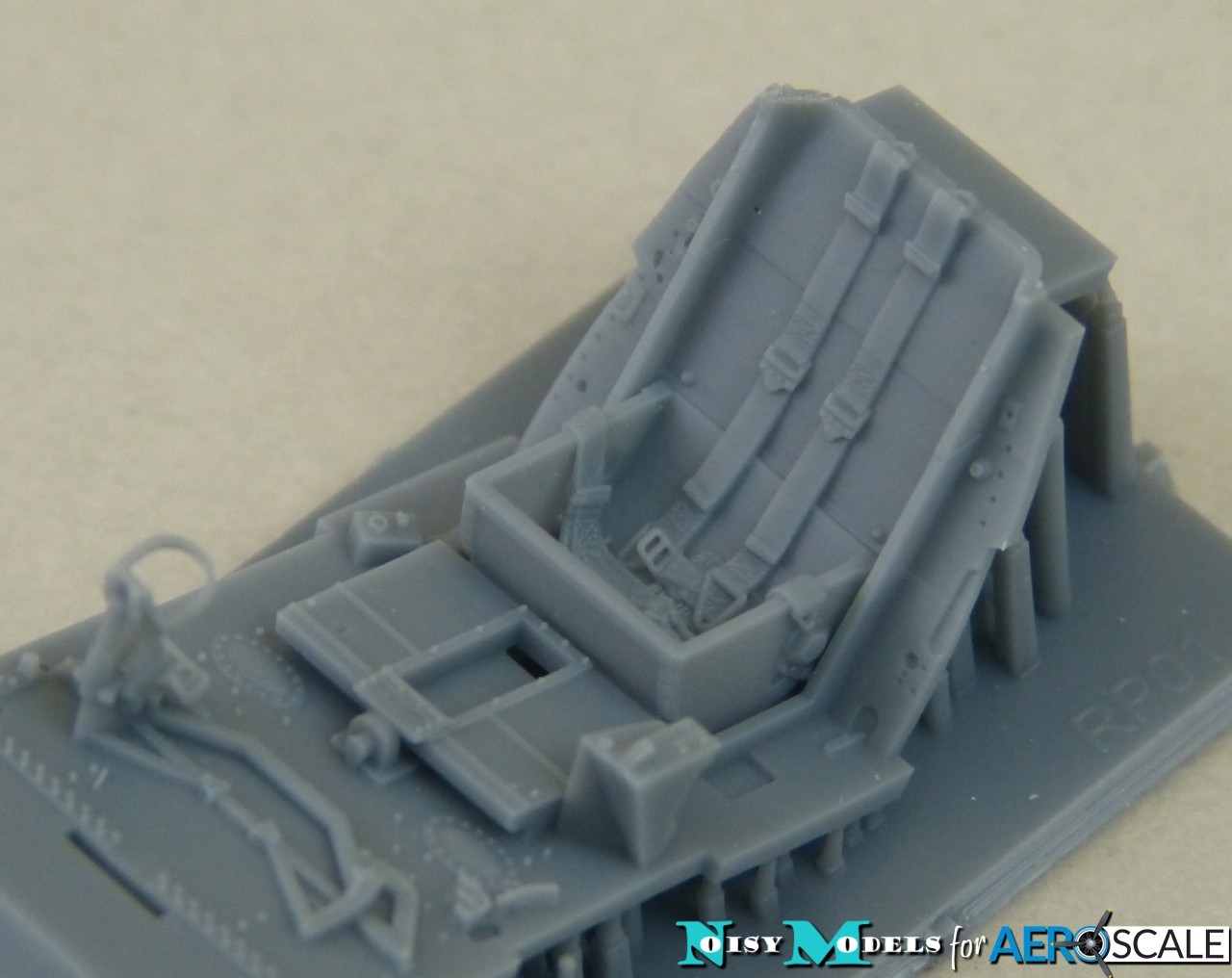
One point that may not appeal to everyone is that the seat has its harness already in place. It's beautifully detailed and realistically draped, but some modellers will prefer to add a separate harness. That's one area where Eduard could perhaps have offered an extra option, with a plain seat and a set of colour-etched seatbelts from their existing range of accessories.
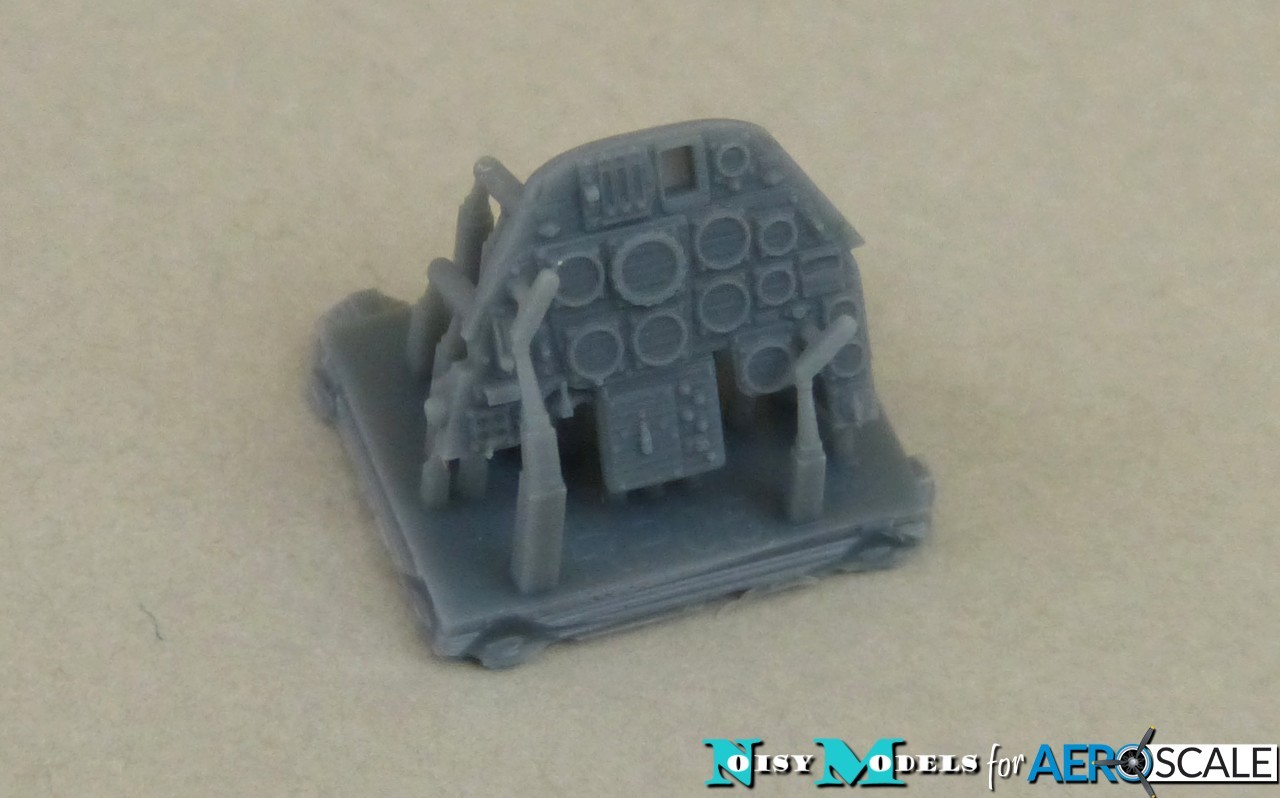
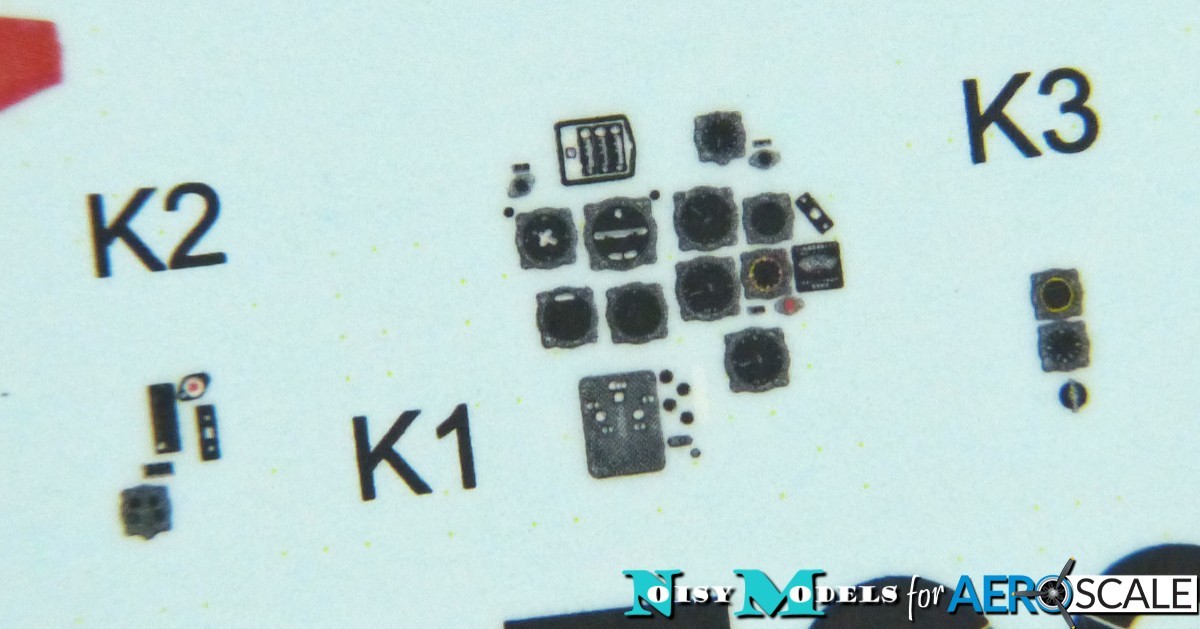
The instrument panel has crisply defined bezels and is printed with a couple of levers already in place, so there's no need to glue on tiny photo-etched items. The decal provided has all the instrument faces grouped as one, so I may use individual Airscale decals rather than mess around with a punch and die to separate them.
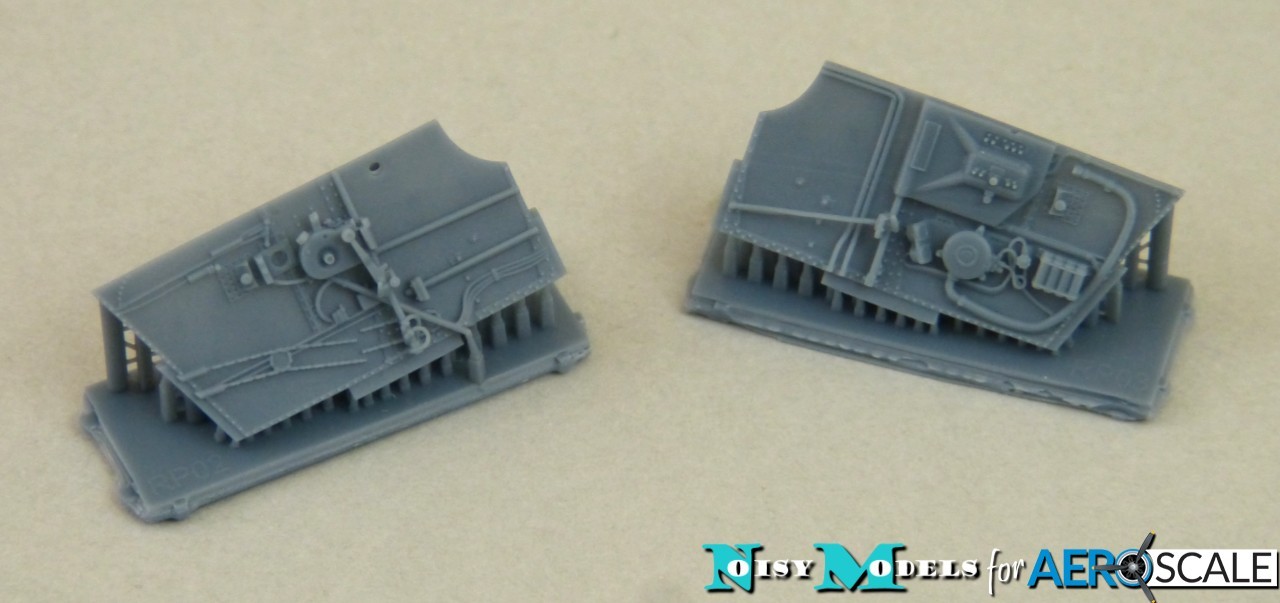
The sidewalls are beautifully detailed and, as much as I enjoy tinkering with tiny photo-etched fascias and levers, the benefit here is that construction is infinitely easier - and, if I'm being honest, will look more convincing after careful painting and weathering.
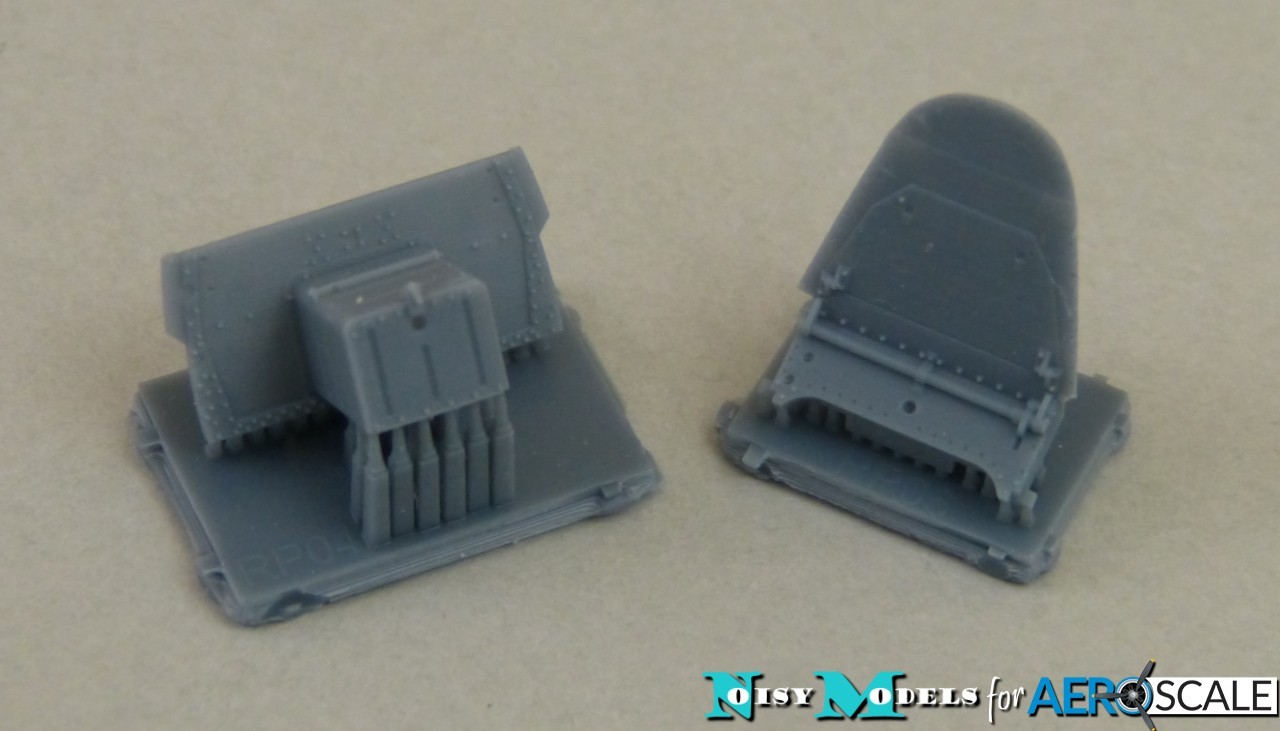
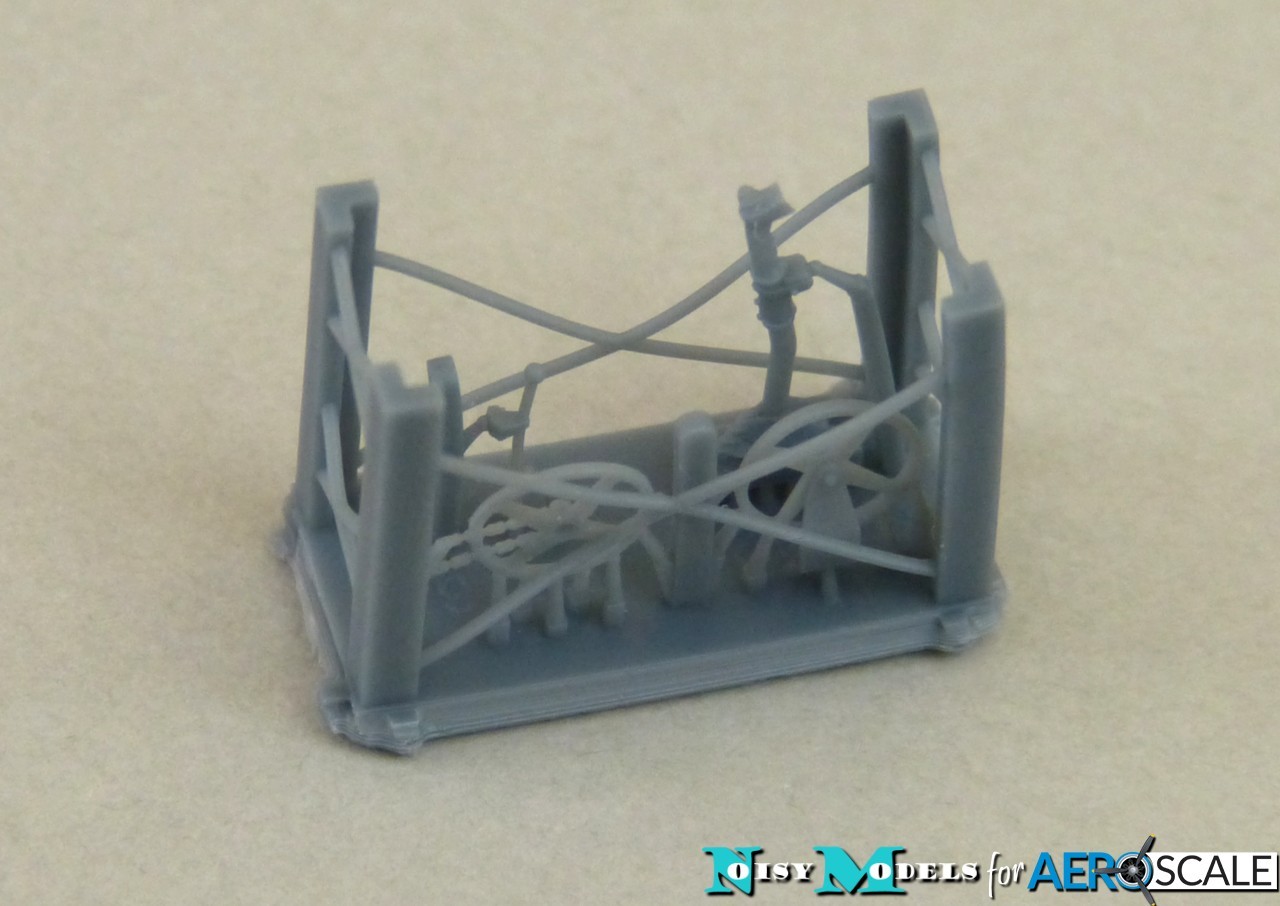
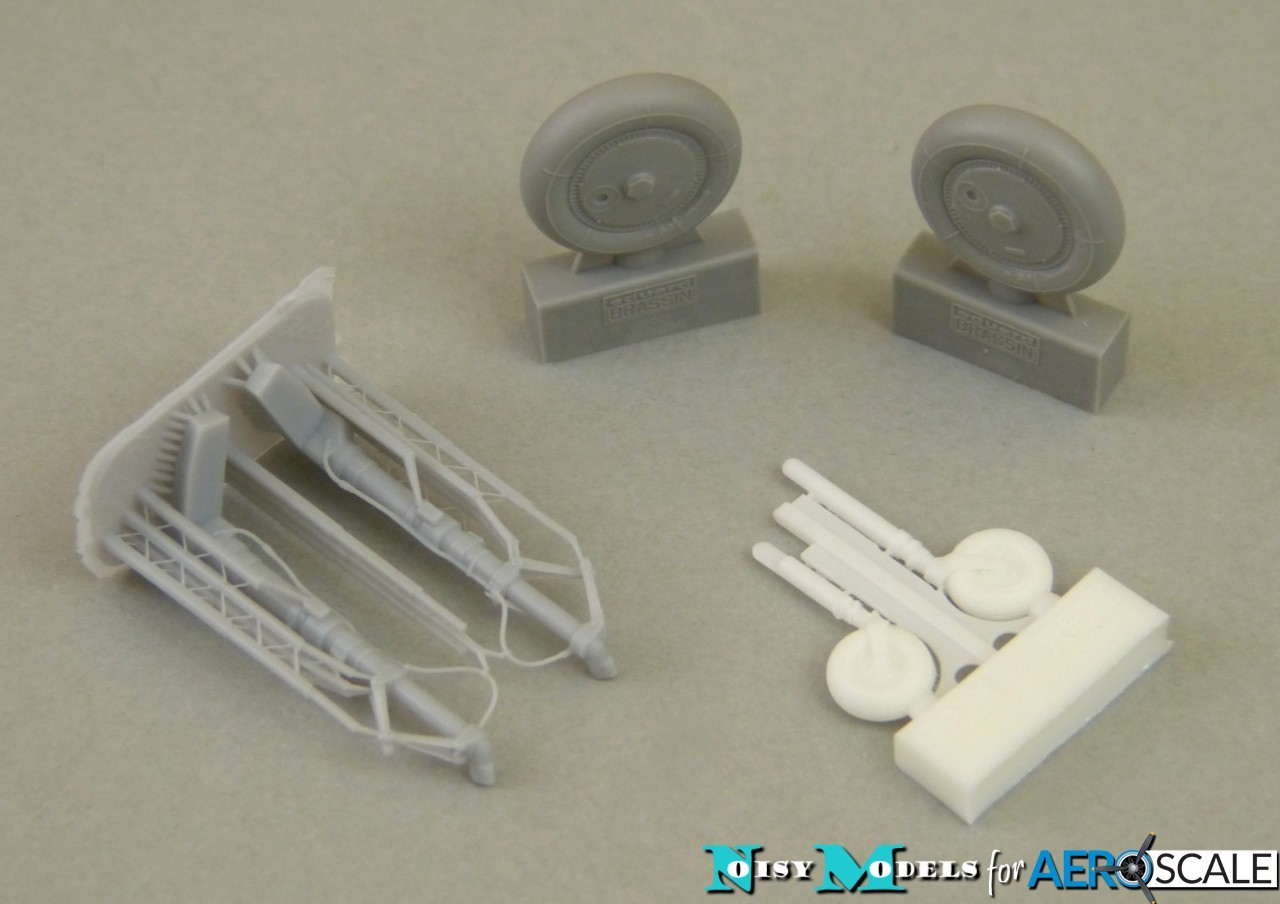
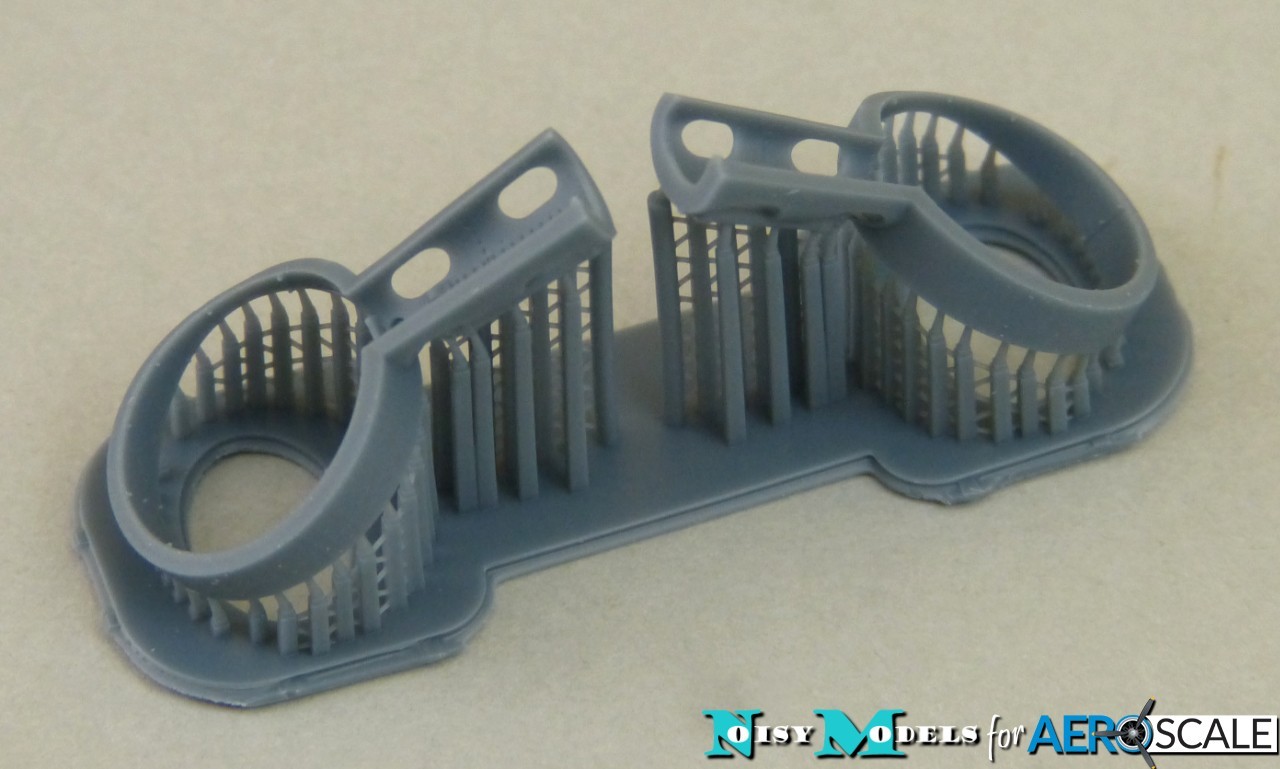
The next area to benefit from 3D-printing is the undercarriage. Whereas Eduard's early Bf 109 kits required multiple interlocking parts to box-in the wheel wells, now there's just a single piece for each well.
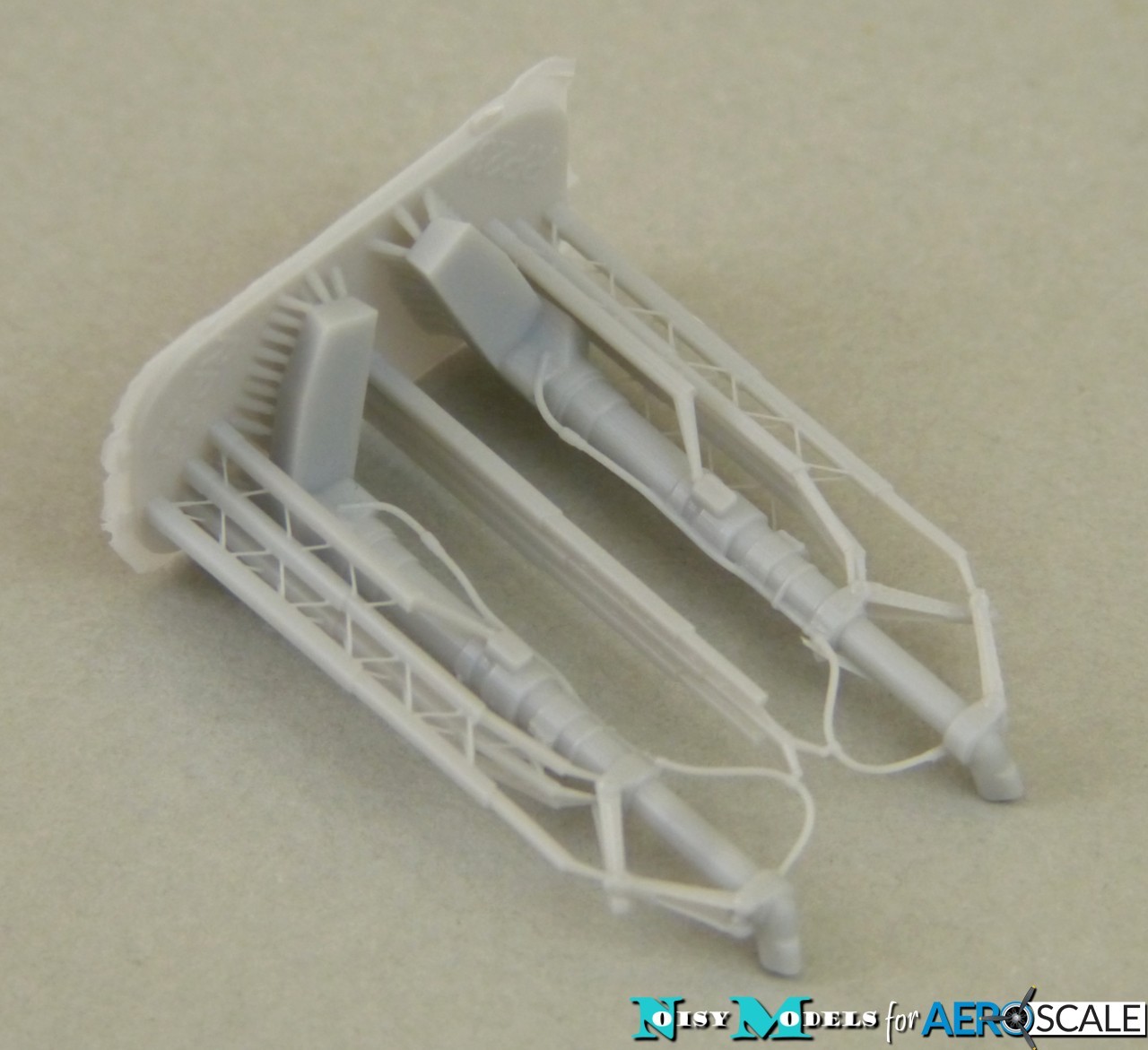
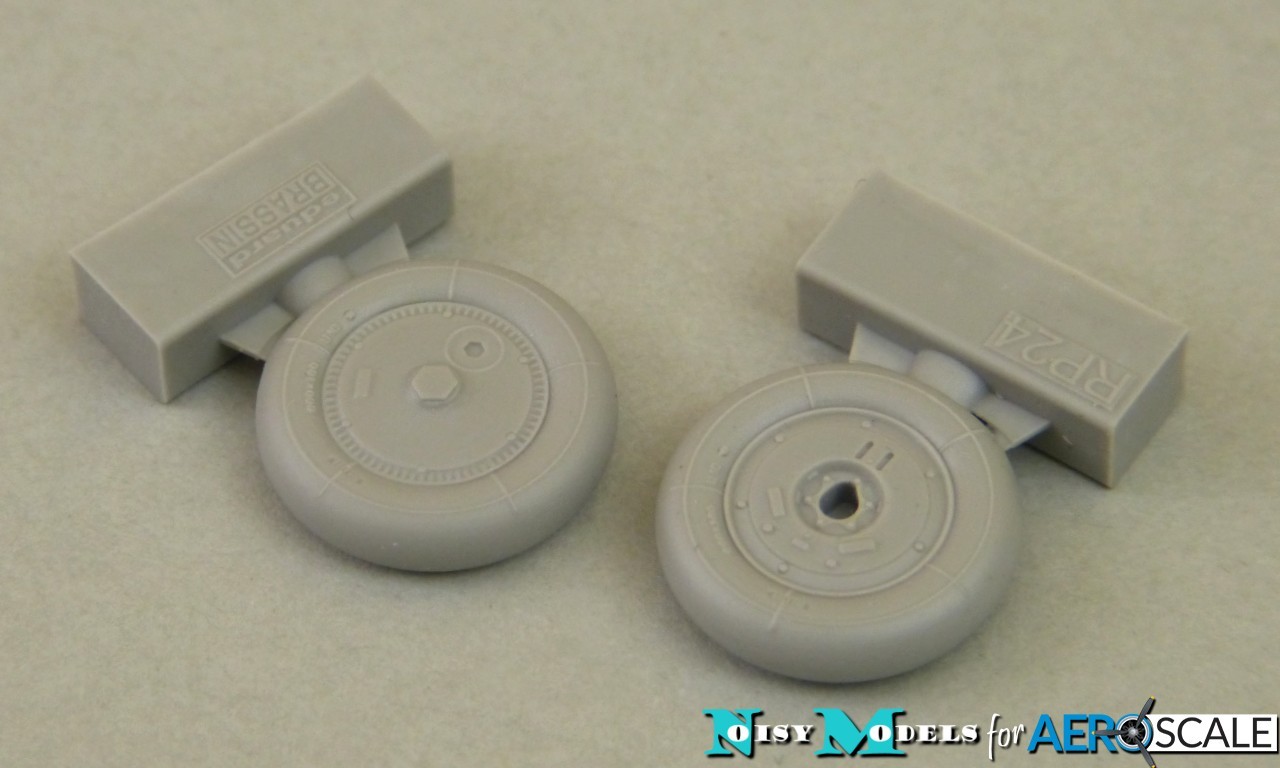
The 3D-printed main gear legs are crisply detailed and come complete with brake cables and oleo scissors already in place. Meanwhile the wheels themselves are cast in resin and are "weighted" with beautifully detailed hubs and delicate ribbing and text on the tyres.
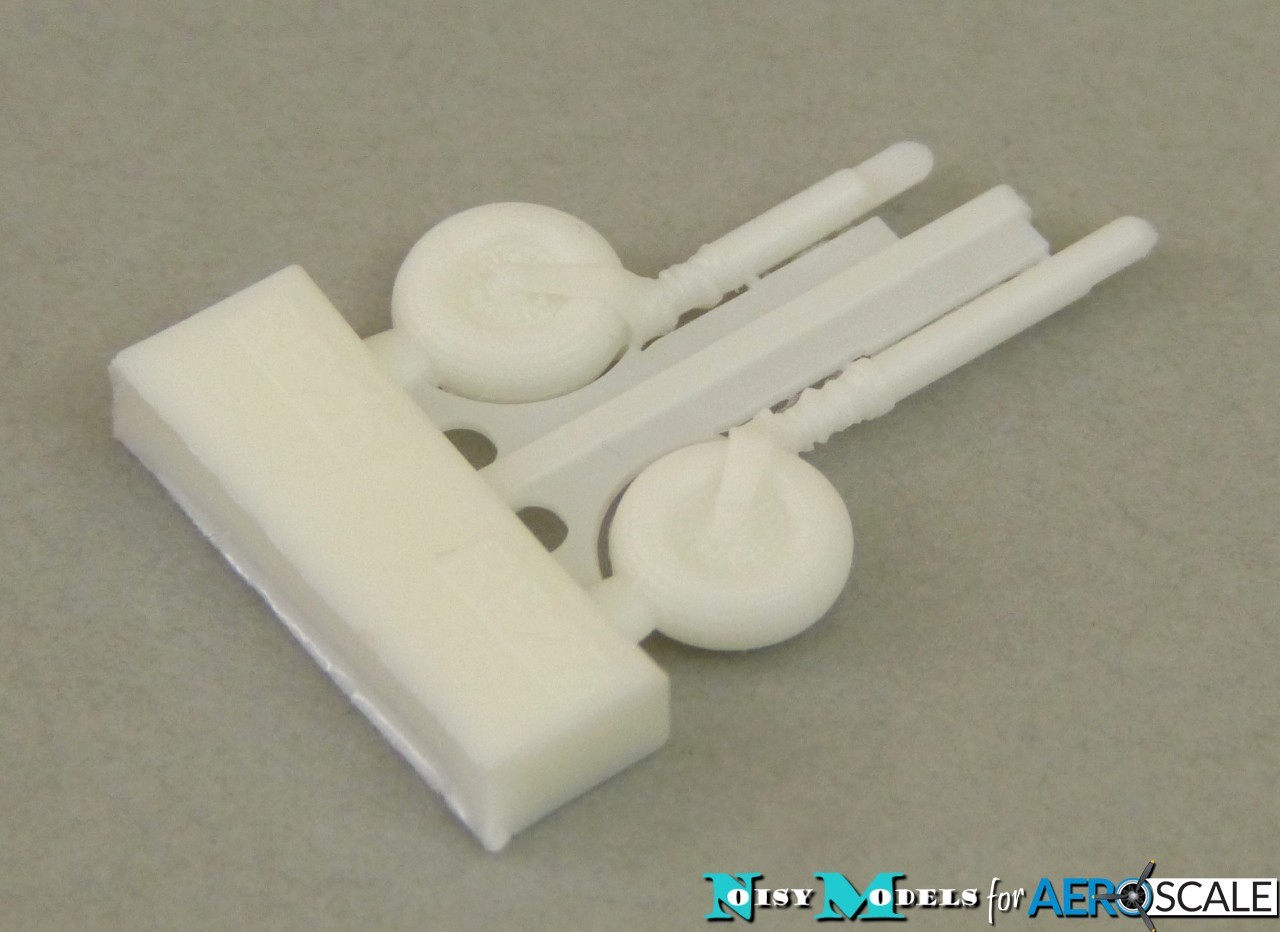
There's a choice of long and short tailwheels, again cast in resin - this time what appears to be a high-density variety for the required strength.
Returning to 3D-printing, the benefits are again evident with the hollowed-out exhausts and gun barrels, plus a very neat one-piece supercharger intake.
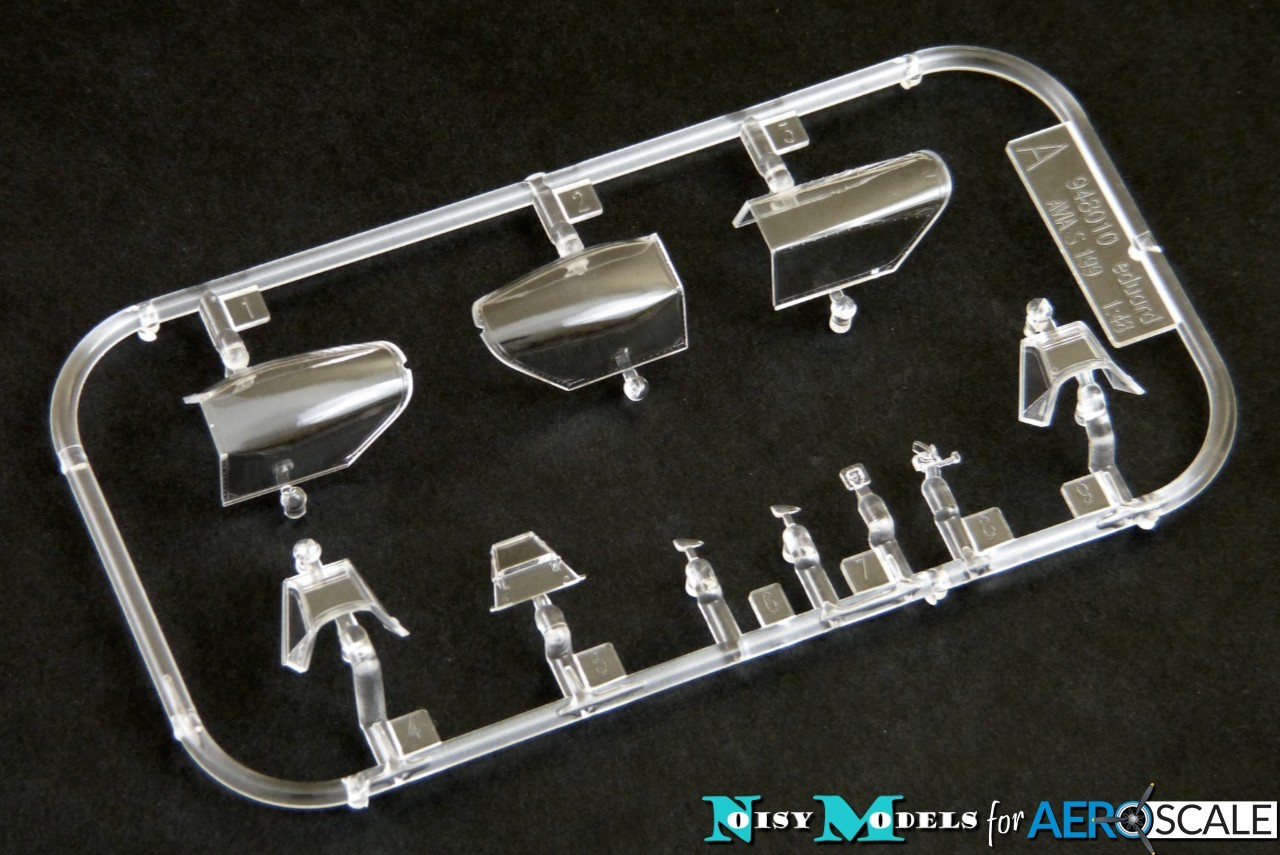
The clear parts are conventional injection moulded styrene, and the canopy and windscreen are nice and thin and free of distortion. The canopy can be posed open - all that will need adding is the retaining strap at the rear. I'll also add grab-handles inside the windscreen.
Instructions & Decals
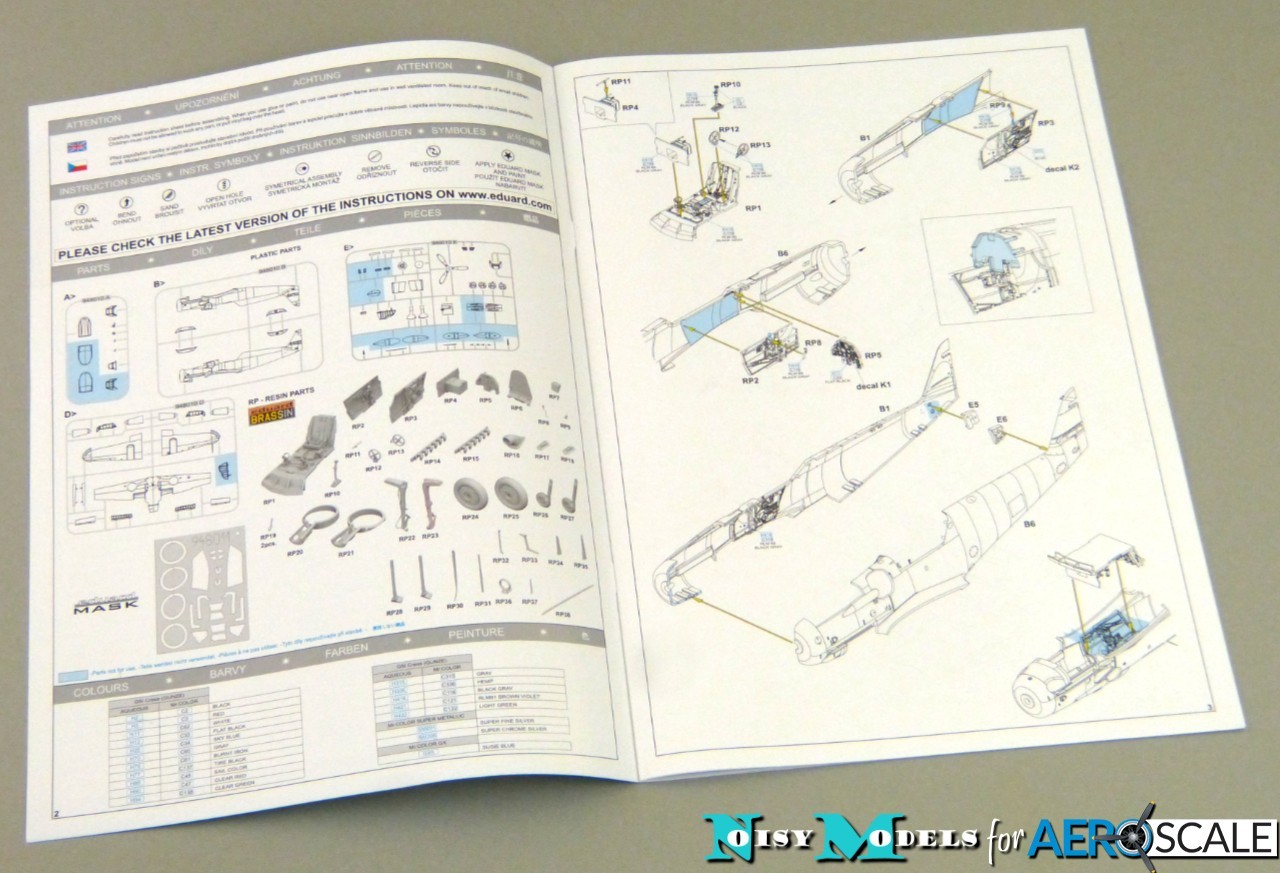
The construction guide is printed in colour as a classy A4 16-page booklet on glossy paper. Assembly is broken down into easy to follow stages and the sequence is nice and logical. Colour matches are provided for Gunze Sangyo paints with mixes given for most of the exterior colours.
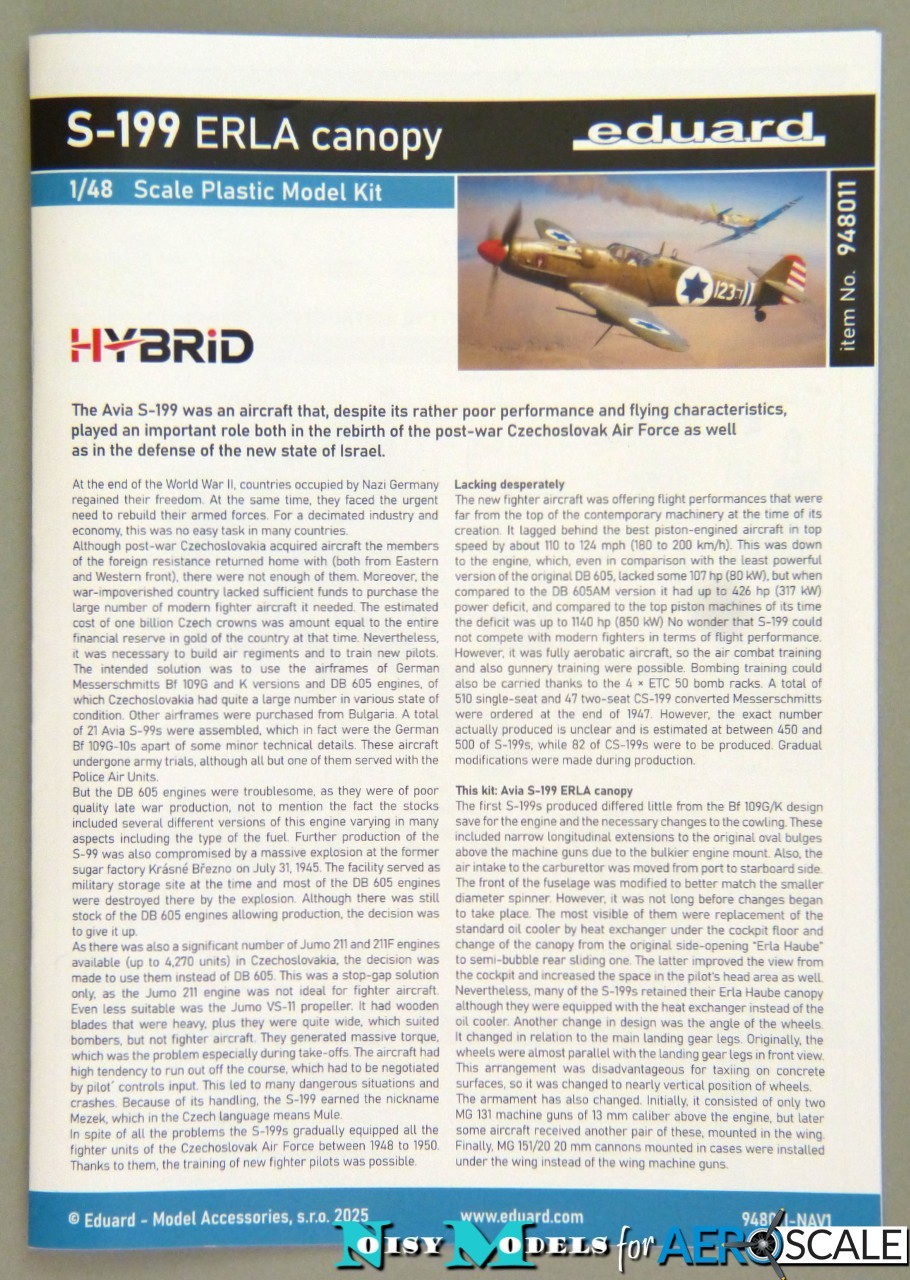
Decals are included for six colour schemes with an attractive selection of Israeli and Czech aircraft:
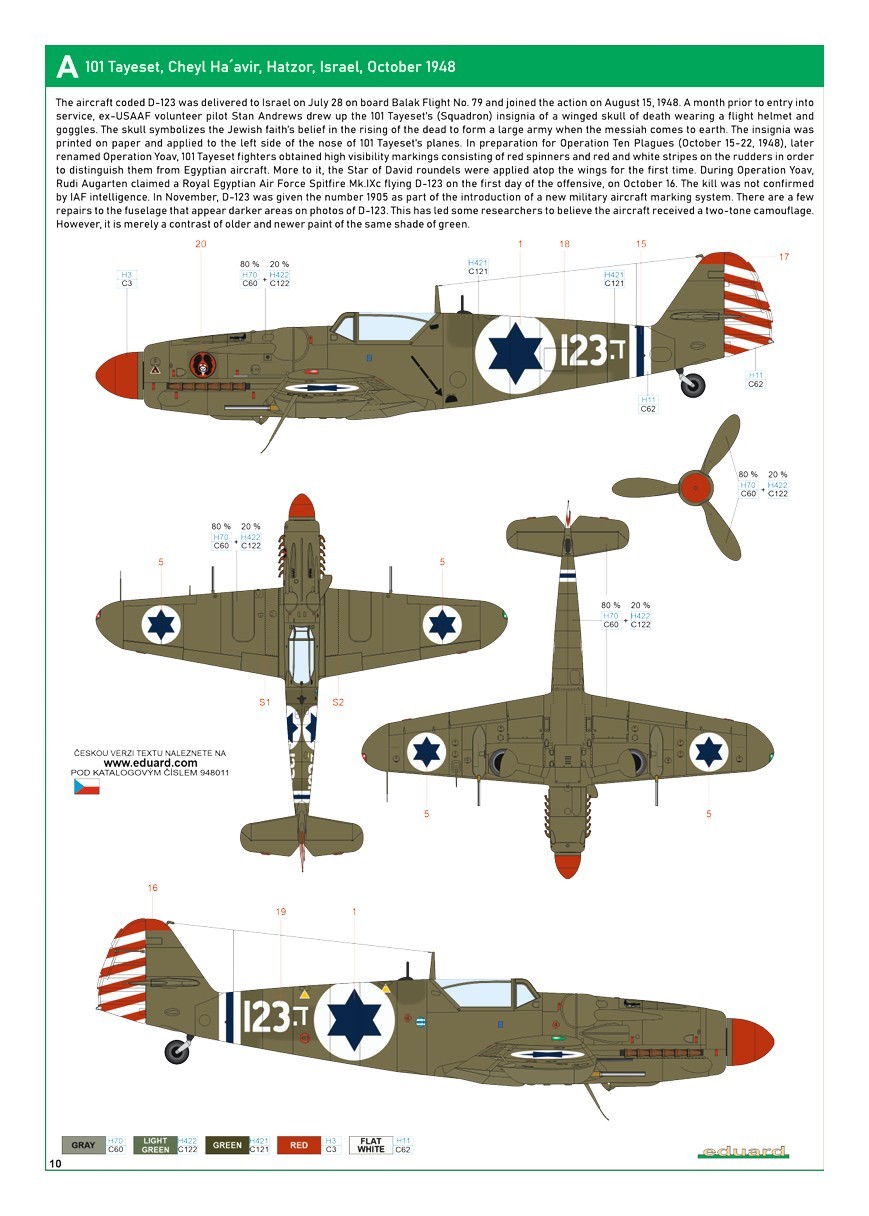
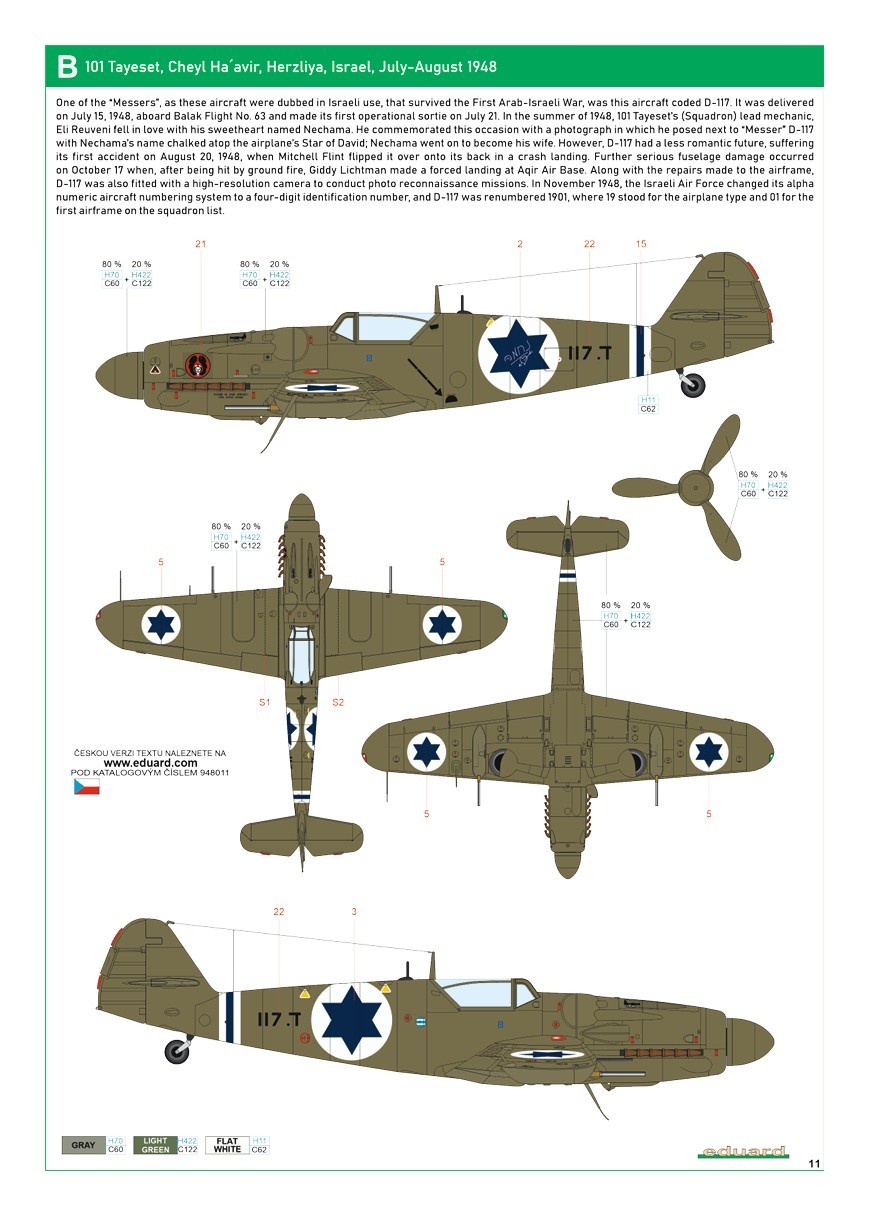
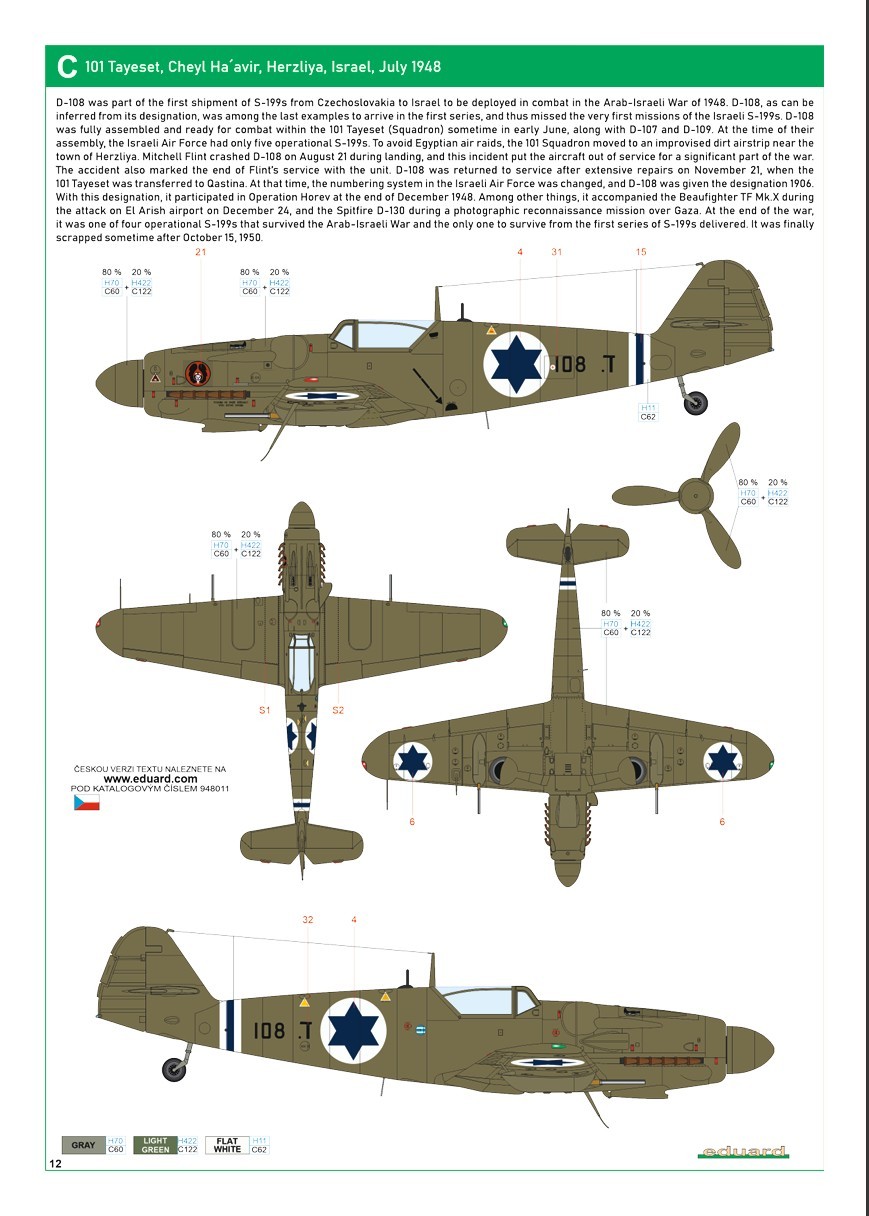
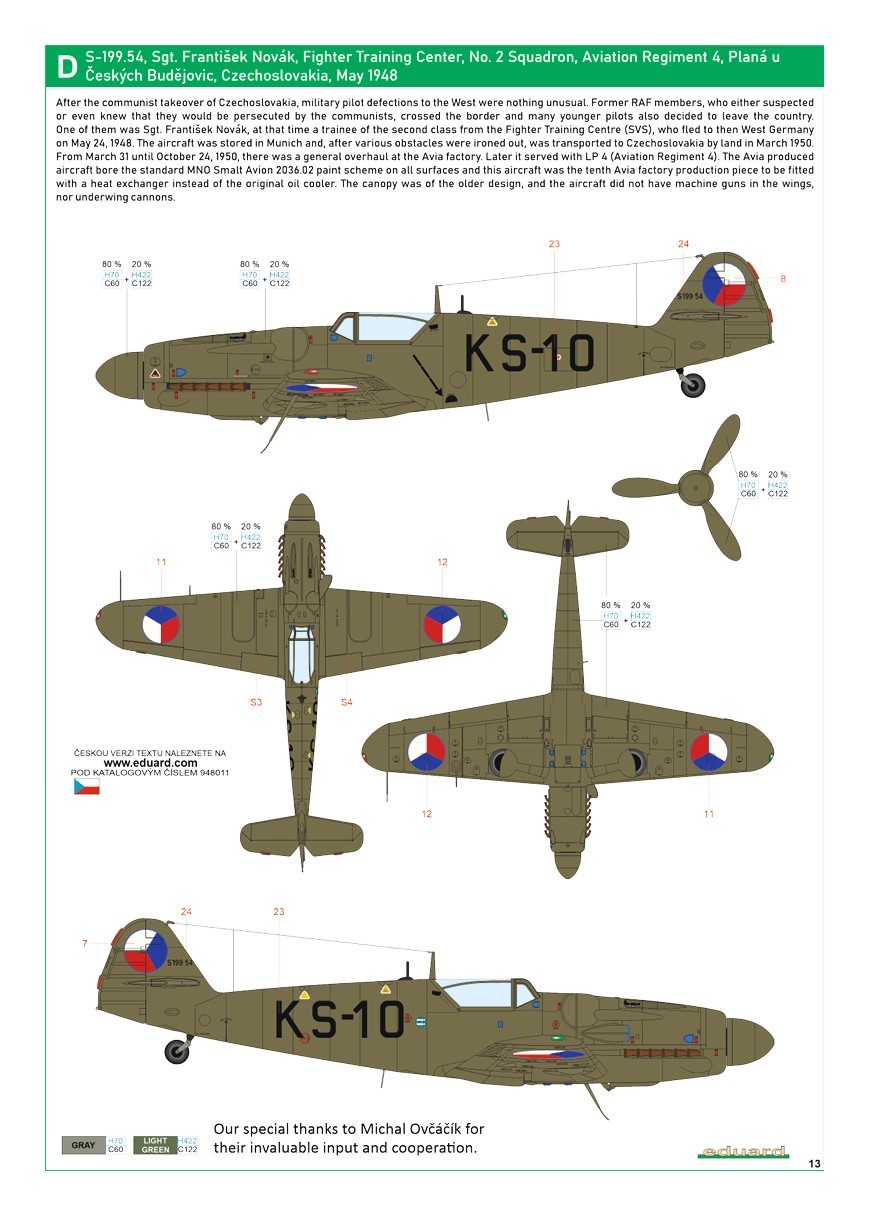
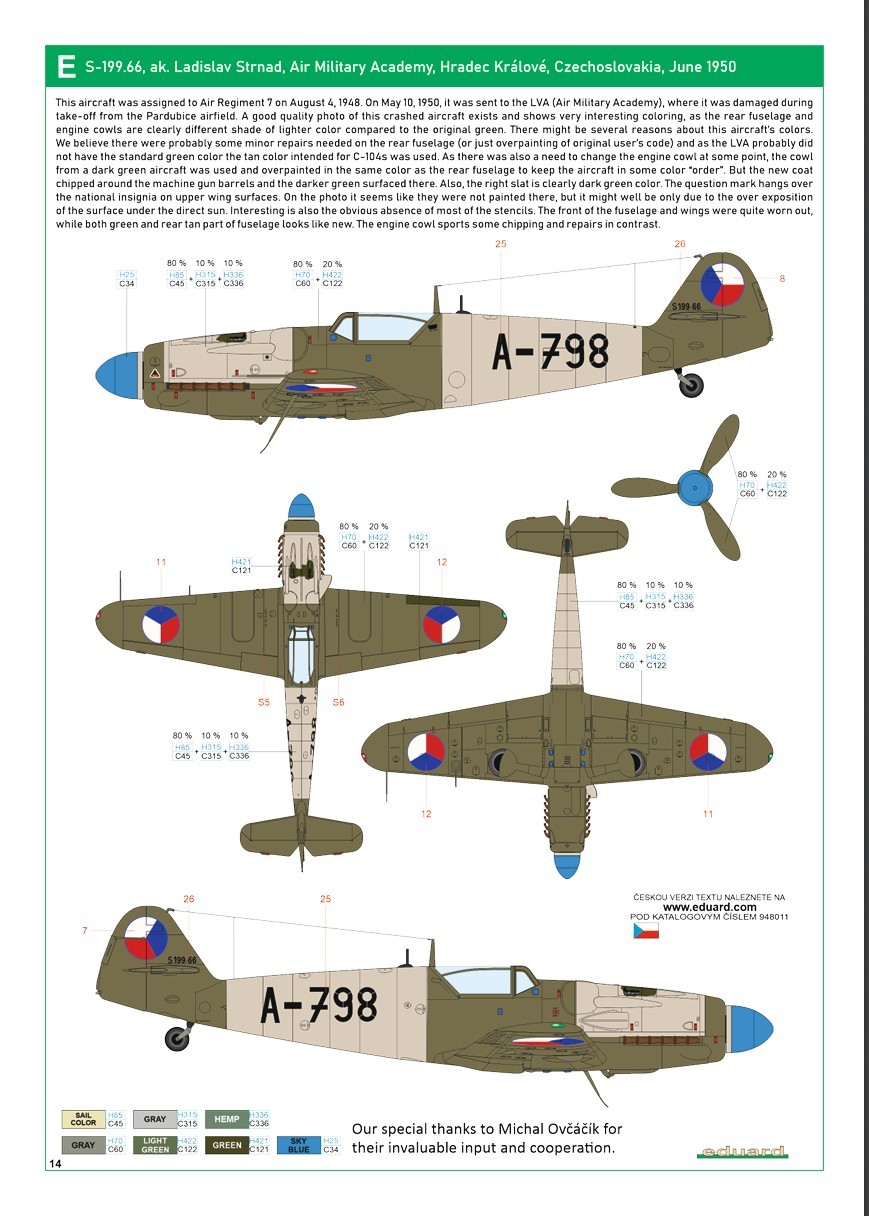
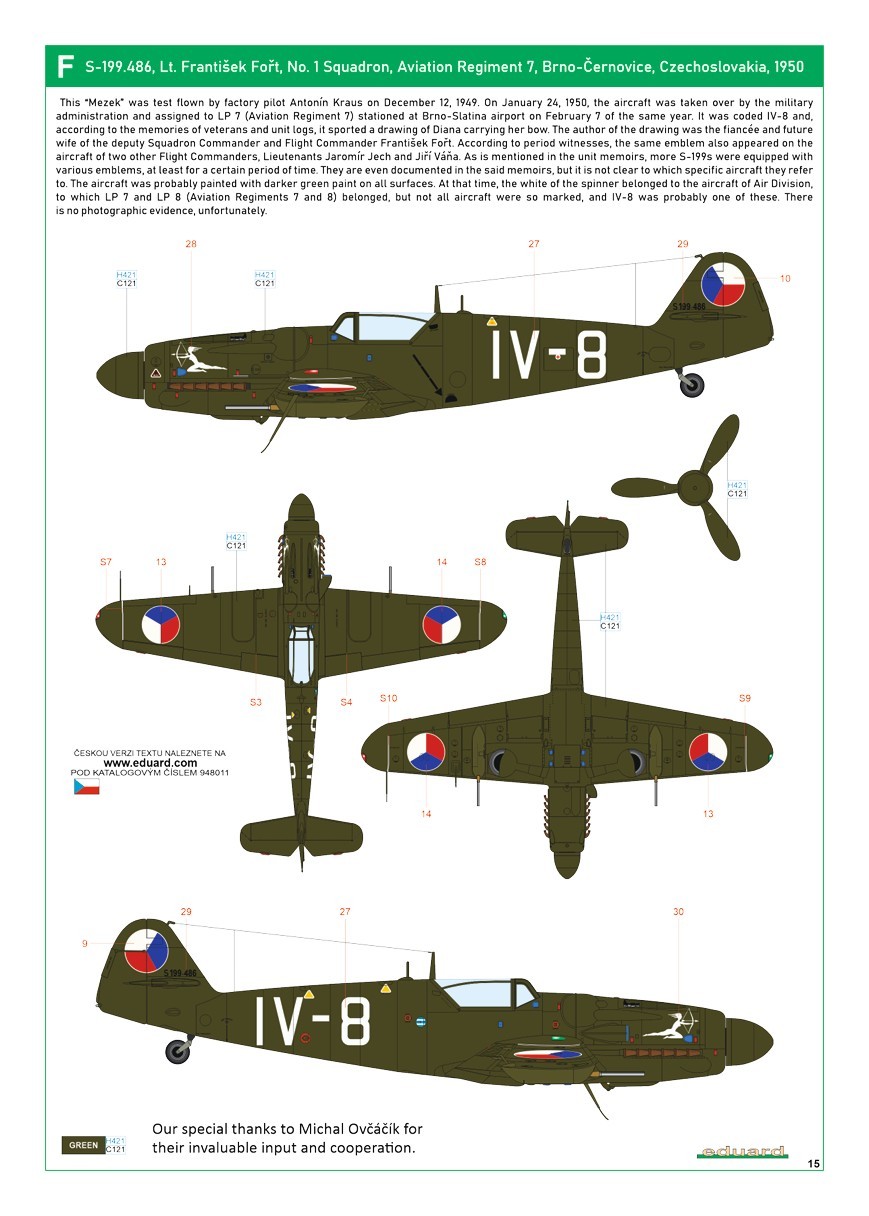
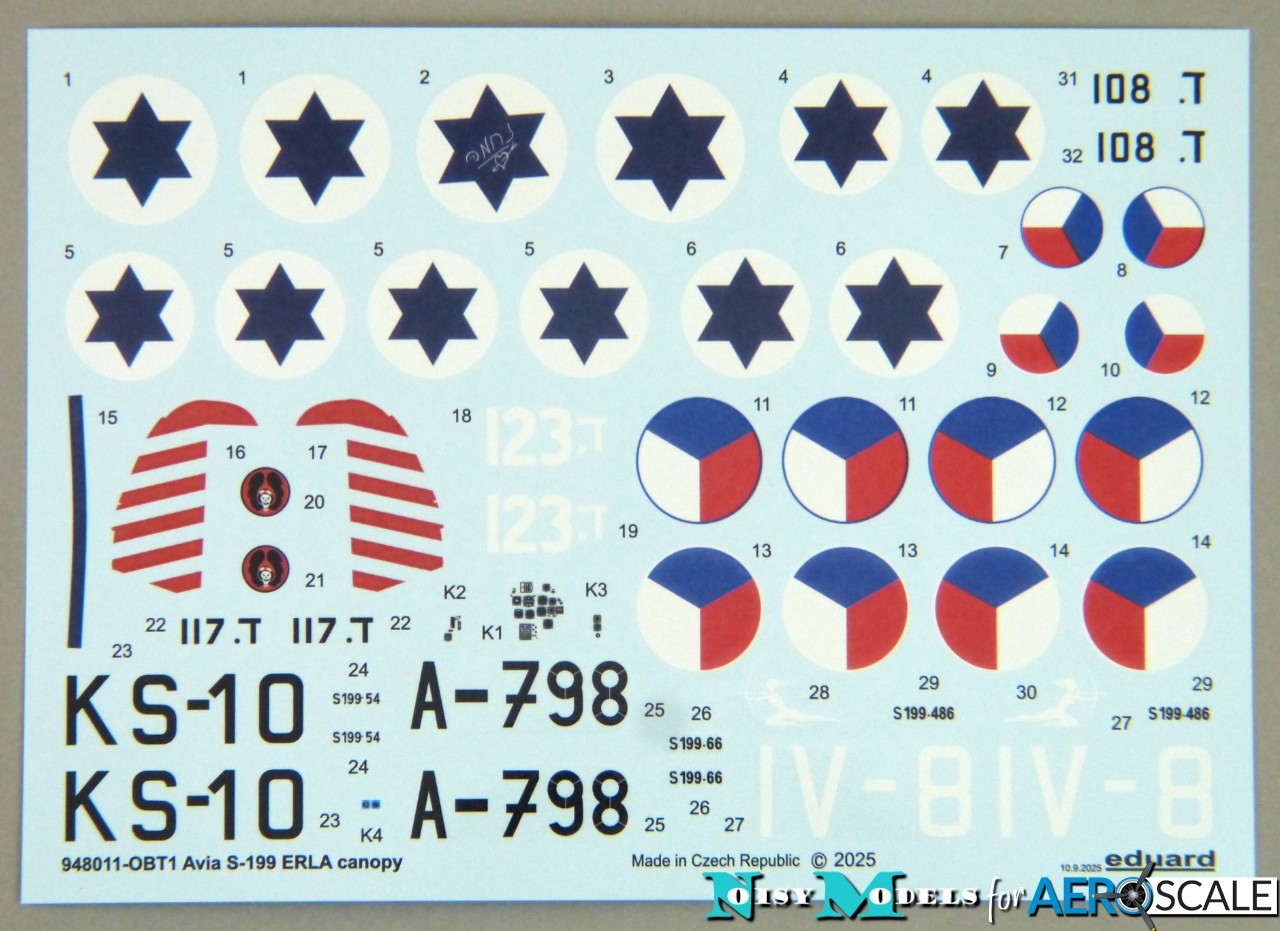
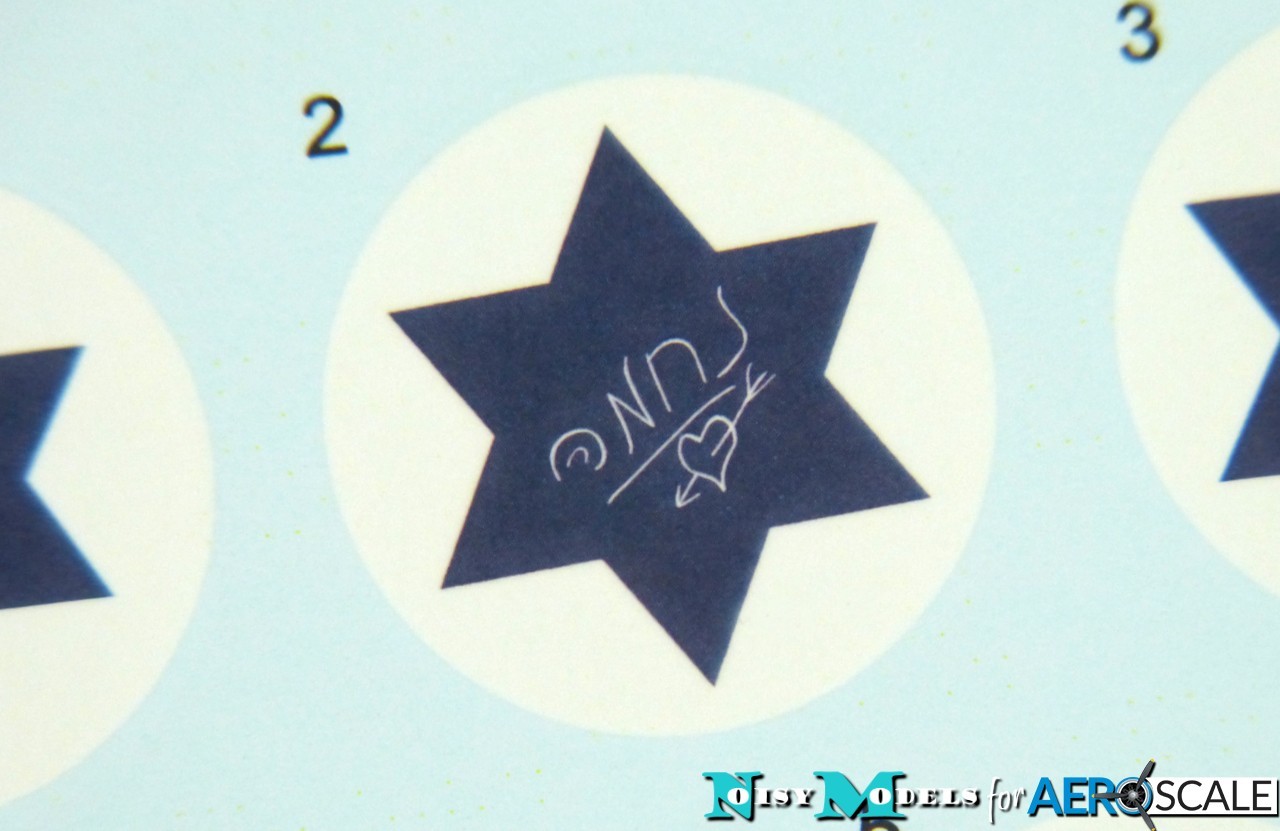
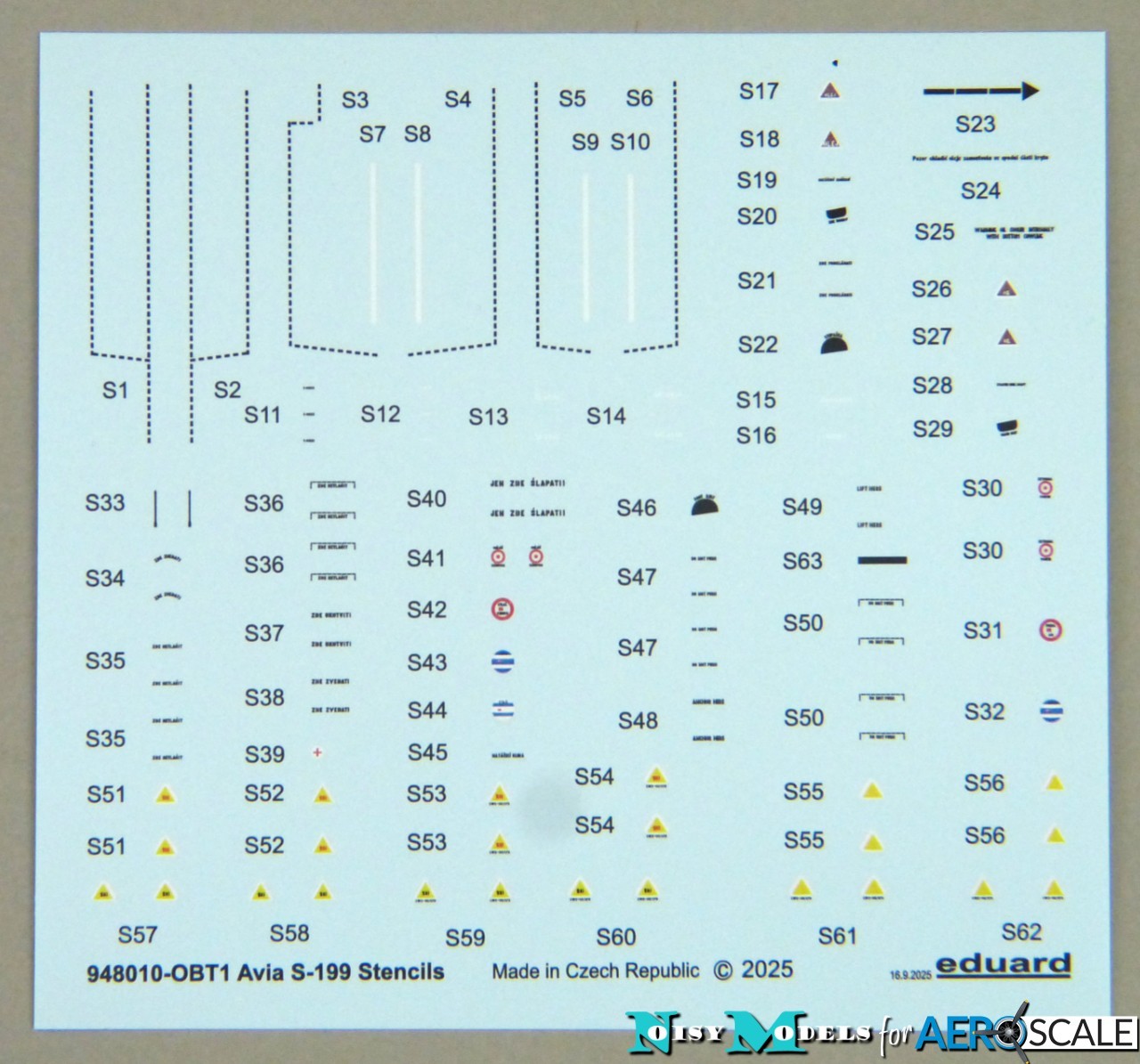
The decals look to be excellent, with precise registration on the thin high-gloss items. One thing to note with Eduard's current decals is that they have quite a lot of excess carrier film. This may look a bit off-putting at first glance, but don't feel the need to trim it off, because the decals work very well with standard setting solutions on a gloss surface and the crystal-clear film disappears as they dry.
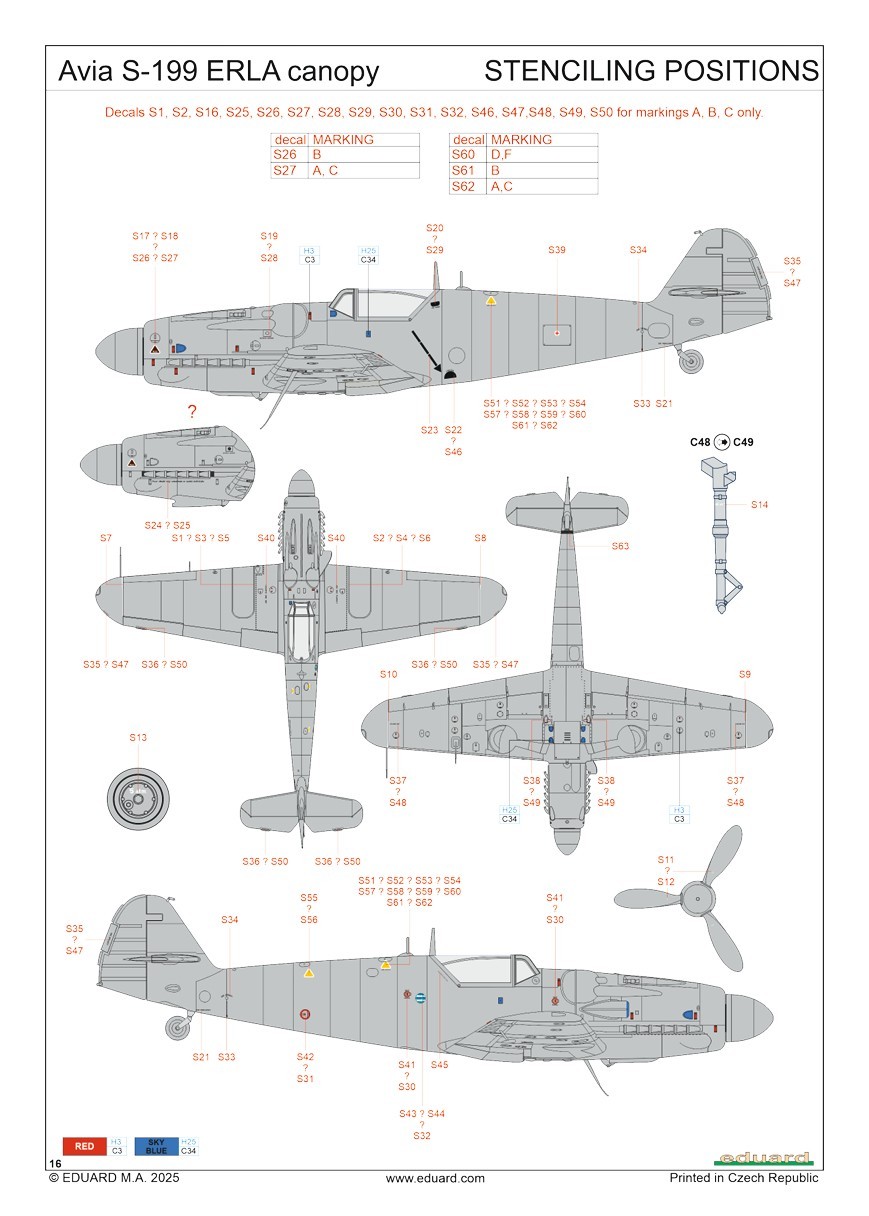
Accompanying the main decals is a comprehensive set of servicing stencils for which Eduard provide a clear full-page placement guide.
Conclusion
Eduard's new 1:48 Mezek is excellent on every level. Ironically, just a week before Eduard released it, I was planning to do a kit-bash combining the nose of the old Hobbycraft kit with Eduard's Bf 109G. Needless to say, that project's firmly scrapped now, because this new kit is simply in a different league and Eduard have done all the work for me!
This new HYBRID series promises to be very exciting, because it makes it possible to have exceptional levels of detail in a kit that's quick and simple to assemble. Is it "the" future of kit design? - only time will tell, but I think it's a clear sign of the increasing role that 3D-printing will play in our hobby. I'm certainly looking forward to future releases.
I purchased my kit for £30.49 from Jadlam Toys & Models - my go-to online retailer with a great bonus-point discount system. I think its UK price represents excellent value for money for a kit of this quality.
Please remember, when contacting retailers or manufacturers, to mention that you saw their products highlighted here - on AEROSCALE